≡ Menu

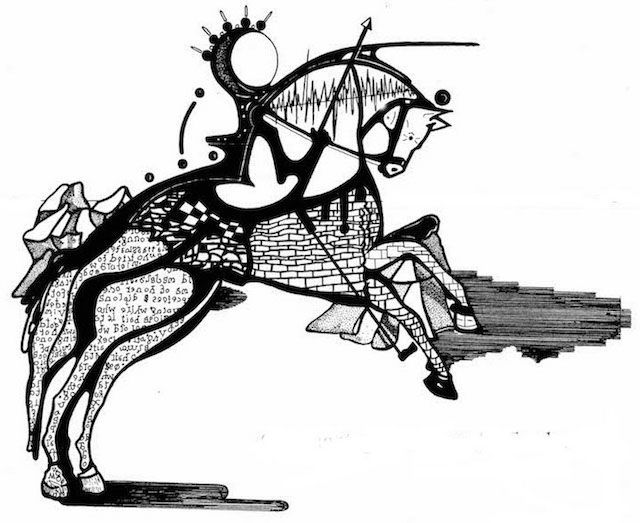
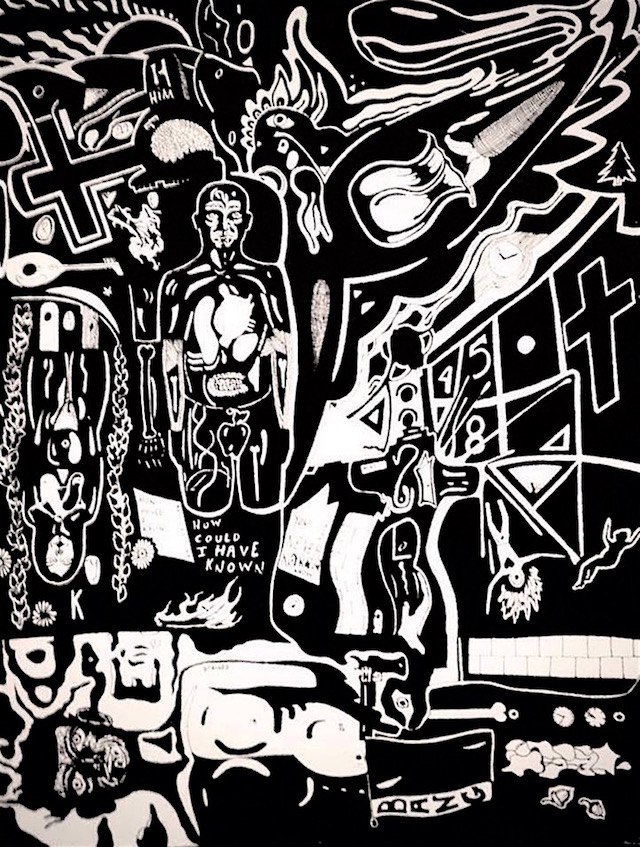
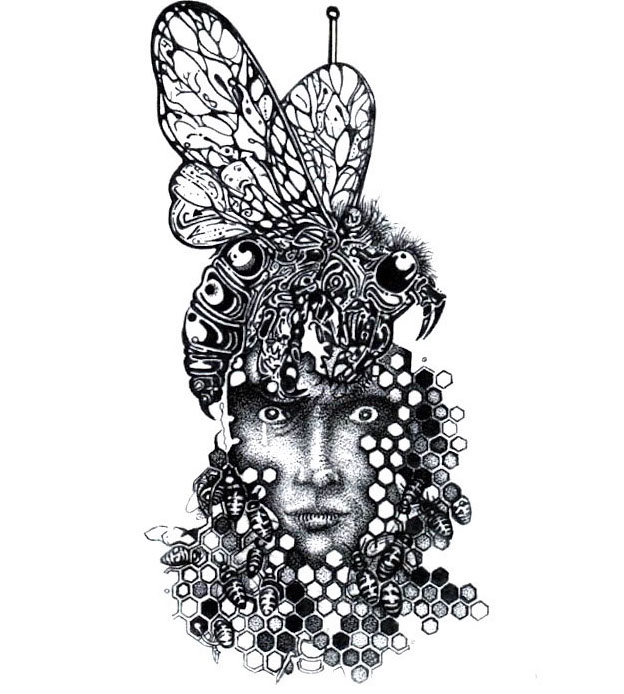
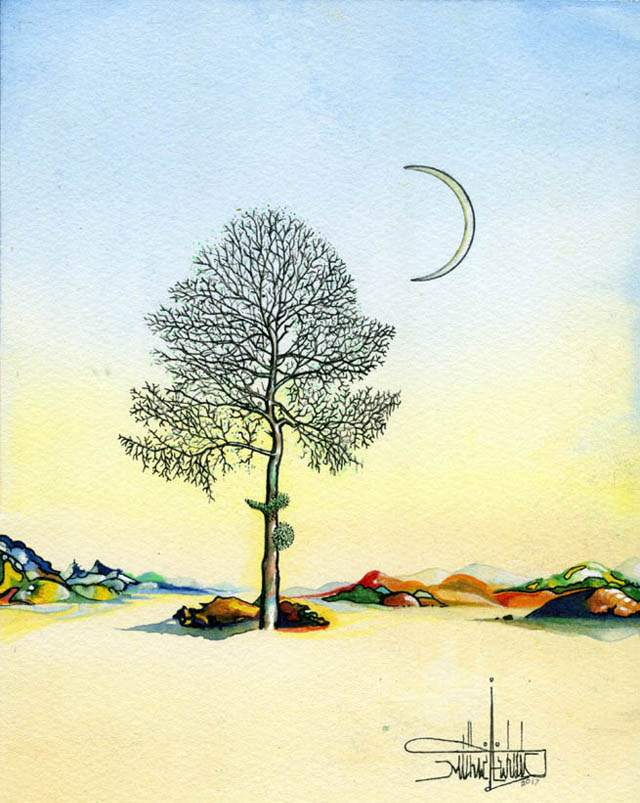
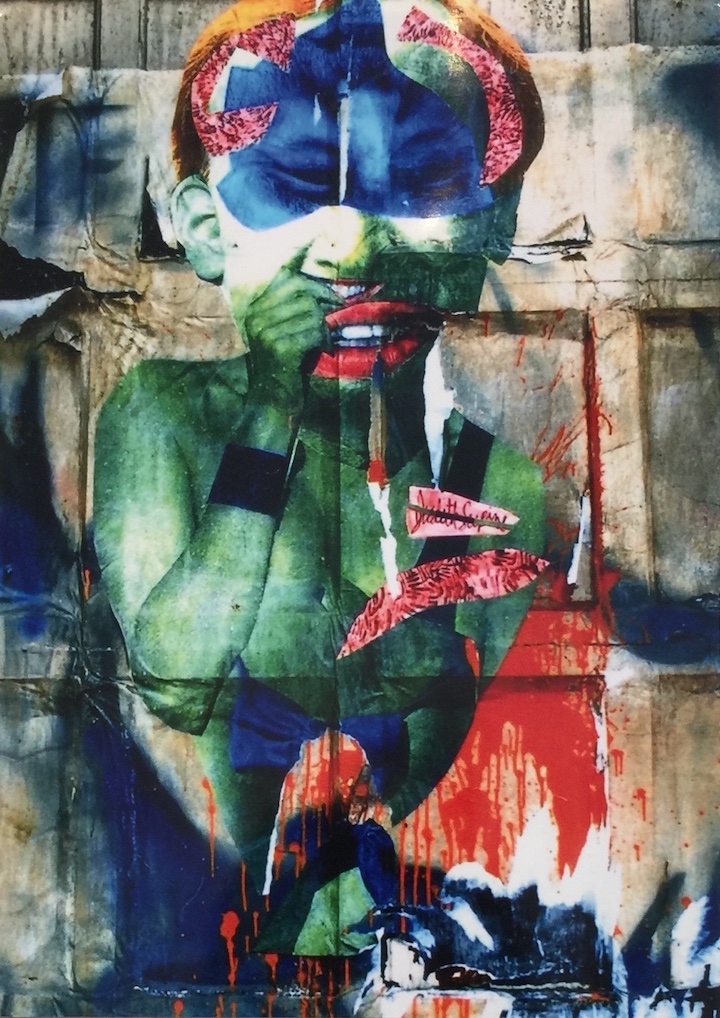
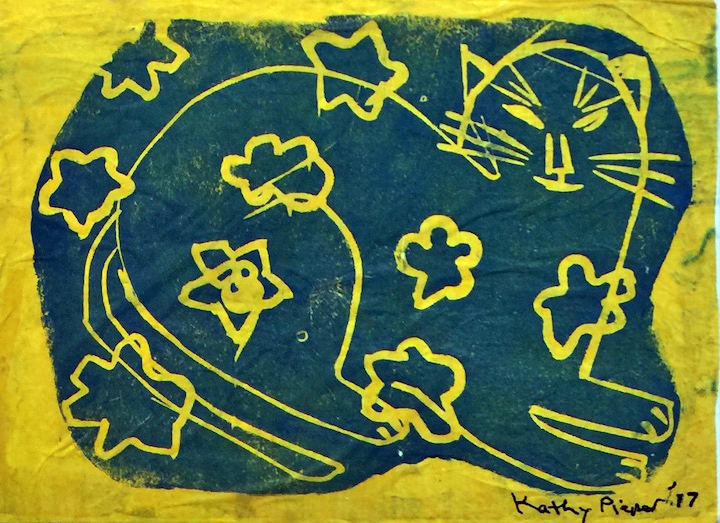
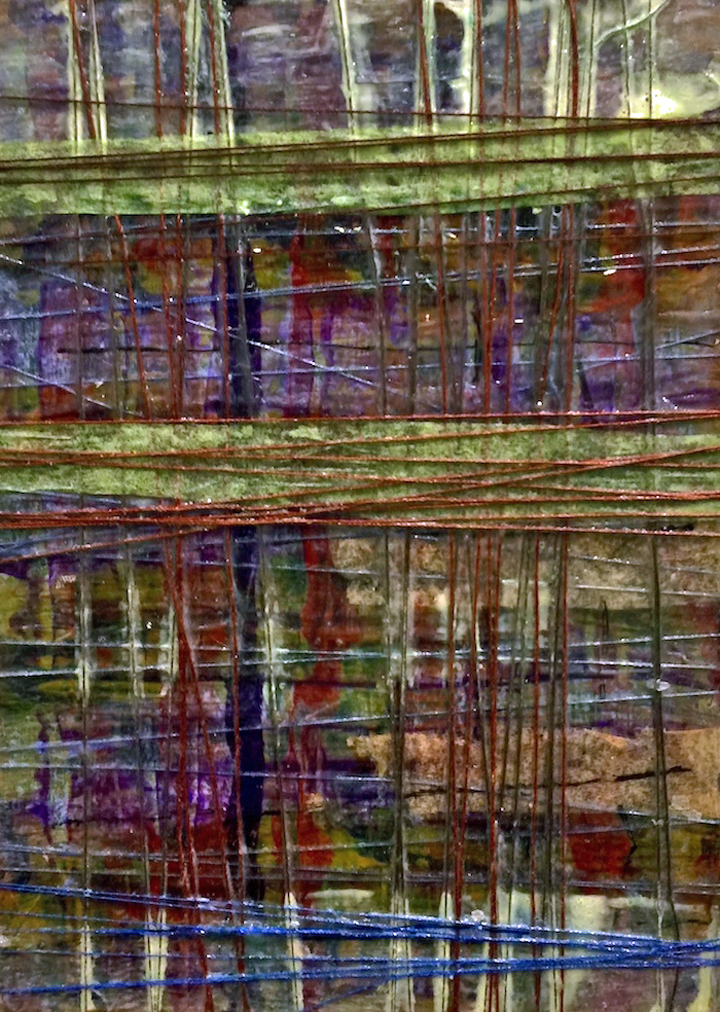
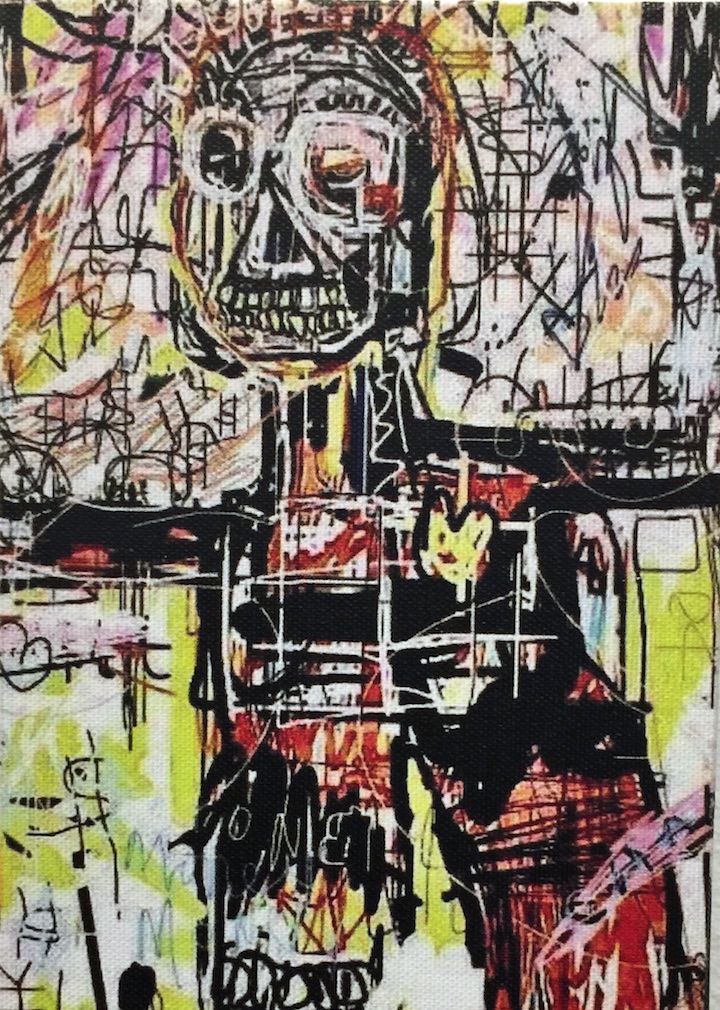
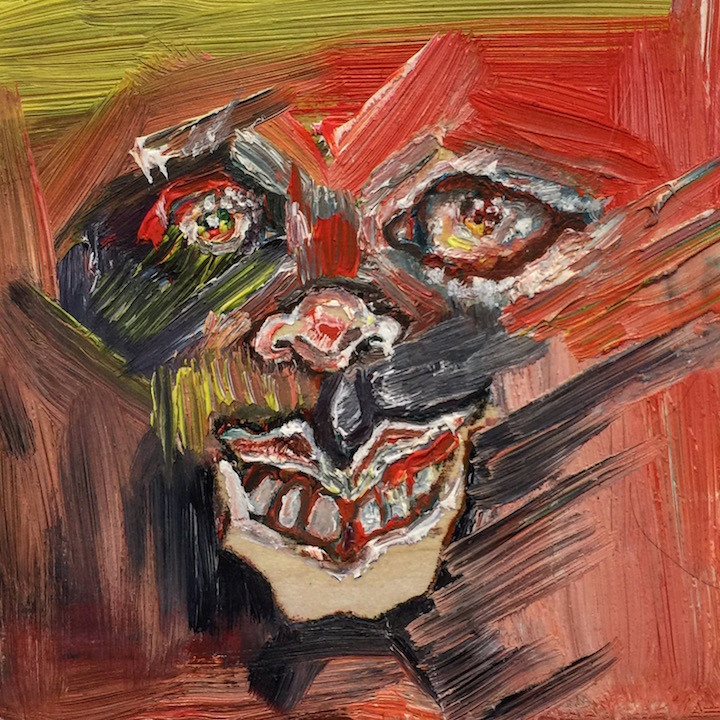
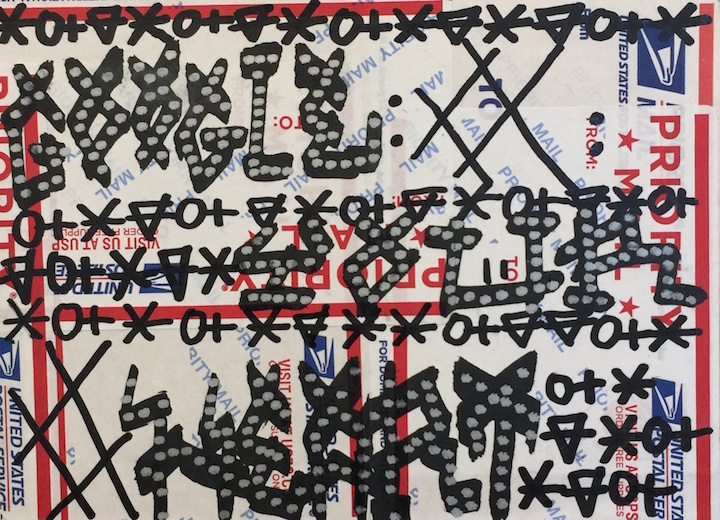
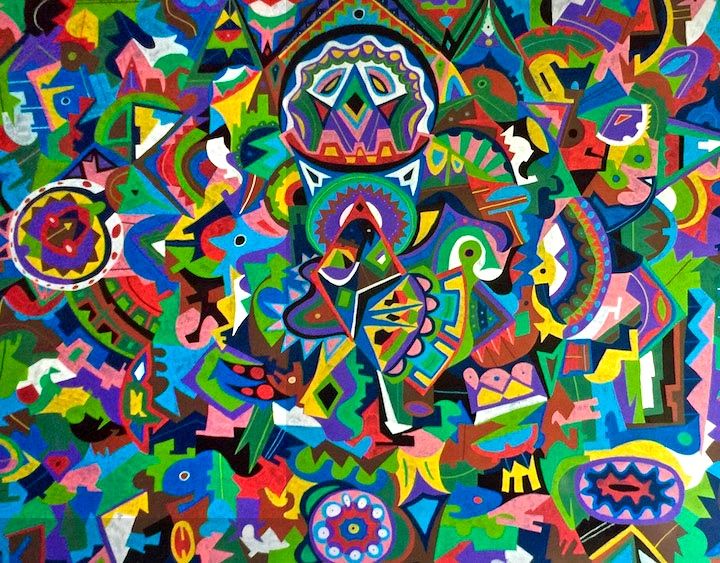
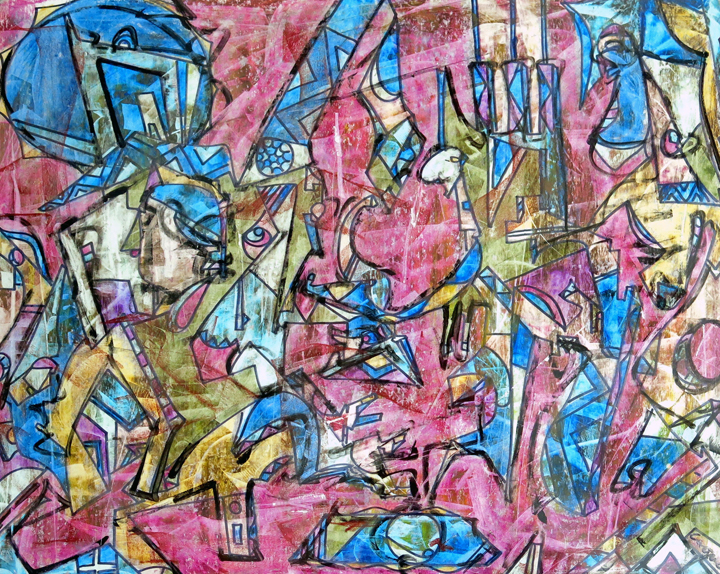
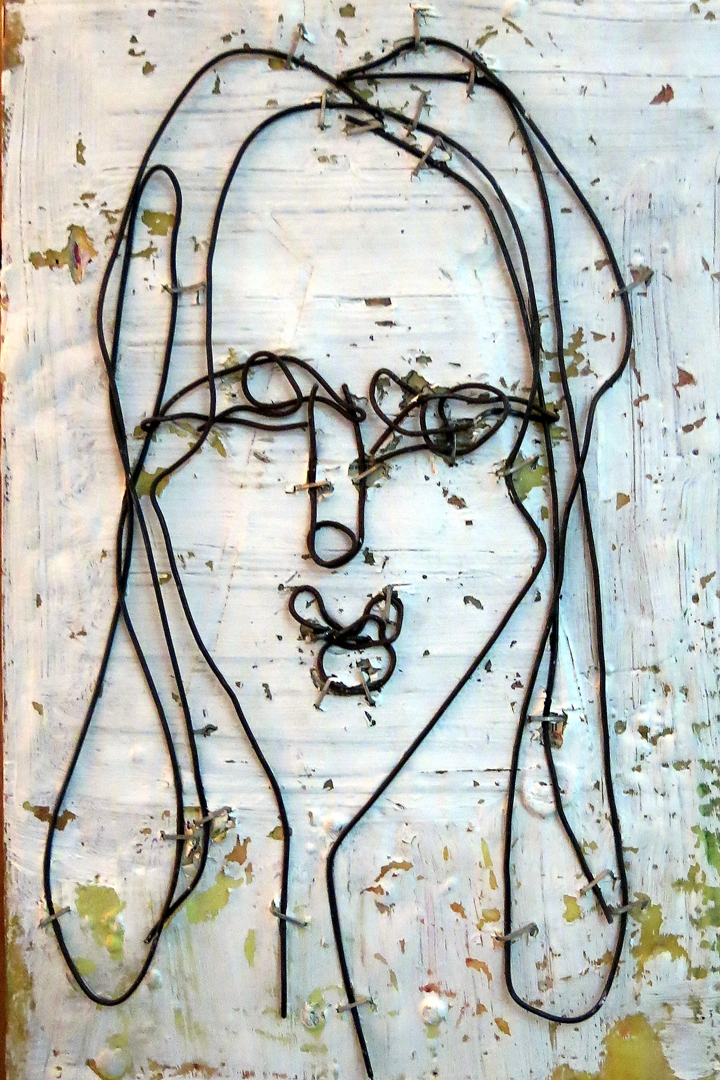
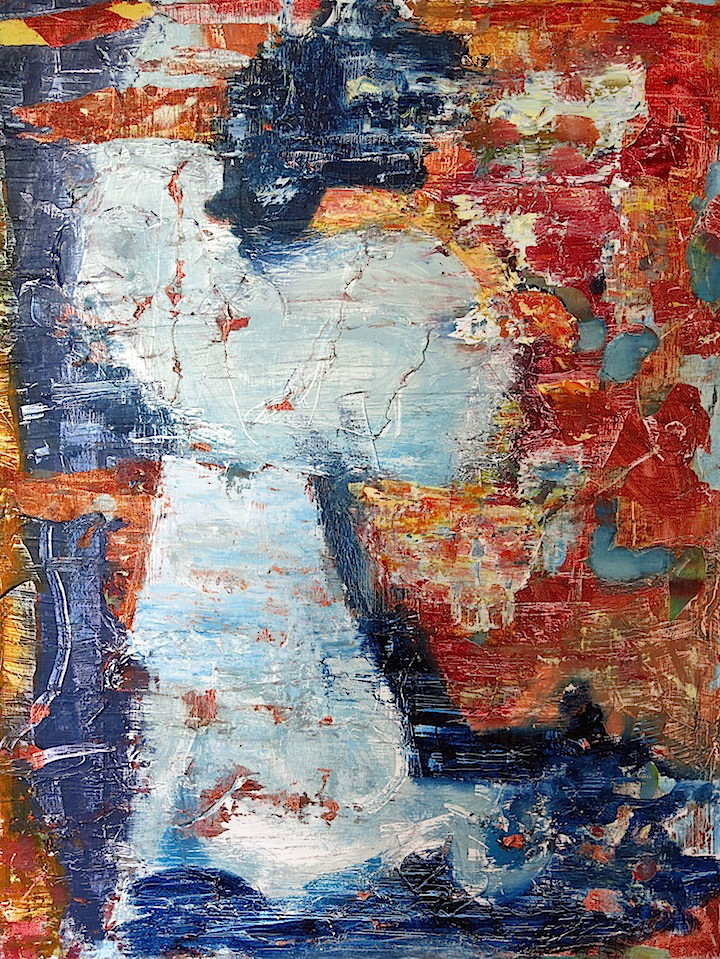
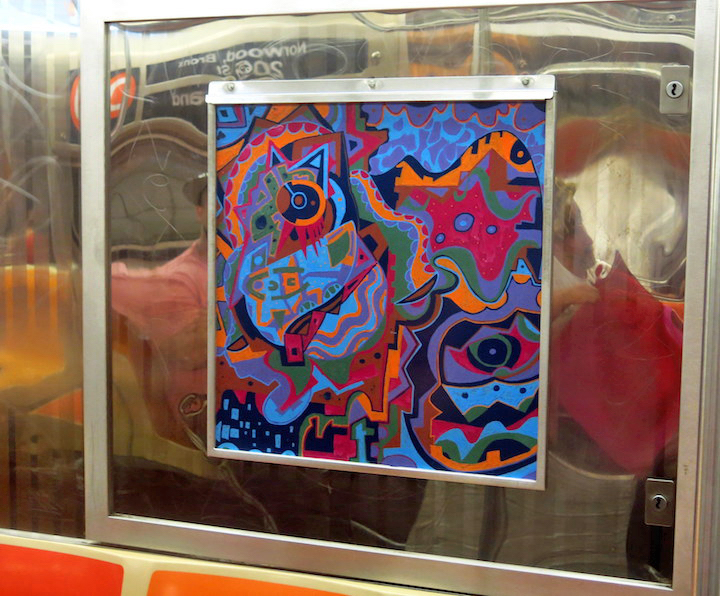
I’ve been mesmerized by Yonkers-based Michael Cuomo‘s inventive aesthetic sensibility and extraordinary versatility since I first met the self-taught artist several years ago. What follows is an interview with the artist, along with a sampling of his artwork:

When did you first start making art?

Back in 2002 on a date at Applebees. I was 27 at the time.

Why did you start?

It calmed my spirit. It was my emotional and psychic therapy.

It’s difficult to imagine you ever not drawing! Any earlier memories?

When I was in the 5th grade, I remember designing my initials and sketching Pumas in a sketchbook.

Who inspired you at the time?

I used to watch my brother who was a graffiti artist.

Have you any favorite artists? Any particular artists who inspire you?

Picasso is one of them. At the moment, I’m my favorite artist. I am inspired by everybody.

What about cultural influences?

New York, straight up! Living in the Mecca of the world. Everything is here in NYC!

How has your art evolved through the years?

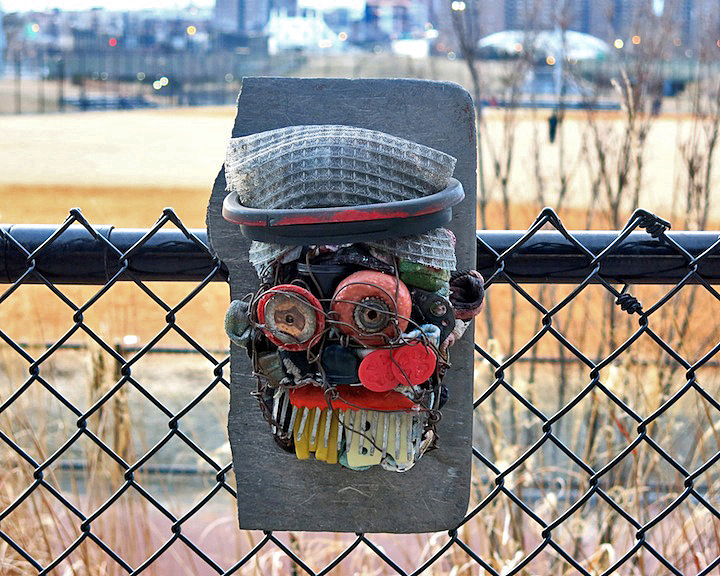
I went from working with crayons to oil paints to pencils to working with found objects – and from abstract painting to portraits to black and white illustrations to sculptures and assemblages.

Are you generally satisfied with your finished product?

If I finish it, I am!

Have you any favorite piece that you’ve created?

There are lots that I like. Not one in particular!

How long do you usually spend on a piece?

I don’t use time as a measurement; time is an element that is always evolving. And it’s the vision that matters.

What percentage of your time is devoted to art?

100%; it can’t be any other way!

What are some of your other interests?

Mystical occult knowledge, metaphysical studies and healing.

What is your favorite setting to work?

My YOHO studio.

Have you exhibited your work?

Yes – in a variety of settings, outside and inside.

How important is the viewer’s response to you?

It interests me, but it doesn’t affect me.

Have you any favorite media?

Whatever I’m working on at the time!

What is your main source of income?

Teaching art, selling art and odd jobs that come my way.

What is your greatest challenge as an artist?

Not really knowing how much money is coming my way at any given time.

How does your family feel about your life as an artist?

Except for my cousin, Vinnie, they are not supportive. My sister does, though, come to my openings.

Have you a formal art education?

No!

Where are you headed?

I’m interested in painting outdoor murals and becoming more engaged with the community.

What do you see as the artist’s role in society?

To create art with substance and to share positive energy.

Note: You can find out more about the artist here and follow him on Instagram here. To purchase his art, you can send him a direct message via Instagram or contact him at the email address noted here.

Interview conducted by Lois Stavsky with Bonnie Astor; photos by Lois Stavsky

{ 2 comments }

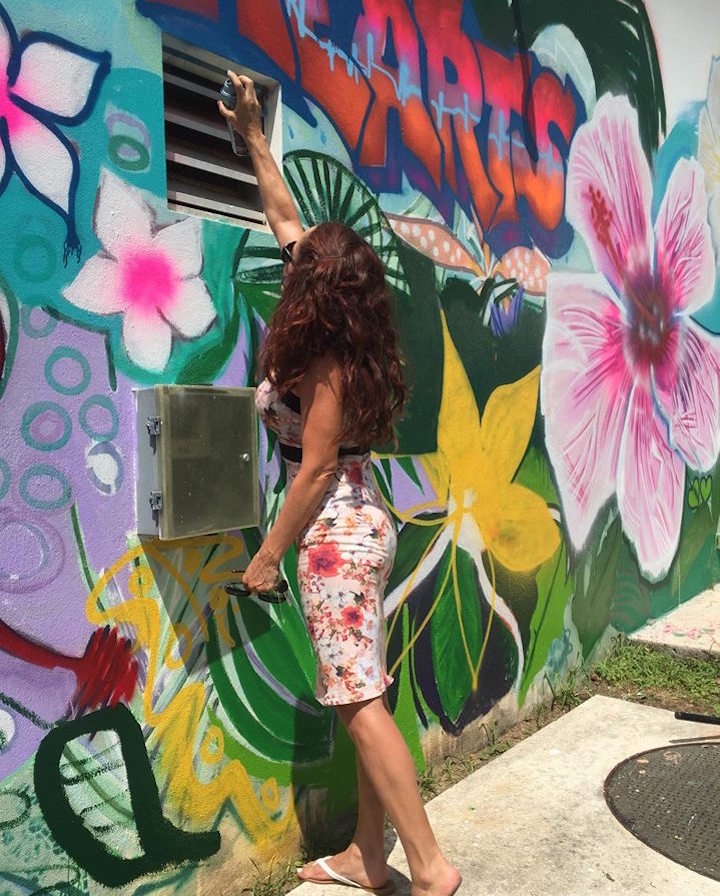
Canadian born, Bronx-based interdisciplinary artist Lady K Fever continues to be feverishly active in a huge range of educational settings and in dozens of innovative projects. Best known to many of us in NYC for her graffiti and mural art — integrating traditional graffiti lettering with her signature flora and botanicals — she has been featured in such classic graffiti books as Nicholas Ganz‘s Graffiti Women: Street Art from Five Continents, James and Karla Murray‘s Burning New York: Graffiti NYC When we met up with her this past week, she spoke about her recent adventures in Bermuda, where she had spent three months earlier this year at the Masterworks Museum of Bermuda Art as an artist-in-residence and arts educator.

What brought you to Bermuda earlier this year?

I had painted a mural back in 2011 on the exterior of The Masterworks Museum of Bermuda ArtTom Butterfield, the museum’s founder and creative director, invited me back as an artist-in residence to restore the mural, conduct art workshops and create artwork influenced by Bermuda for a solo exhibit.

Can you tell us something about the workshops you conducted? The ages of the children you worked with?

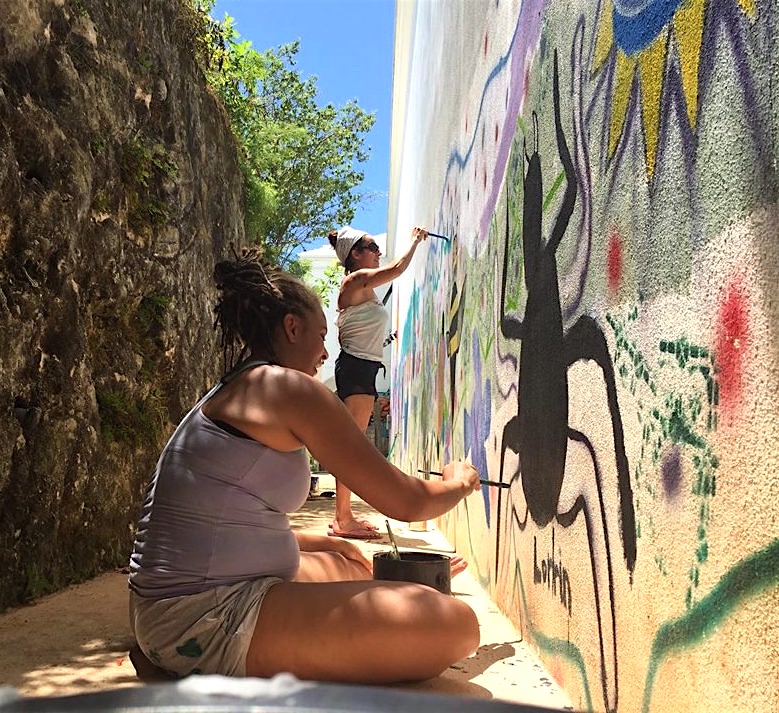
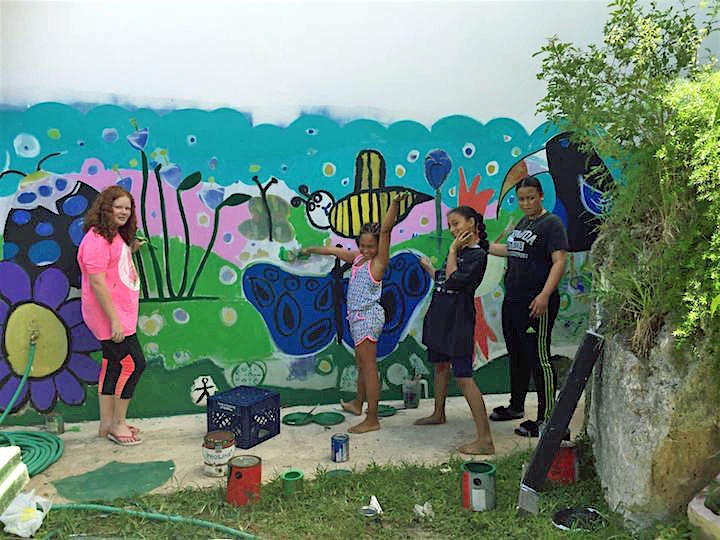
The children ranged in age from 6-12.  I refer to my methodology as “Call and Response.” The kids watched me paint in the morning and responded in the afternoon.

What inspired the artwork that you and the young community members created?

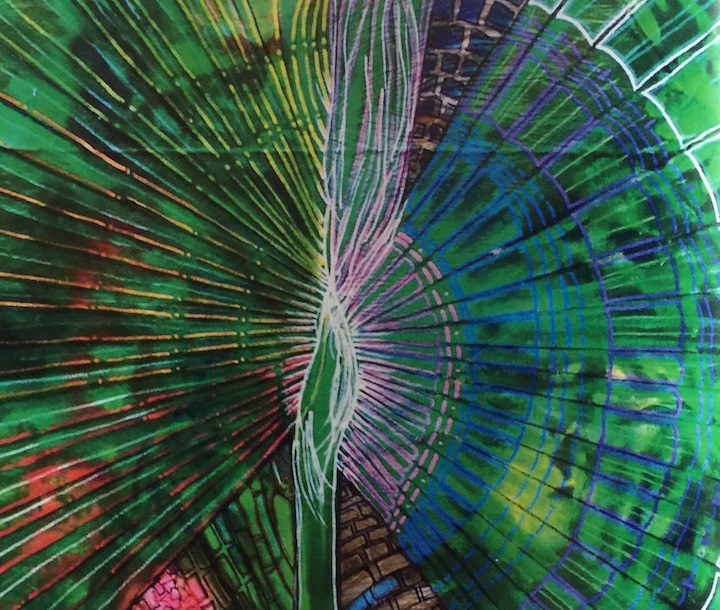
We were inspired by the natural environment — the palms, the hibiscus, the tropical climate.

Did living and working in Bermuda present any challenges?
The racism and classism that pervade much of the society disturb me. There is considerable segregation among people of different classes and colors. Especially wonderful is how art-making helps to break this down and integrate so many individuals, who — otherwise — would not interact. I also found the cost of living very high. Everything is expensive. A loaf of pre-packaged white bread can cost $7.00 — easily twice what it would cost in NYC.

Did your experiences as an artist-in-residence atThe Masterworks Museum of Bermuda Art influence or impact your personal aesthetic?

Yes! I began creating what I refer to as “dubbed art”   I would adopt other artworks or aesthetic sensibilities and fuse them with my own. The results were a kind of abstract meditation.

How did folks you encountered in Bermuda respond to you and your artwork?

The response was wonderful. Everyone was so welcoming. I believe I was conceived in Bermuda! I think of it now as my “spiritual home.”

Note: A selection of Lady K Fever‘s new line of accessories and handbags can be purchased at the Bronx Museum of the Arts‘ gift shop and at the upcoming Bronx Museum Artisan Market on Saturday, December 9th. You can check out Lady K Fever‘s Etsy shop here and keep up with her on Instagram here.

Interview conducted by Lois Stavsky and Bonnie Astor. All photos courtesy of the artist.

{ 1 comment }

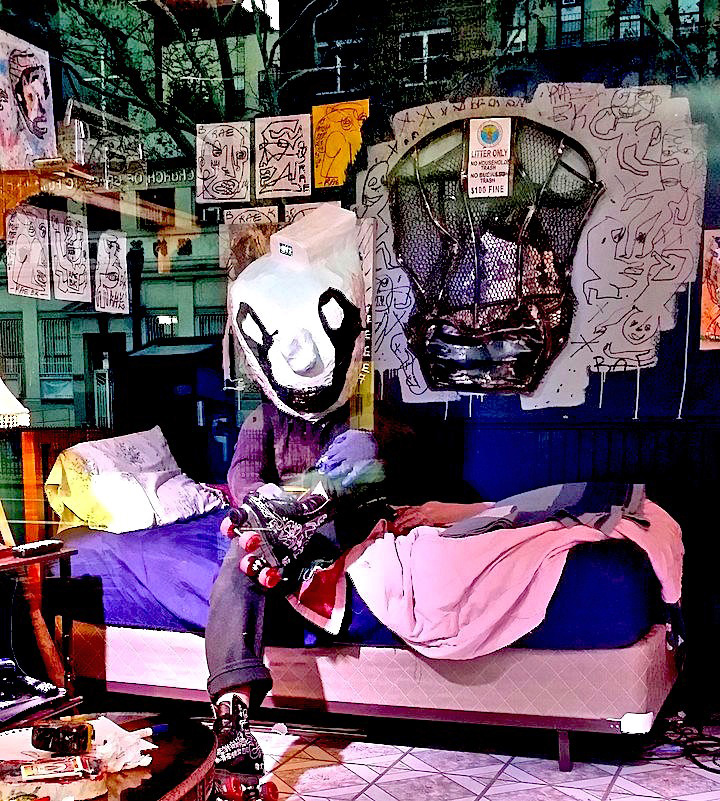
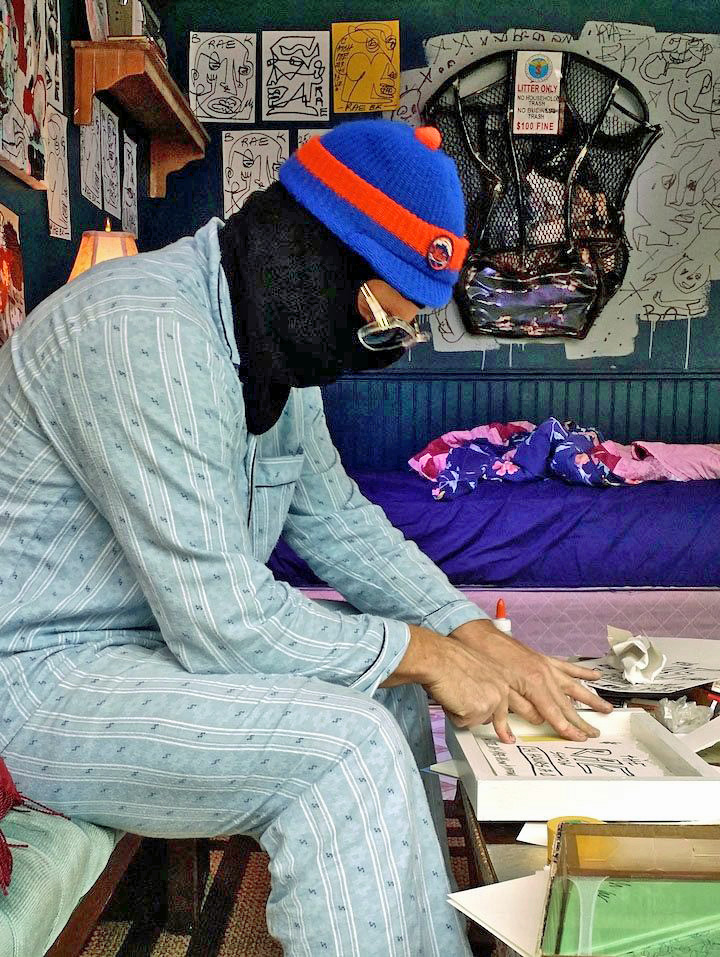
We’ve been huge fans of RAE BK‘s folksy, outsider aesthetic since we first came upon it years ago on the streets of NYC. Woven into NYC’s fabric, his installations, paintings, paste-ups and stickers continue to delight us. And since Halloween, it’s been possible to observe the reclusive artist live — with occasional special guests — 24/7 in The RAE Show staged in a storefront at 130 Allen Street on Manhattan’s Lower East Side.

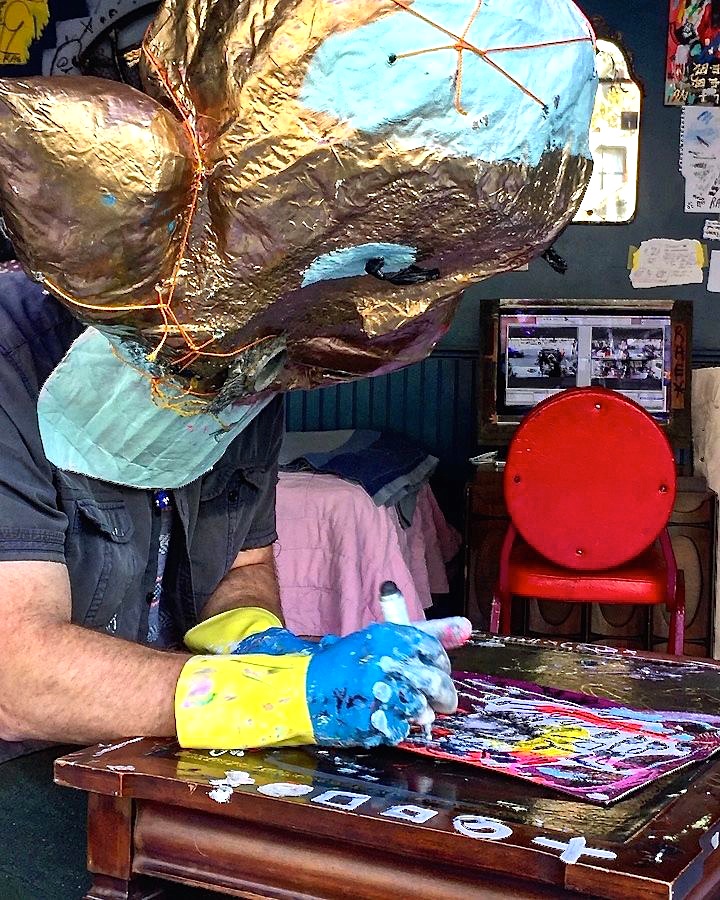
Pictured above is RAE at work in his pajamas as seen from outside his temporary home. What follows are several more images we captured these past two weeks peering in from the outside at the space that — as reported in The New York Times — resembles the room that the artist grew up in on Utica Avenue:

RAE at work in one of his disguises

And with another disguise — a papier-mâché mask

Getting ready to roller-skate in his temporary abode — with yet another disguise

And a close-up of RAE‘s “home” with a smattering of artworks

The RAE Show continues at 130 Allen Street until Thanksgiving and can also be viewed 24/7 here:

Photo credits: 1, 3 & 4 Tara Murray; 2 & 5 Lois Stavsky; post by Lois Stavsky with Tara Murray

{ 1 comment }

In 1986 Chinese artist Lily Yeh was drawn to a vacant lot in a North Philadelphia neighborhood plagued by poverty, substance abuse and urban blight. Viewing it as a space where she “could locate the sacred in the mundane,” she envisioned transforming it.

“Since I knew nothing about the neighborhood, I had to learn to ask people to help me. I needed to engage the neighborhood, the children and also the street people and drug users who hung around the block,” she told Phil Leggiere, a reporter for The Pennsylvania Gazette back in 2000.

She was also concerned as to how the largely African neighborhood would respond to her as an Asian woman.

“Friends had said that my work would be destroyed because of tensions between Asians and African-Americans. I wanted to run away, but there was a voice inside me that led me on.”

Several years after the transformation began, Lily Yeh commented, “North Philadelphia gave me the opportunity to see again. I think it’s because in broken down places spirits are more open.”

Since 1986, the Village of Arts and Humanities — as it is now called — has emerged into a vibrant cultural center that provides opportunities for artistic expression and personal success for neighborhood youth and their families. Among its many missions is the engagement of the local community in the preservation of Black culture.

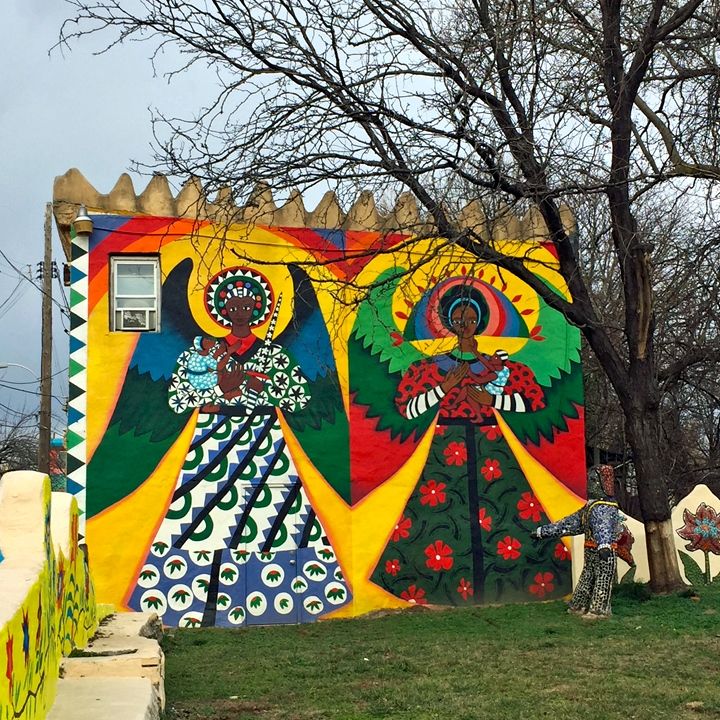
Pictured above is the recently restored Guardian Angels mural designed by Lily Yeh and painted by Lily, along with members of the community. What follows are several more images I captured on my two visits earlier this year:

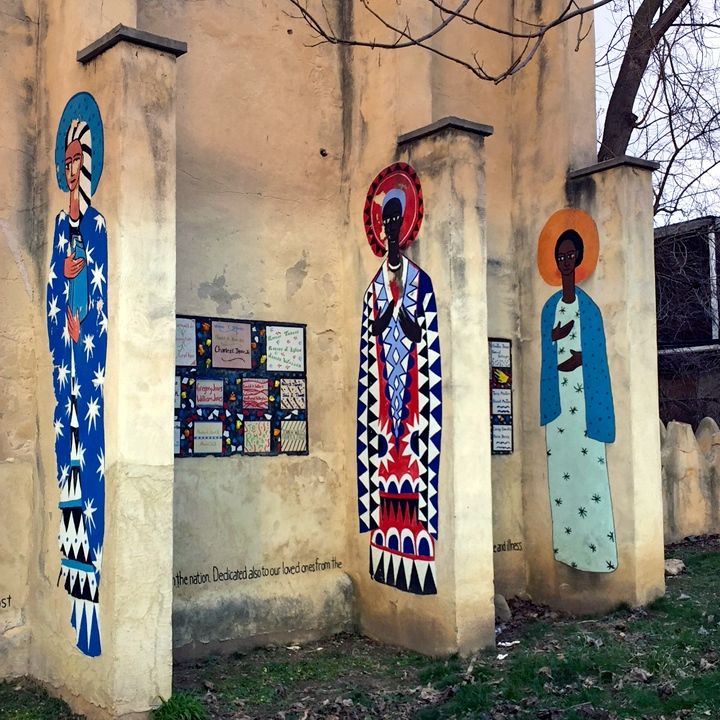
 Memorial Park, designed by Lily Yeh & built by neighbors — honoring fallen soldiers and community members

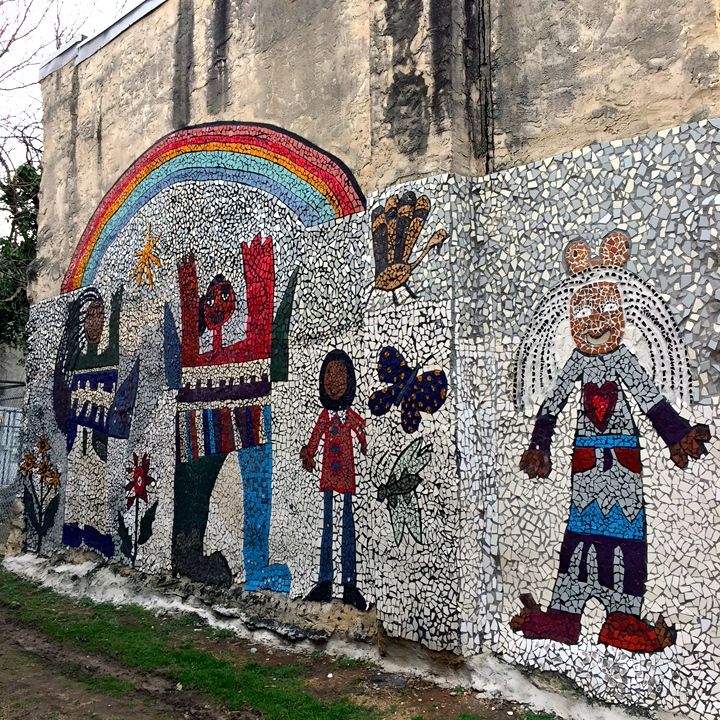
Happy Alley, designed by Lily Yeh from local children’s art with mosaic art by the late James (Big Man) Maxton

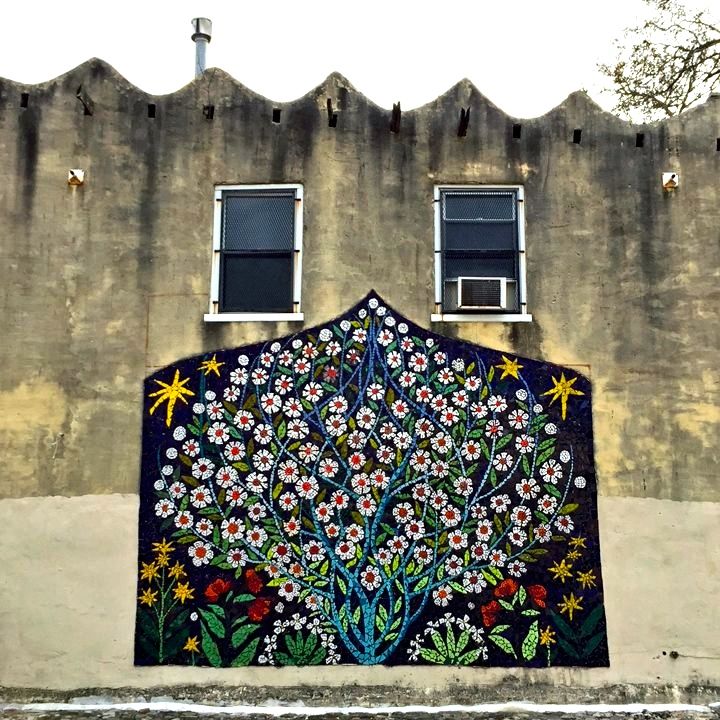
The Tree of Life, designed by Lily Yeh with mosaic art by the late James (Big Man) Maxton

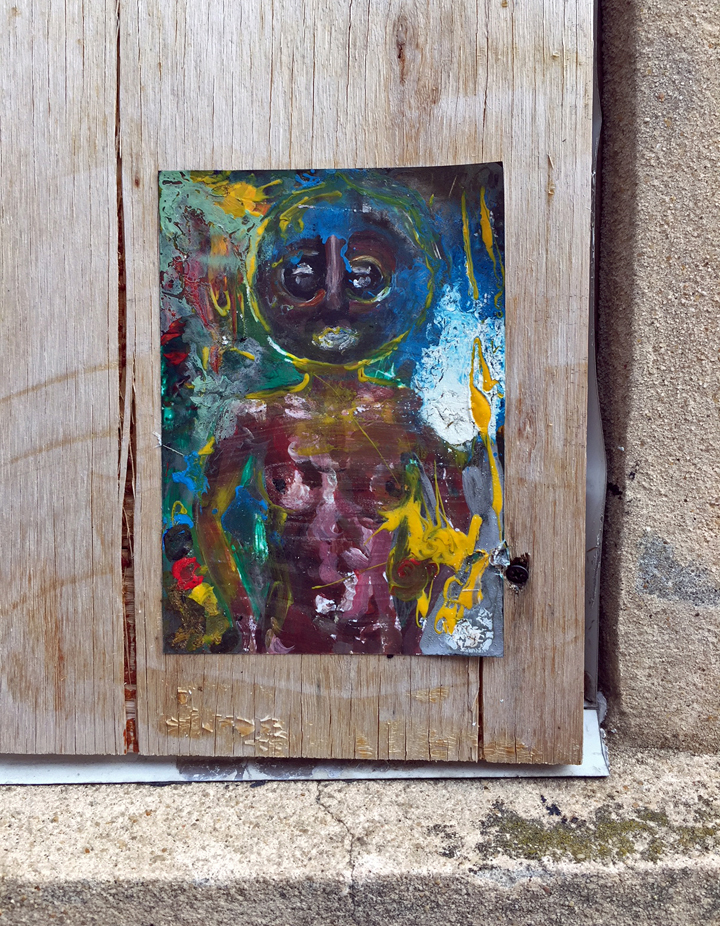
Random unidentified art, one of several unsigned artworks posted in the Village neighborhood

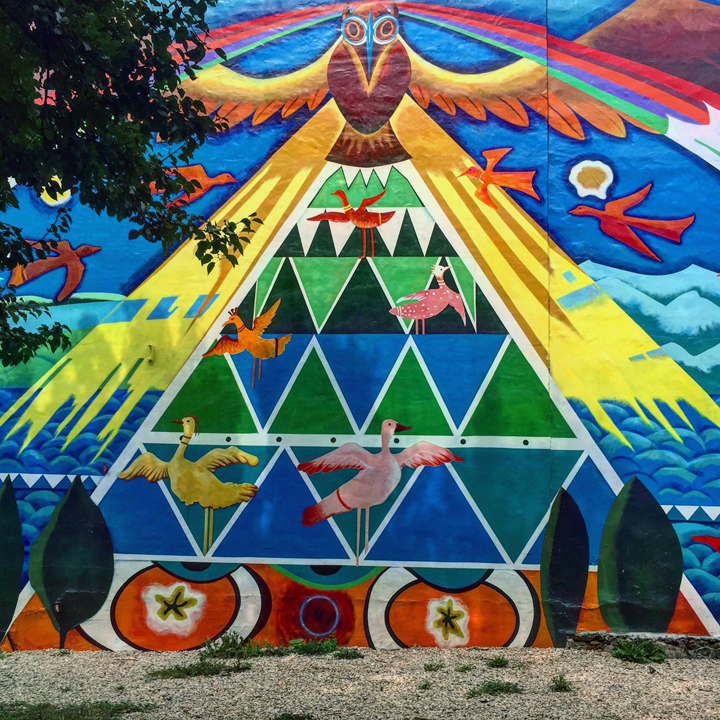
Ile Ife Park mural, designed by Lily Yeh & painted by Lily with neighborhood adults

Note: You can find out more about the Village of Arts and Humanities — located at 2544 Germantown Avenue in North Philly — here and how you can support its work here.  You can also read about The People’s Paper Co-op, a social justice and advocacy initiative incubated at The Village of Arts and Humanities working with formerly incarcerated individuals, here.
Photos and post by Lois Stavsky

{ 1 comment }

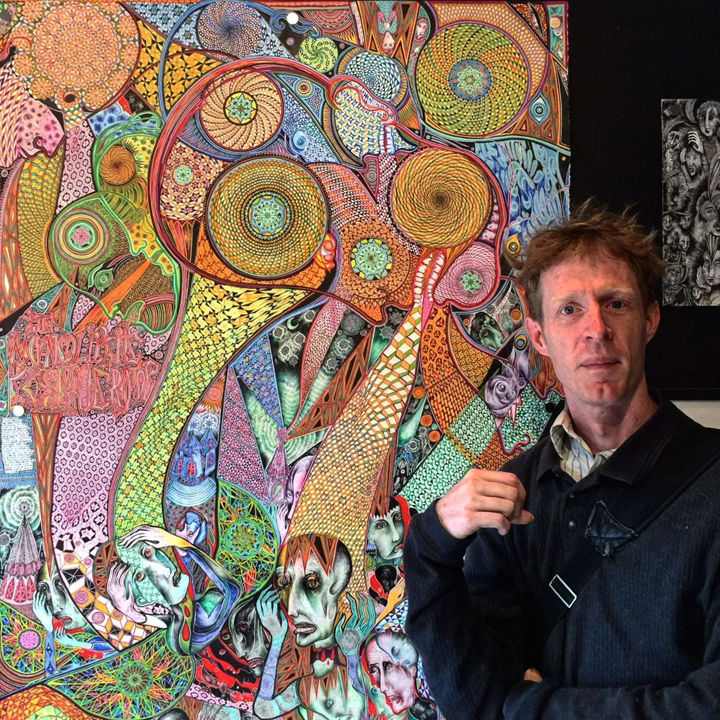
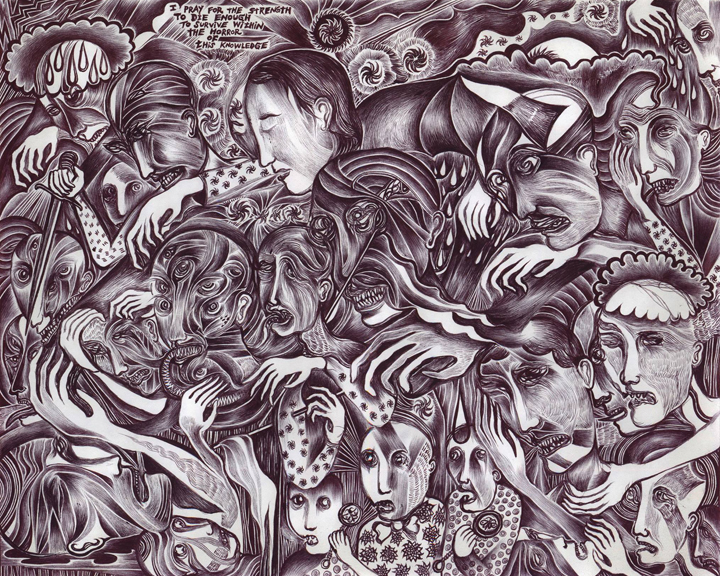
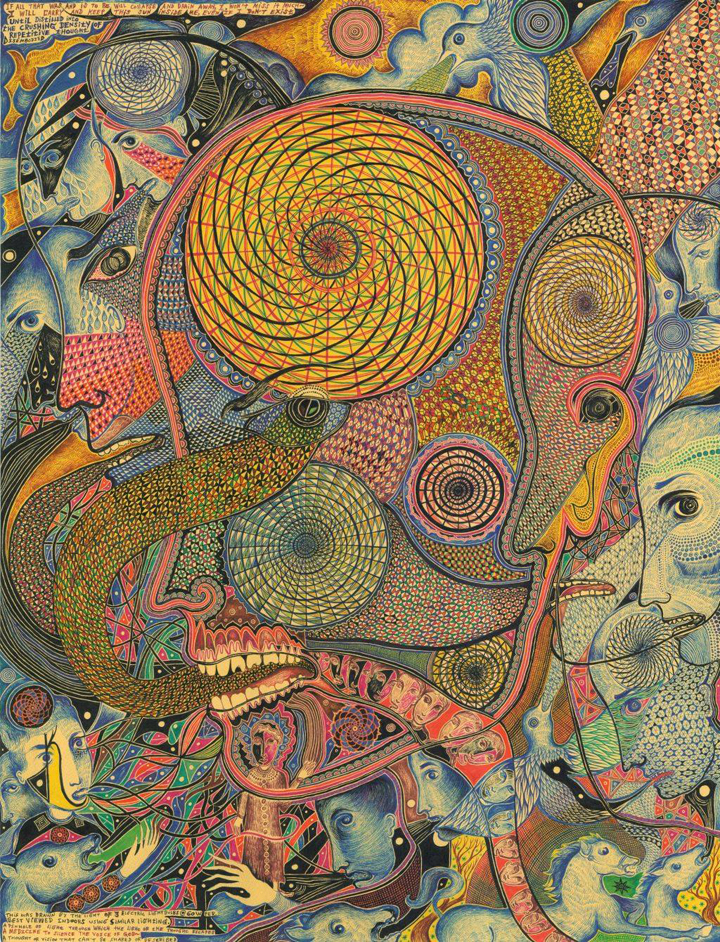
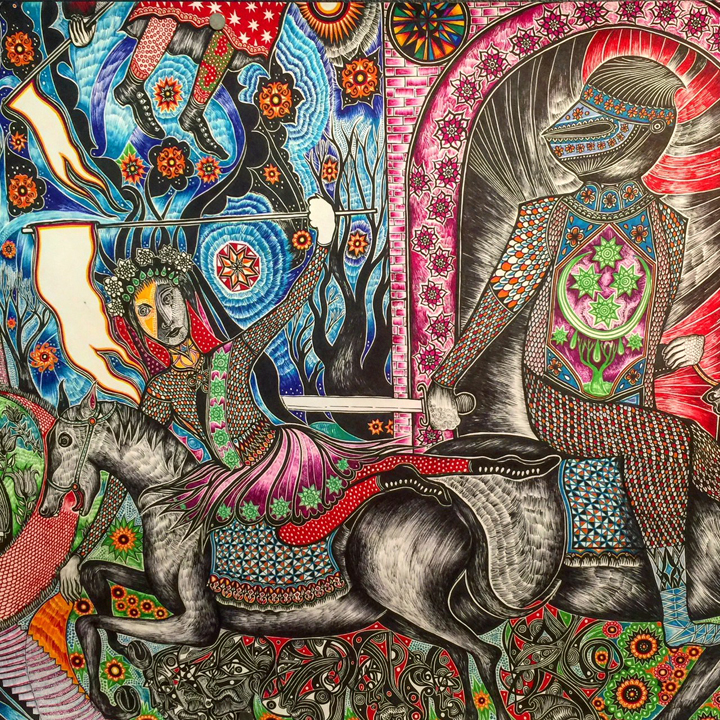
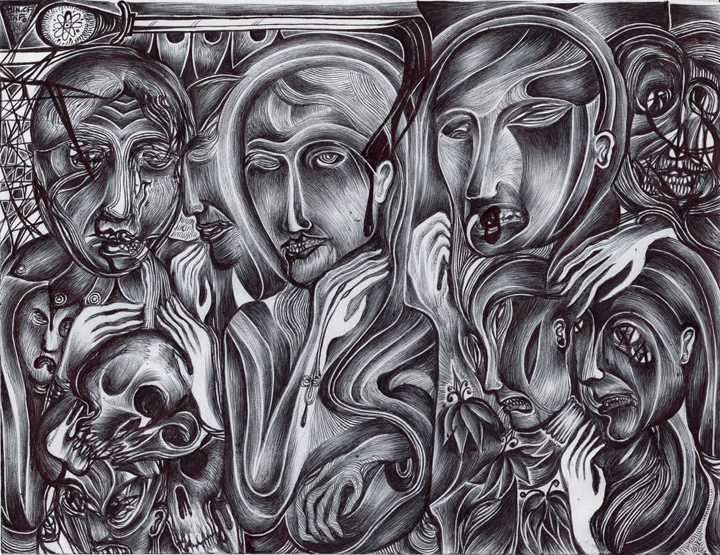
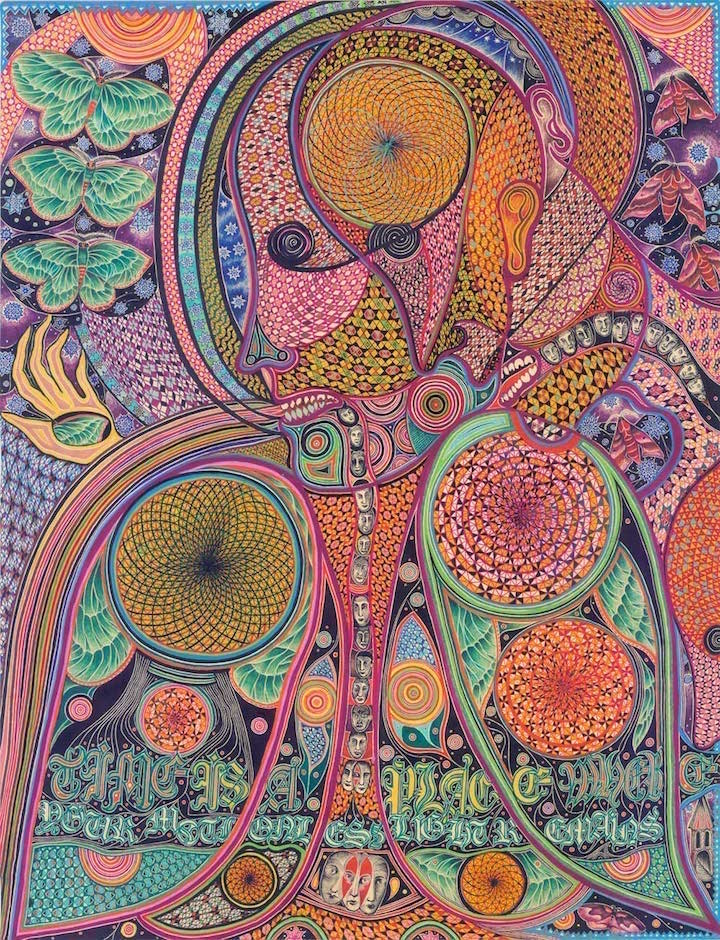
Based in Philadelphia, Justin Duerr is a self-taught visionary artist, musician and writer. As featured in the 2011 award-winning film Resurrect Dead: The Mystery of the Toynbee Tiles about his quest to uncover the enigma behind mysterious tiles that surfaced on the streets of Philadelphia and beyond, Justin Duerr is intriguingly thoughtful, inquisitive and passionate.

An interview with the artist – whom I discovered while he was installing his exhibit TIME’S FUNERAL at Magic Gardens in South Philly earlier this fall – follows:

When did you first begin drawing? And what inspired you at the time?

I was about seven. I had visited an exhibit of the Egyptian pharaoh Tutankhamun at the Metropolitan Museum in New York City. I began to draw then and think about language…words and text.

Can you tell us something about your distinct visionary aesthetic? Its roots?

I grew up in rural Pennsylvania, where my parents were in the greenhouse business. I was exposed early on to lots of different strains of Christianity from nearby folks. The Bible was the first book that I read. And in the 90’s, I became very curious about other texts – such as the Egyptian Book of the Dead and a range of occult books I had discovered in a trash bag. I remember, too, reading Hiroshima and the vivid nightmares that followed.

Any favorite artists? Artists who especially intrigue you?

I’ve spent the last few years researching the brilliant cartoonist Herbert E. Crowley. I came across his work around 2008 and I was instantly intrigued. Since almost nothing was known about his life or his work, I set out to uncover it. The result of my efforts is The Temple of Silence: Forgotten Works and Worlds of Herbert E. Crowley featuring 200 Crowley images, along with a 20,000-word biography of the artist. Another artist who fascinates me is Renee Leshner. She was a Philadelphia-based visionary artist who was a member of the The Coalition Ingenu Self-Taught Artists’ Collective.

What percentage of your time is devoted to art these days?

Whenever I can, I draw. It’s not about inspiration; it’s all about perspiration. It’s hard work, but I do it whenever I can. I can work for 12-15 hours at a time.

Are there any particular cultures or movements that have influenced you?

 Egyptian and various religious sects.

How has your art evolved through the years?

It just does. It’s a natural process. Sometimes I discover a new path.

Are you generally satisfied with your finished product? 

Yes! When it’s done!

How much time do you spend – on average – on one of your works?

Anywhere from three to six months. Smaller pieces often demand more time and labor than larger ones.

Which tools do you generally work with?

Highlighters, markers and pens…on paper that I can roll onto the floor and then back again to store.

Do you have a formal art education?

No! I was thrown out of art class. And when I was, I’d go to the gym and draw.

What are some of the other activities that engage you these days?

I write music and I sing; I have several shows coming up with my band Northern Liberties. I research and I write.

How does your family feel about your life as an artist?

They appreciate my art.

Is art the main source of your income?

It waxes and wanes. I also have a day job; I do house painting.

You’ve exhibited in quite a few venues. When did you begin to show your work?

My first exhibit was at Borders Bookstore in Philly back in 1996-97.

What do you see as the role of the artist in society?

Something in the universe is off kilter. This derailment is what the artist addresses – and, in some way, tries to fix.

Note: Justin’s current exhibit, TIME’S FUNERAL, ends tomorrow, Sunday, November 12, at Magic Gardens,1020 South Street in Philly. Justin will also be appearing tomorrow at the Philly Zine Fest at 4014 Walnut Street. You can follow Justin on Instagram here and purchase his artworks here.

Photos of images: 1, 3, 4 & 6 courtesy Justin Duerr; 2 & 5 Lois Stavsky; interview conducted and edited by Lois Stavsky

{ 2 comments }