≡ Menu

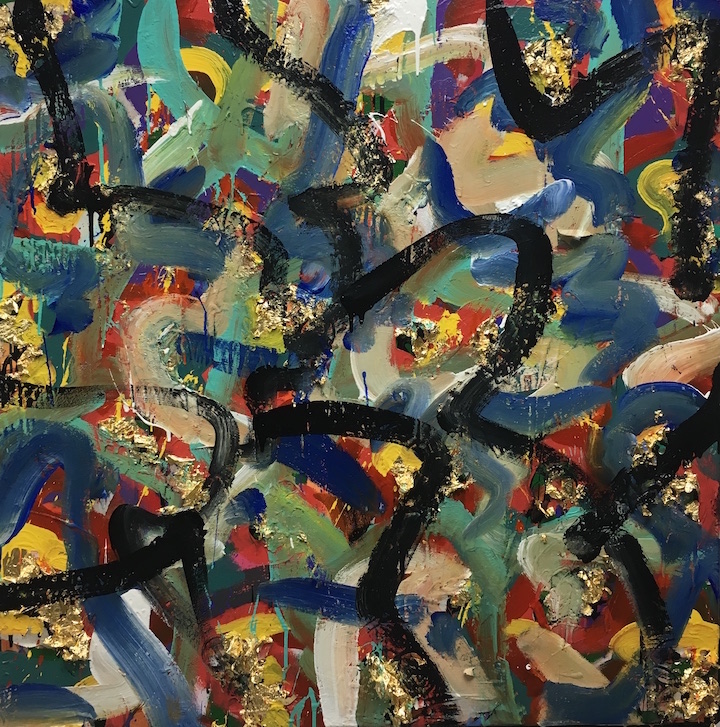
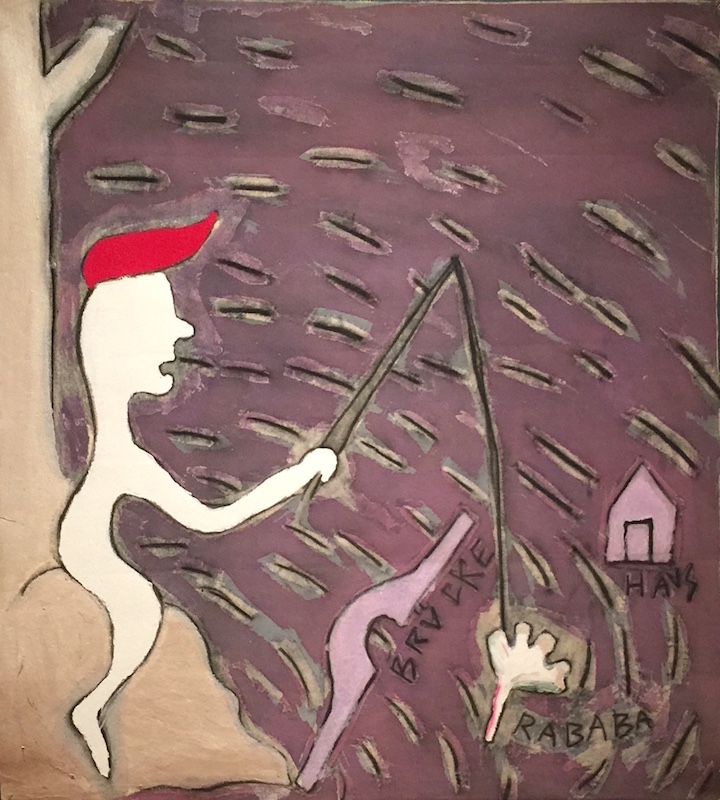
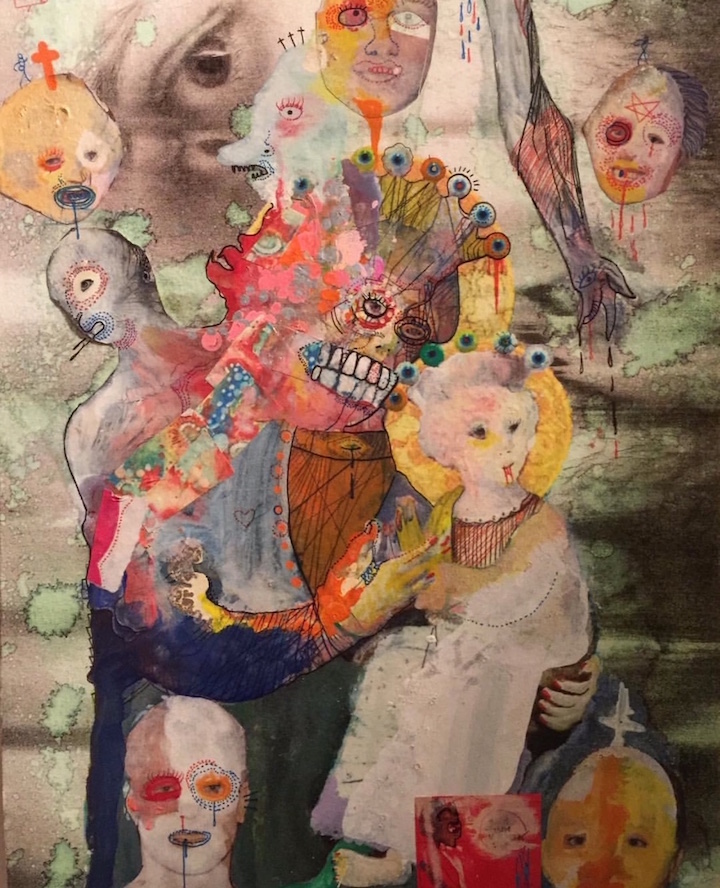
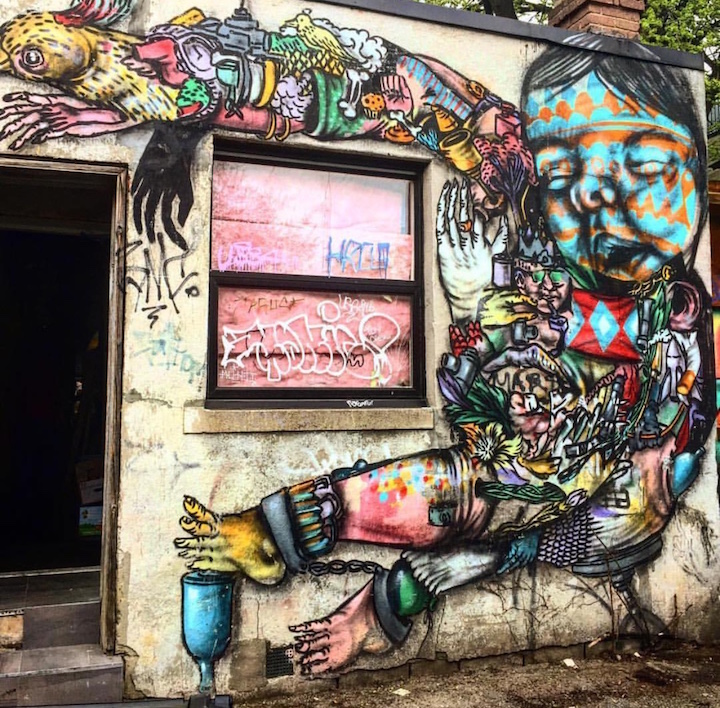
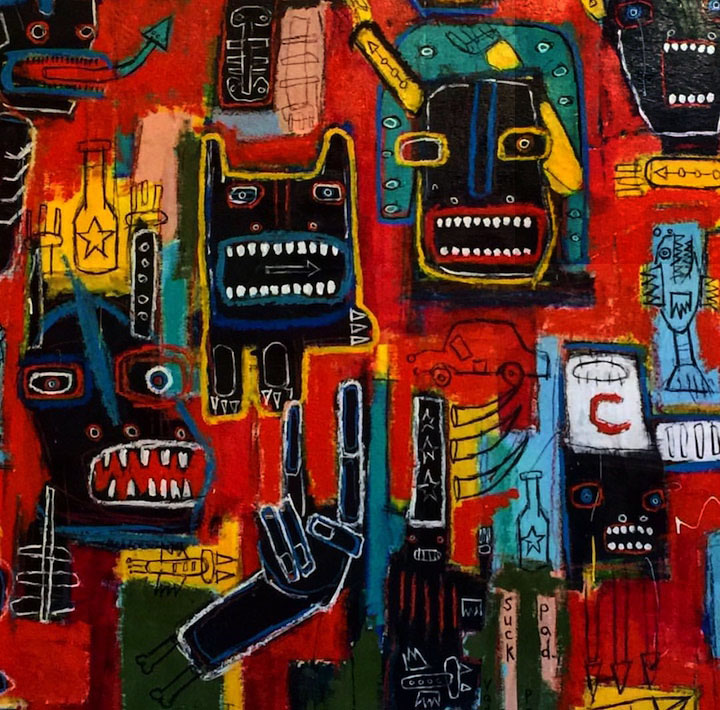
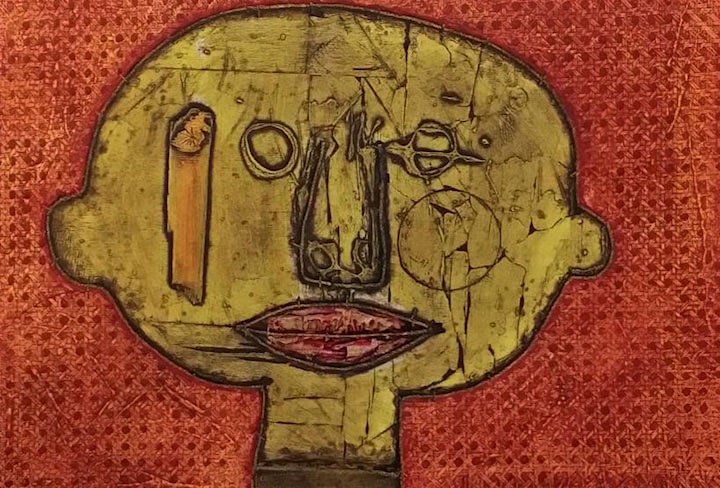
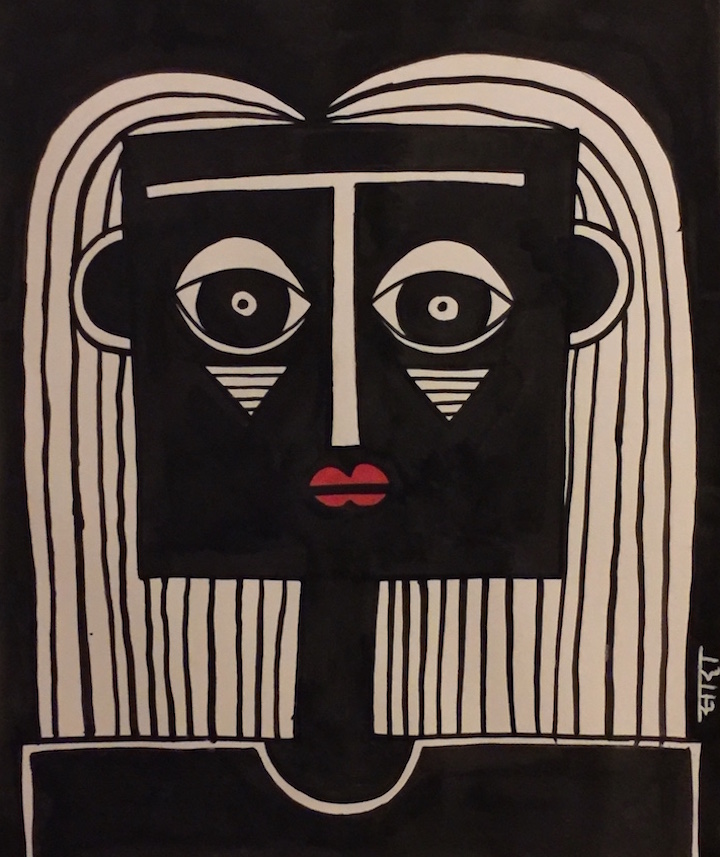
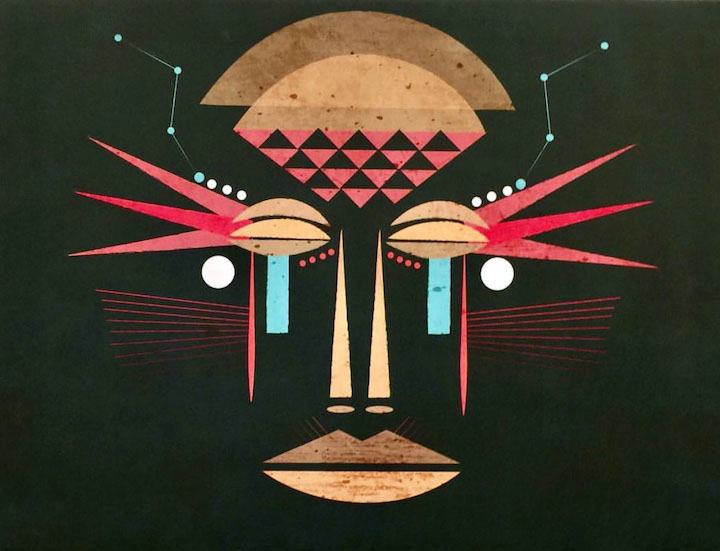
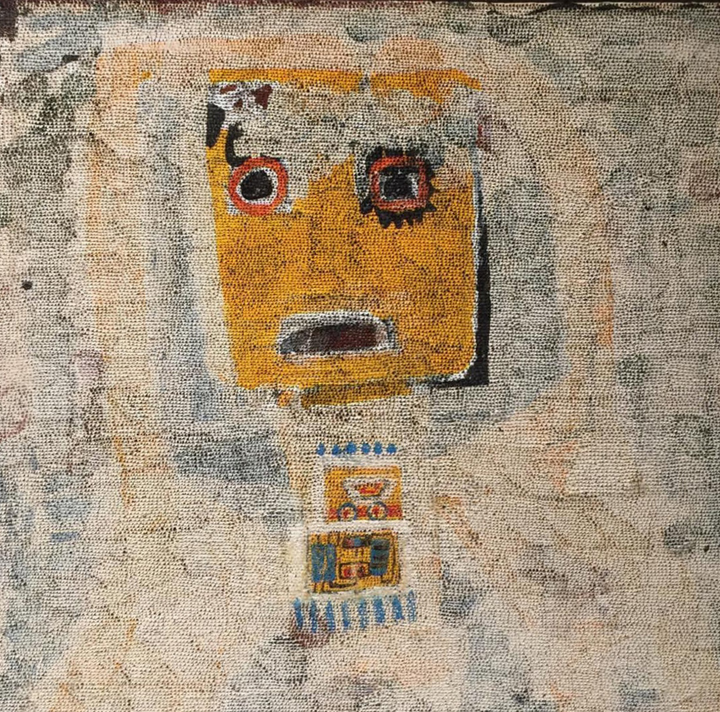
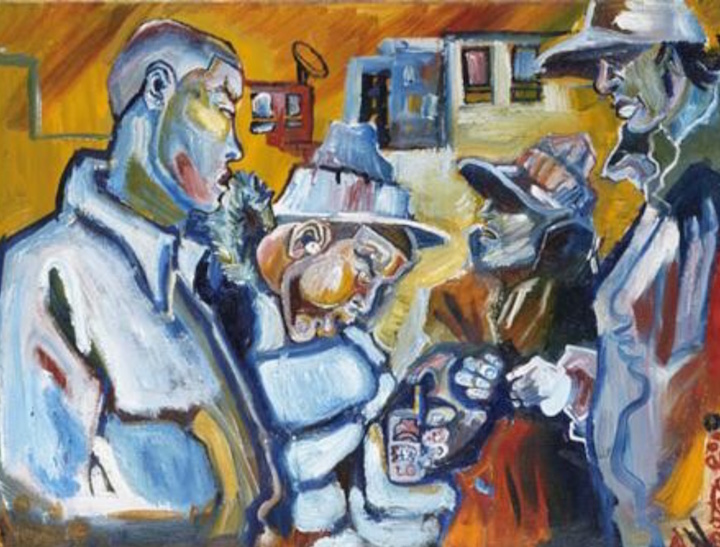
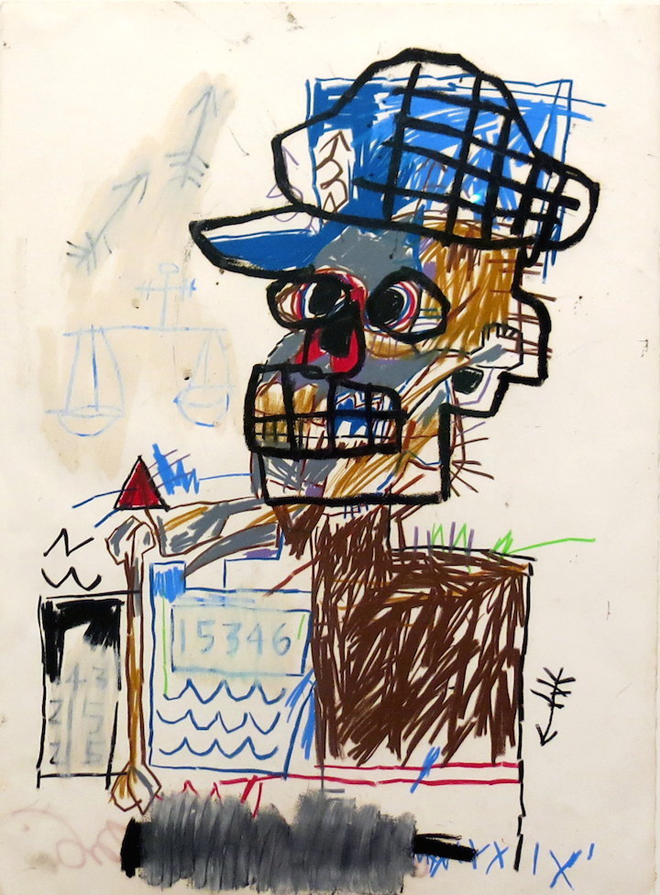
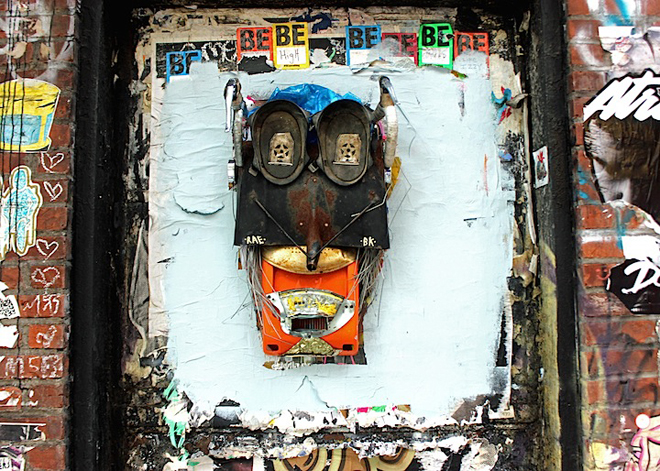
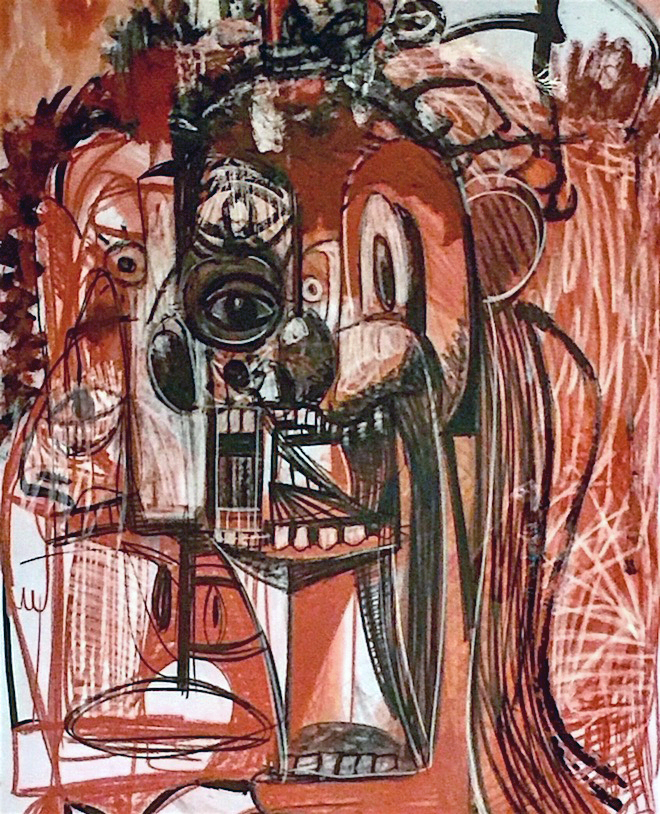
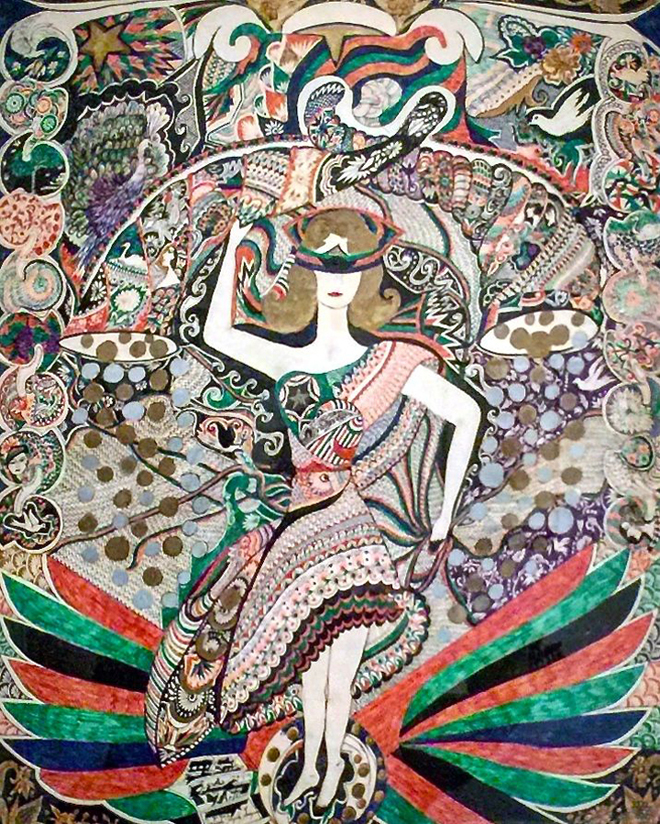
The image pictured above was painted by Washington, DC visual artist Matt Sesow.  What follows are several more artworks with a distinct outsider sensibility in the second of our ongoing series, Re-Imagining Faces.

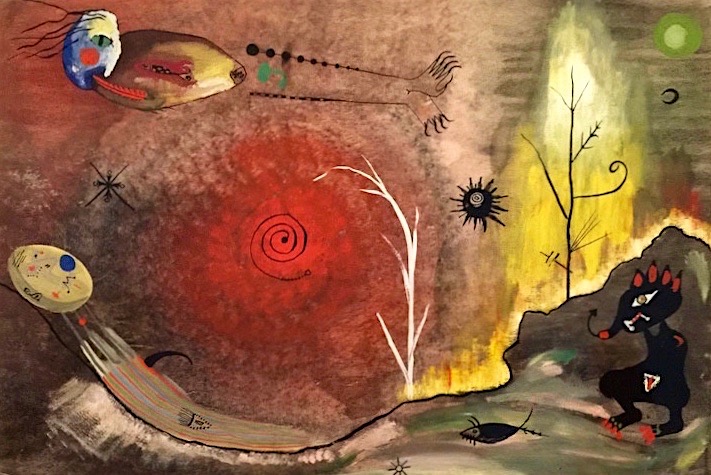
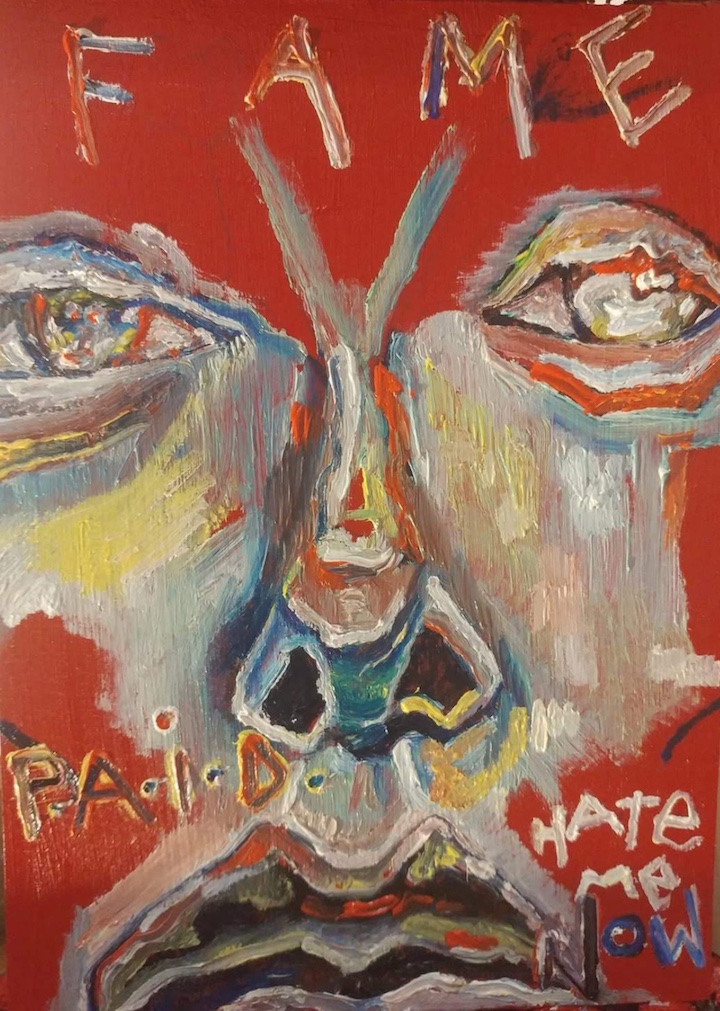
Cuban artist Eduardo Roca aka Choco

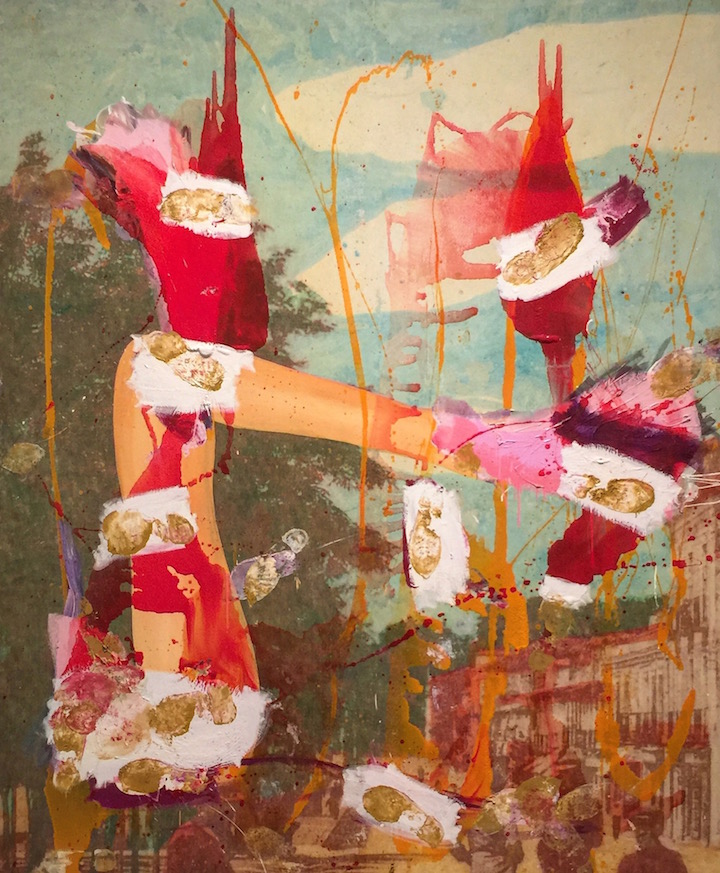
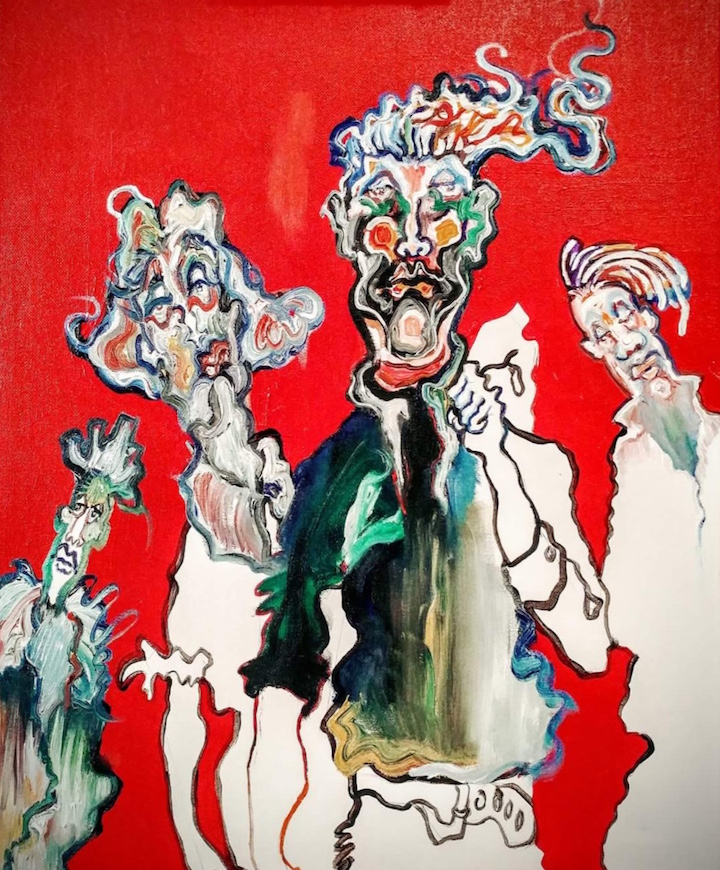
Brooklyn-based artist multi-disciplinary artist Sara Erenthal

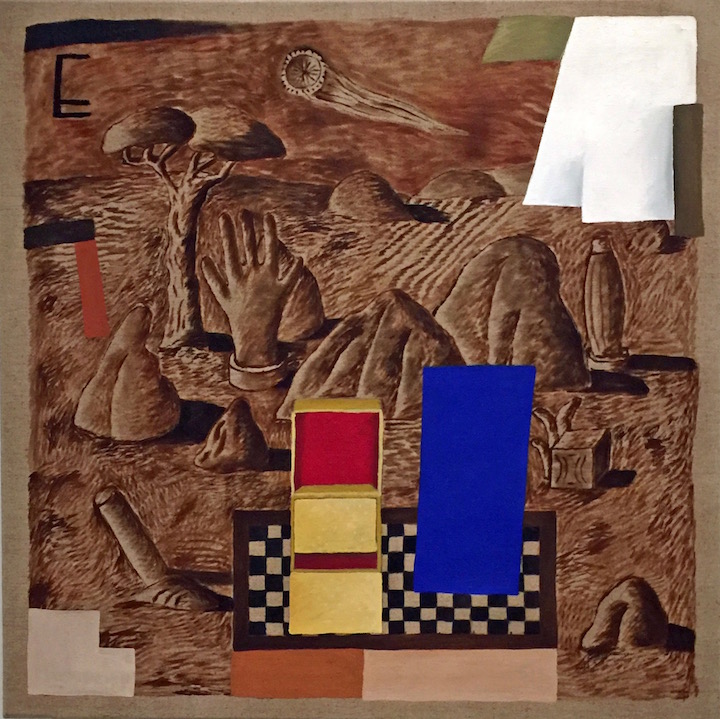
17-year old Atlanta-based Erin Chakalos

Paris-based African artist Afi Nayo

Photos of artworks: 1, 3-5 Lois Stavsky; 2 Tara Murray

{ 1 comment }

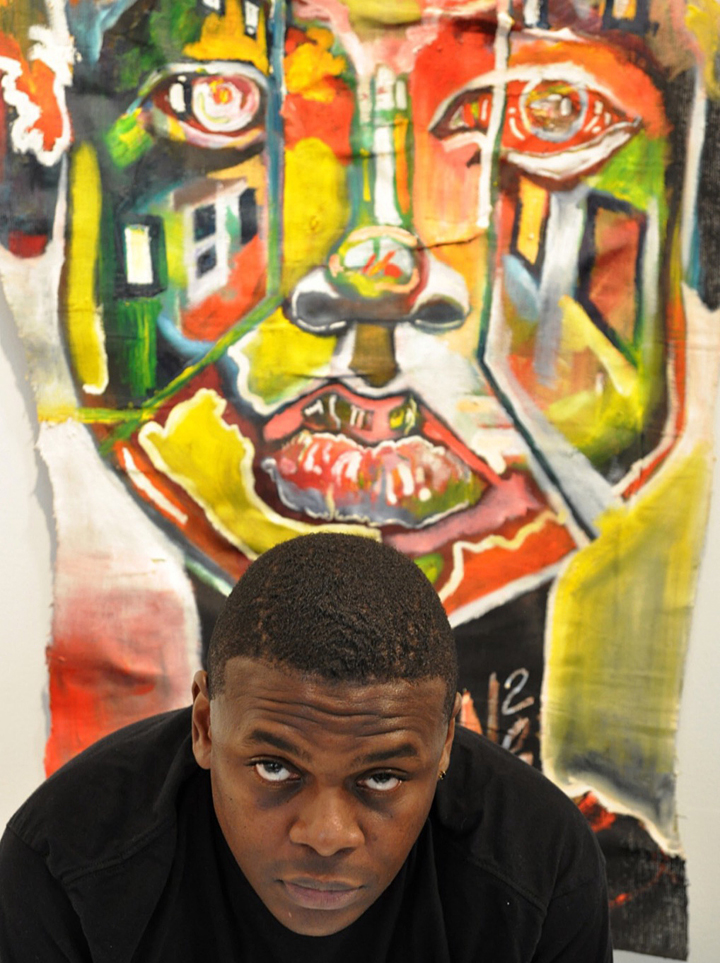
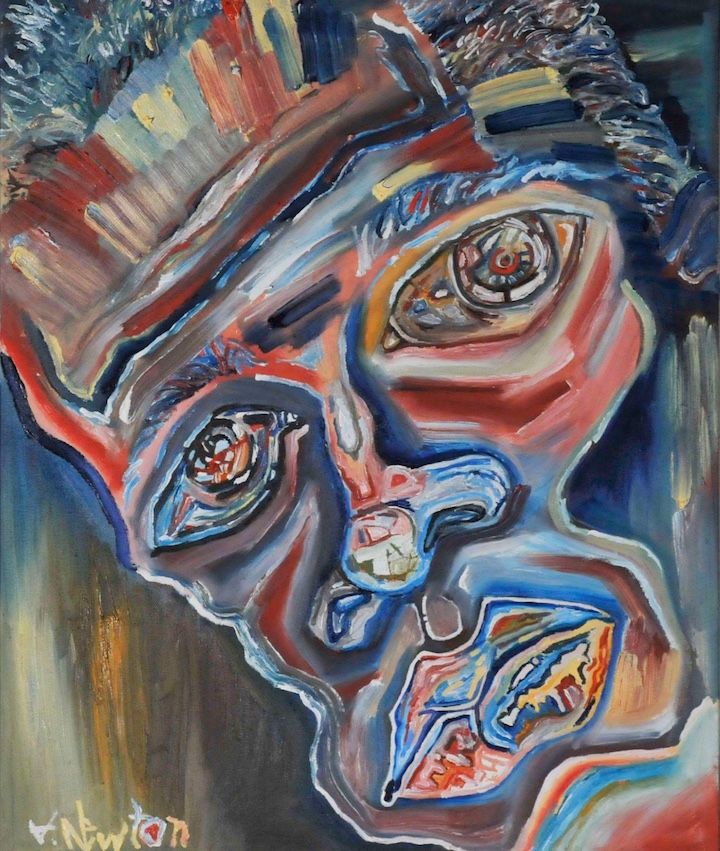
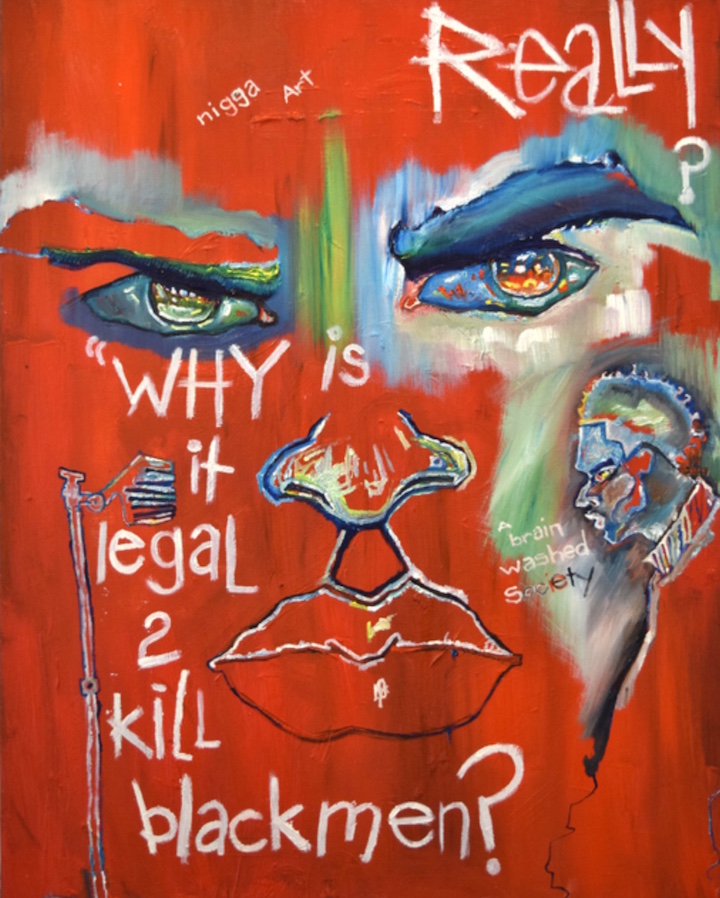
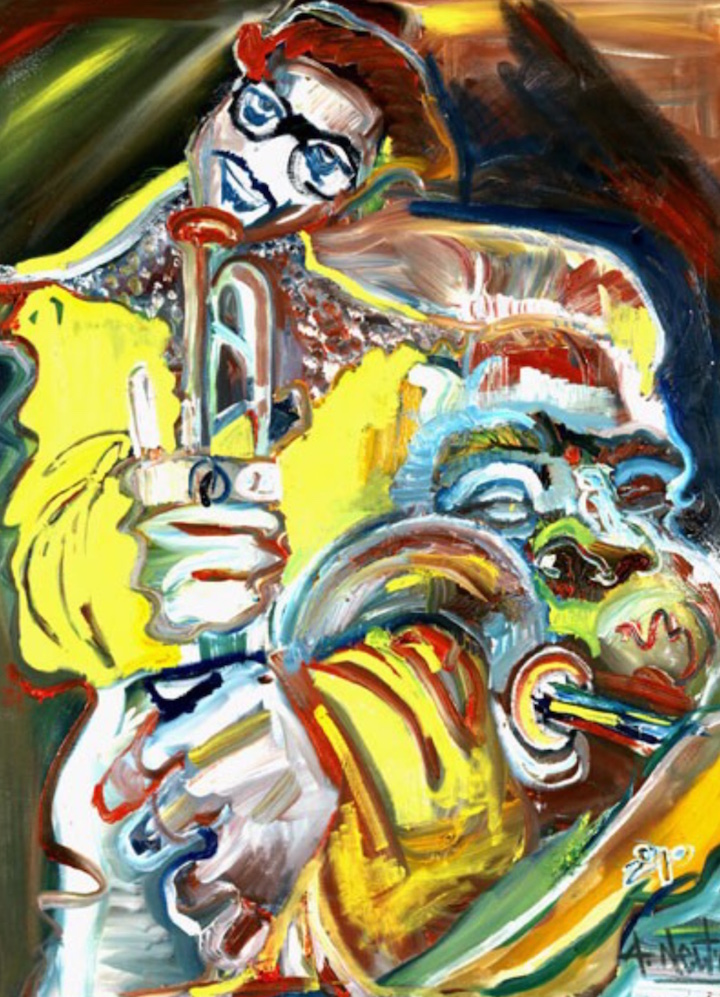
Working primarily with oil and acrylic, NYC-based Anthony Christopher Newton creates distinctly expressive portraits, reflecting his personal life and culture. We discovered his talents at Fountain House Gallery and recently had the opportunity to interview him.

When did you first start drawing? And what did you draw at the time?

I started when I was about 7 or 8 years old. I began drawing action figures like G.I. Joe with colored pencils.

What prompted you to?

I was living with my family in Germany, where my stepfather was serving in the US Army. We were going through difficult times, and I was alone a lot. Drawing helped me express my feelings. It was a natural drive, and it was fun!

Who are some of your favorite artists?

Among then are: Basquiat, Michelangelo and Lucian Freud.

Have you any particular cultural influences?

Living in Germany for several years gave me a global perspective. And attending FIT here in NYC introduced me to my own African-American culture, which has had a huge impact on my art.

How has your work evolved within the past few years?

My tools have changed. I went from using colored pencils to graphite to acrylic to oil. And now I’m back to acrylic.

Are you generally satisfied with your finished piece?

It’s got to be really good for me to be satisfied with it. I want to feel that it’s “gallery material.”

We’ve seen your work here at Fountain House. Have you exhibited elsewhere?

Yes. Among the places I’ve exhibited here in NYC are: The Jadite Gallery here in Hell’s Kitchen; Cuchifritos on the Lower East Side and Chashama. My work was also included in an exhibition at the Education and Research Center of the Museum of Modern Art.

How important is the viewer’s response to you? Does it matter?

Yes! It is important because I learn from it.

How has your family responded to your life as an artist?

My mother does not think of art as “a safe career.” But my dad was supportive and would come to my shows.

How long do you usually spend on a piece?

It ranges from three hours to about two months — depending on the level of difficulty.

How do you know when it’s finished?

I look at it about 10,000 times!

What percentage of your time is devoted to art?

As much as possible.

Have you a favorite work setting?

I like painting in the Fountain House studio space in LIC, because I can get input from the staff.

Have you any preferred media?

Oils and acrylic; but I enjoy working in all media.

Have you a formal art education?

Yes, I studied Illustration at FIT.

We met you at the Fountain House Gallery. How did you connect to Fountain House? And how have your experiences at Fountain House impacted you?

A girlfriend who had salvaged me from the streets introduced me to Fountain House. And my experiences at Fountain House have positively impacted every aspect of my life. Fountain House has helped me view myself as a serious artist. It has also enabled me to confront and deal with my schizophrenia.

Do you feel that your mental state has influenced your art?

Definitely! People with a diagnosis of the mind have a particular psychological viewpoint. And creating art is an important and necessary outlet for its expression. I couldn’t imagine my life without art.

What do you see as your role — as an artist — is in society?

It is, primarily, to bring something positive to my community. To let people know and feel that I care.

What’s ahead?

I want to continue to feel comfortable with painting and show my work in more galleries to a wider audience.

Note: To view more artworks by Anthony and for info on several featured here, check out the following: Fountain House GalleryArtsy and Instagram.

Interview conducted by Bonnie Astor and edited by Lois Stavsky; all images courtesy of the artist.

{ 1 comment }

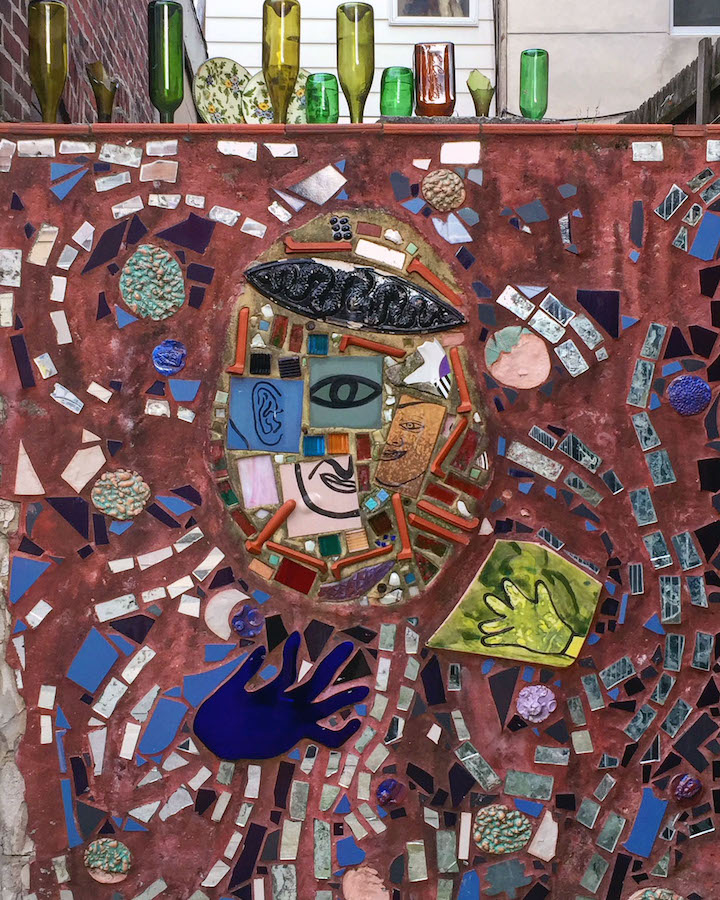
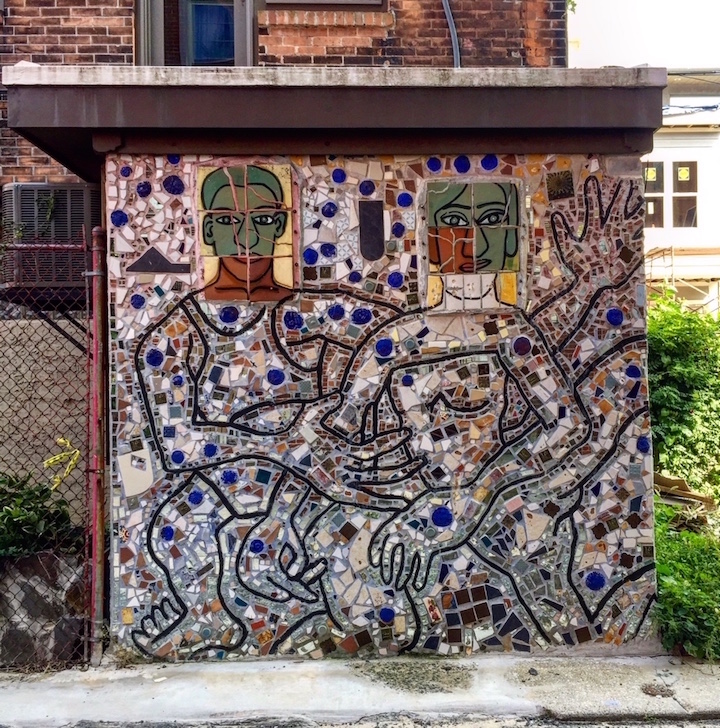
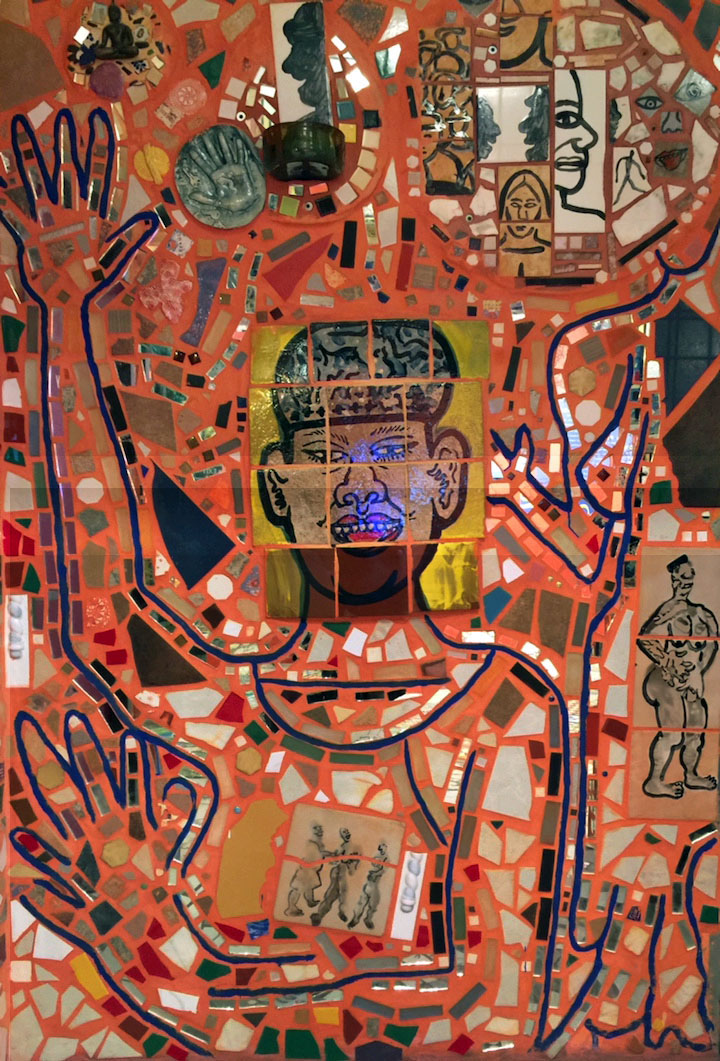
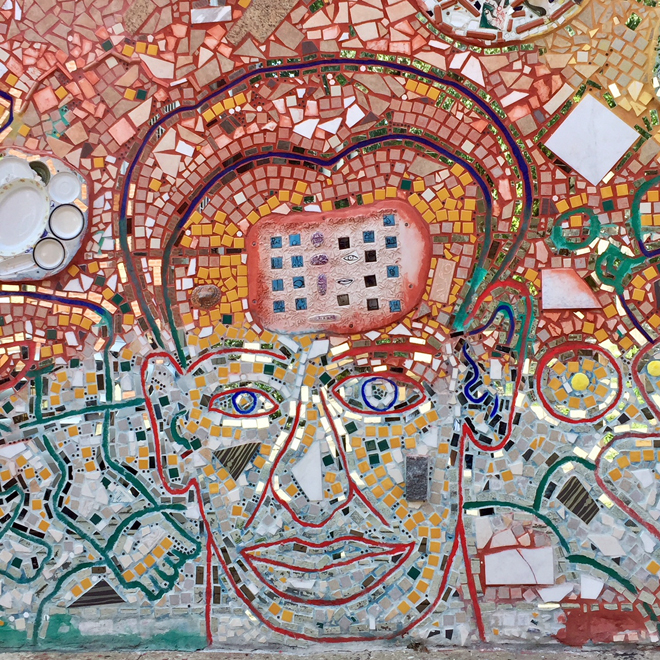
While on view at Philadelphia’s Magic Gardens, Isaiah Zagar‘s mesmerizing folksy aesthetic can also be seen 24/7 on the streets and alleyways on and off South Street. The tile mosaic pictured above is on South Leithgow Street. Several more follow:

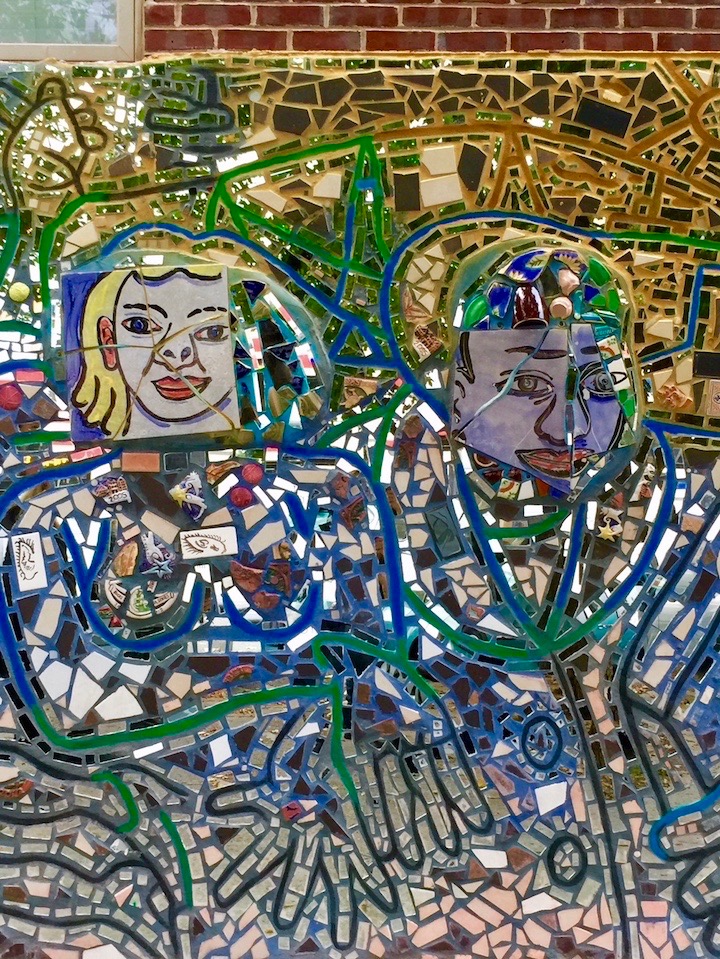
A couple on South 9th Street

Another couple on South 11th Street

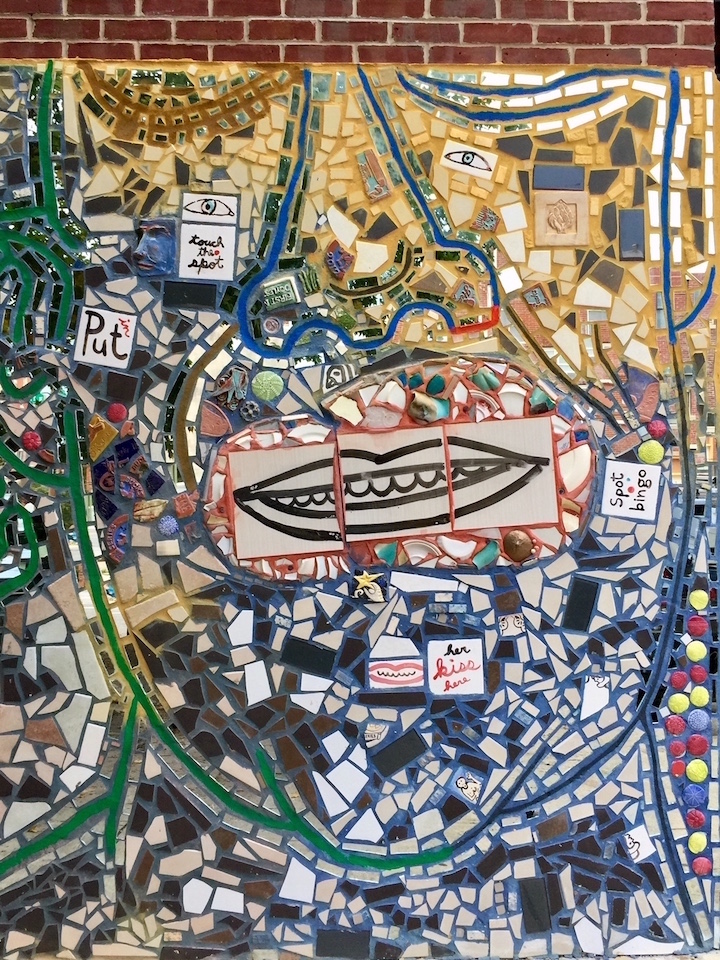
One of Isaiah’s many faces — this one on Christian Street

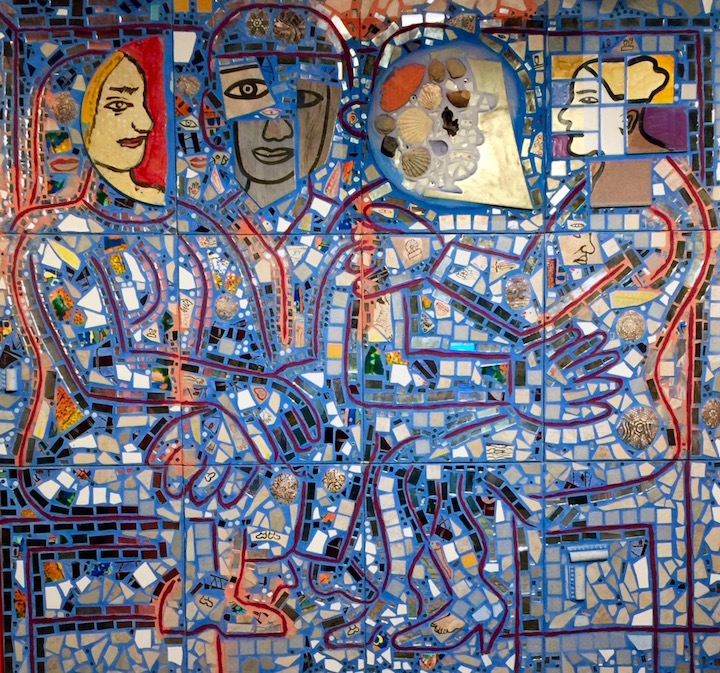
Fun on South Leithgow Street

Photos by Lois Stavsky

{ 0 comments }

Isaiah Zagar at Philadelphia’s Magic Gardens

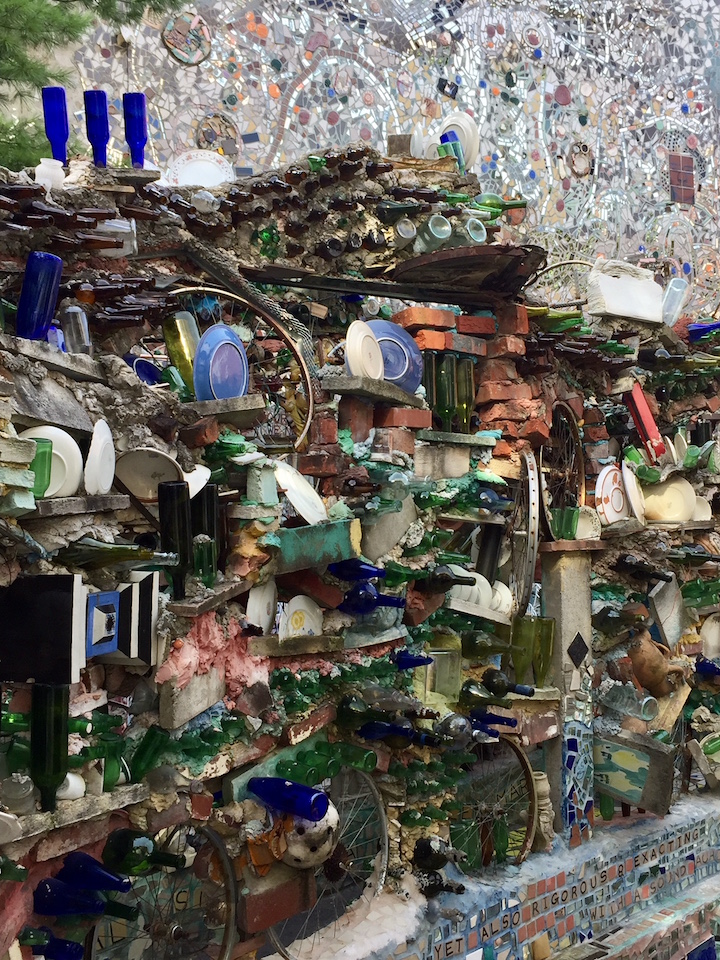
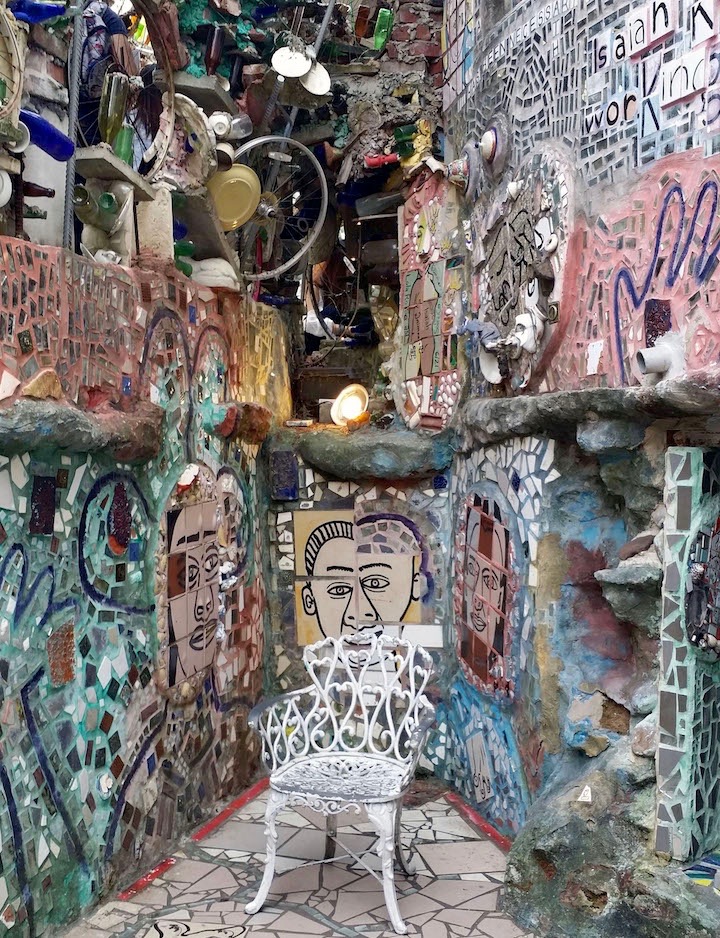
A graduate of Pratt University who has adapted the aesthetics of folk art, Isaiah Zagar refers to himself as an outsider/insider artist. With thousands of tiles, glass bottles, plates, bicycle wheels and an array of found objects — some from his travels abroad, he has transformed ordinary public spaces into tantalizing open museums. In Philadelphia, which this Brooklyn native has called home since 1969, hundreds of his murals grace streets, alleyways, doorways and interior spots. And working with members of the community and folks he’s met along the way, he has created a magical, inspirational oasis at a once-abandoned lot that has evolved into a beguiling complex of interwoven spaces. Known as Philadelphia’s Magic Gardens, it serves not only as a showcase for Zagar’s creative visions, but as a gallery and educational center, as well. The image above was  captured this past weekend at the Magic Gardens. What follows are several others recently seen in this extraordinary space:

A mosaic seen inside the Magic Gardens characteristic of the artist’s public work

A segment from an assemblage among the complex of open interwoven spaces

Another close-up from this mesmerizing open air complex

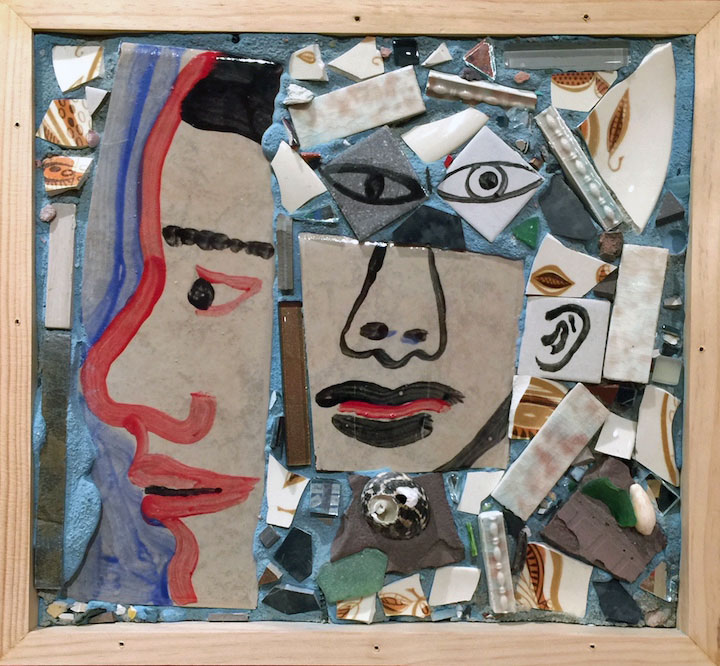
And continuing through Sunday, February 25 is Lava Flow: New Mosaics by Isaiah Zagar, an exhibit of the artist’s new smaller works in the gallery, along with a short documentary about the artists’ life.  What follows is one of many small affordable works on exhibit:

Two Faces, 16″ x 15″, 2017

Photo credits: 1-3 & 5 Lois Stavsky; 4 Tara Murray

Coming up: Isaiah Zagar on the streets of South Philly

{ 0 comments }

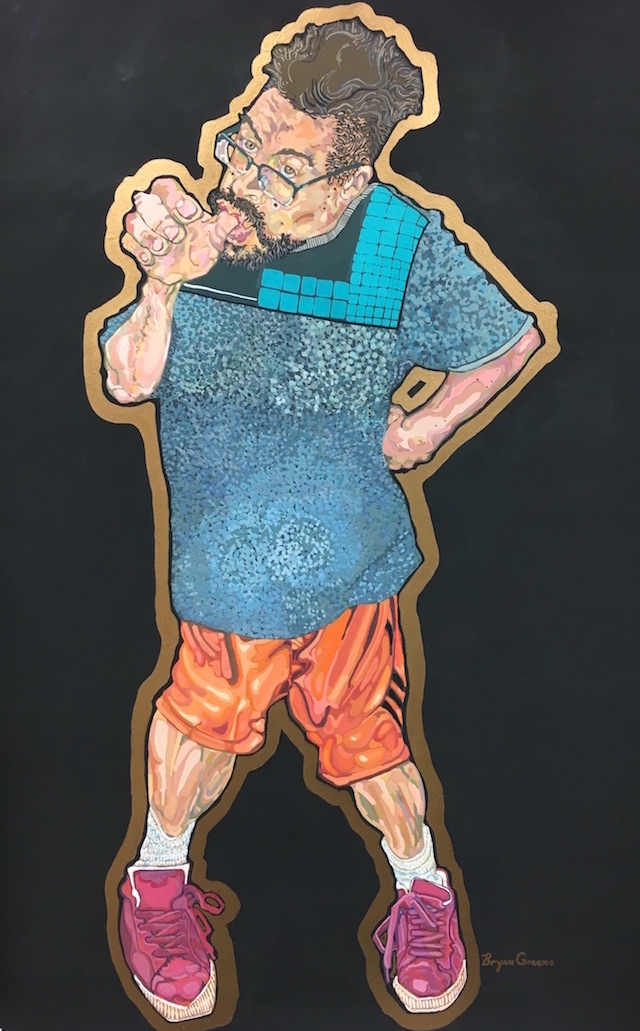
An active member of the Fountain House community, Bryan Michael Greene is a gifted artist with an intriguingly diverse body of work. We were delighted to have the opportunity to interview him:

When did you first start drawing?

I vividly remember drawing circles on a chalkboard back in 1980 at the Montessori school I had attended. I was seven at the time.

And why did you continue?

It got me recognition from my classmates, and I loved doing it. It was exciting! Every other kid wanted to be a doctor or a lawyer. And I was thinking, “I’ll do this.”

Had you a favorite subject back then?

My mom had bought me a book on how to draw monsters. And I was obsessed with dragons.

Have you a formal art education?

Yes. I have a BFA in Fine Art and an MFA in Computer Art from the School of Visual Arts.
Who are some of your favorite artists?

Among them are: Chuck Close, Basquiat, Lucian Freud, Jacob Lawrence, Cecily Brown, Fairfield Porter, Lee KrasnerJoan Mitchell and Jack Whitten, who was my teacher at SVA.

Have you any particular cultural influences?

Not consciously, but my mother is German-Ukrainian and my father is African American.

How has your work evolved within the past few years?

I feel that I have found a style that I am comfortable with, but I am constantly trying to get better. I find myself more detail-oriented and process-driven.

Are you generally satisfied with your finished piece?

No! I often try to destroy it. I always find something I need to improve.
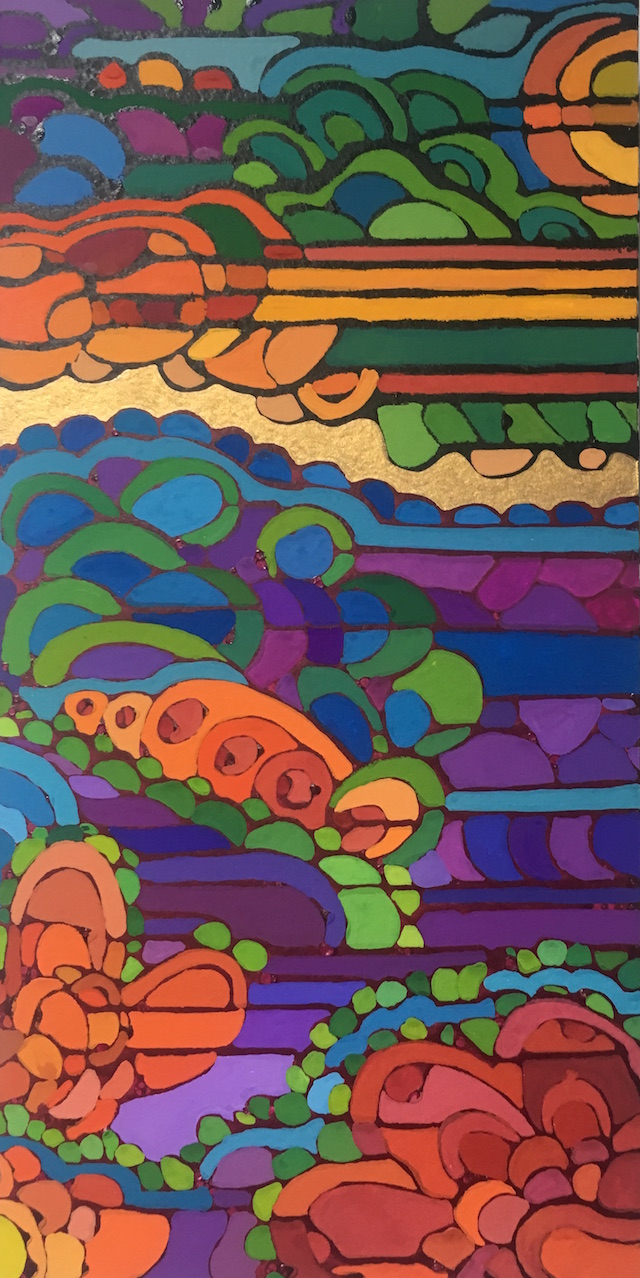
Have you any favorite piece that you’ve created?

Yes! I like my self-portrait. I like its sarcastic tone!

Have you any preferred media?

I like working with gouache.

How long do you usually spend on a piece?

It varies, depending on how close I feel it is to being finished.

What percentage of your time is devoted to art?

Now that I am working in an art store, I can only devote about four hours a day to it.
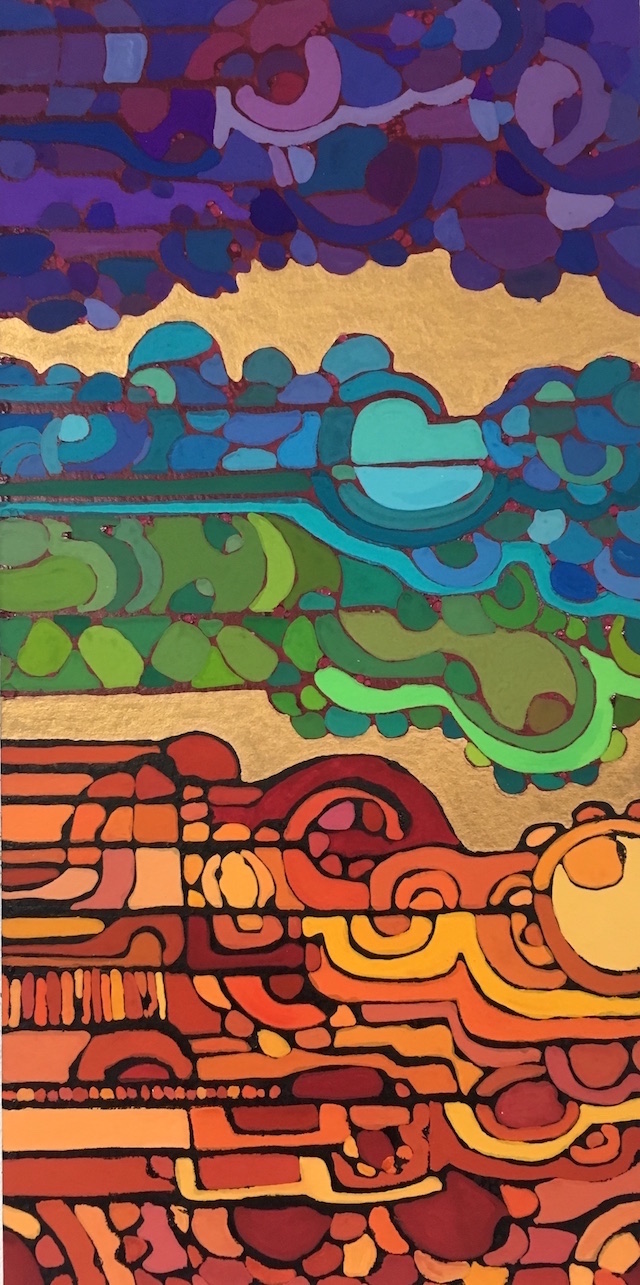
Have you any favorite setting to paint?

I love working outdoors…taking my easel to a public spot.

Have you any other particular passions?

Yes! I love fishing, which I do from our house in Montauk.

Where are you headed?

I am focusing now on small landscape paintings.
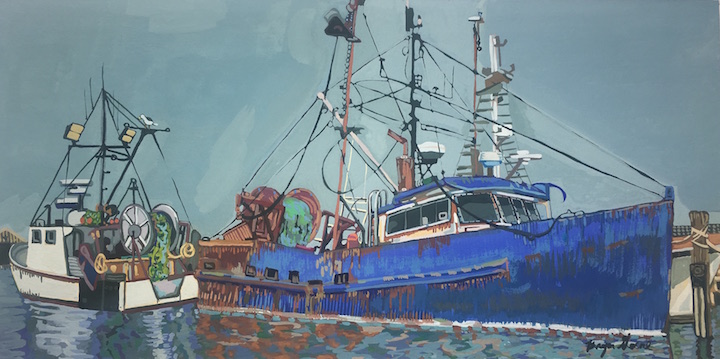
We discovered your talents at the Fountain House Gallery. How did you connect to Fountain House?

I was introduced to Fountain House by a friend Gail Freed, who is an art therapist and artist. Fountain House Gallery has helped me make an entry into a very competitive and humbling community, the New York Art Scene. Thanks to Ariel Willmott and Amanda Suarez, my artistic life has taken its first baby steps.

And how has this connection with Fountain House impacted you personally?

Fountain House has provided me with the platform to grow and understand my schizophrenia on a personal level. Not everything I experience is real. Things I hear are not always coming from outside my mind. The real and unreal are now definable. I can realize what is a symptom or hallucination.

Do you feel that your schizophrenia has affected your art? If so, in what ways?

I do. Schizophrenia is a confusing and distracting disability.  I find I don’t focus like I used to. I focus in a different way now. Instead of brush stroke by brush stroke or mark by mark, I make a plan how to attack the project one studio session at a time. Maybe that’s a good thing. To be able to have a goal for the day and reach it is rewarding

Have you exhibited your work in other settings, in addition to Fountain House Gallery?

Yes, I’ve shown in several galleries including Ashawagh Hall in in East Hampton, The White Room Gallery in Bridgehampton, The Blue Door Gallery in Yonkers and The Greenpoint Gallery in Brooklyn.

What do you see as your role as an artist?

Perhaps to alter reality. The artist’s role is a complicated one.

All images courtesy of the artist: 1 Self Portrait; 2 Portrait of Karen Gormandy; 3, 4 & 6 Abstracts & 5 Boat

Note: You can contact the artist directly via his website and follow him on Instagram here. Several of the Bryan Michael Greene‘s works are, also, available for purchase through Artsy

Interview conducted by Bonnie Astor and edited by Lois Stavsky

{ 0 comments }

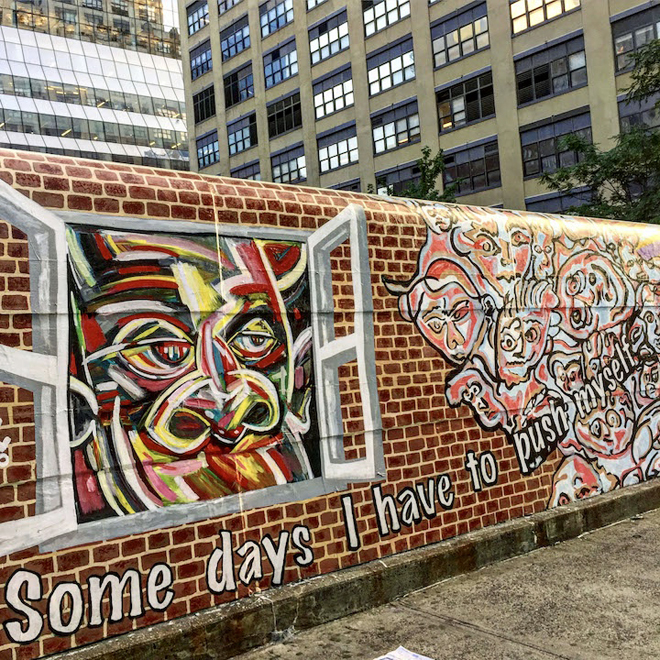
Pictured above is a close-up from a huge mural painted by members of Fountain House and the Hells Kitchen community with lead artist Andrew Frank Baer. The face on the left is the work of Fountain House artist Anthony Newton. What follows are several more faces, fashioned by outsider artists:

Philadelphia-based Isaiah Zagar

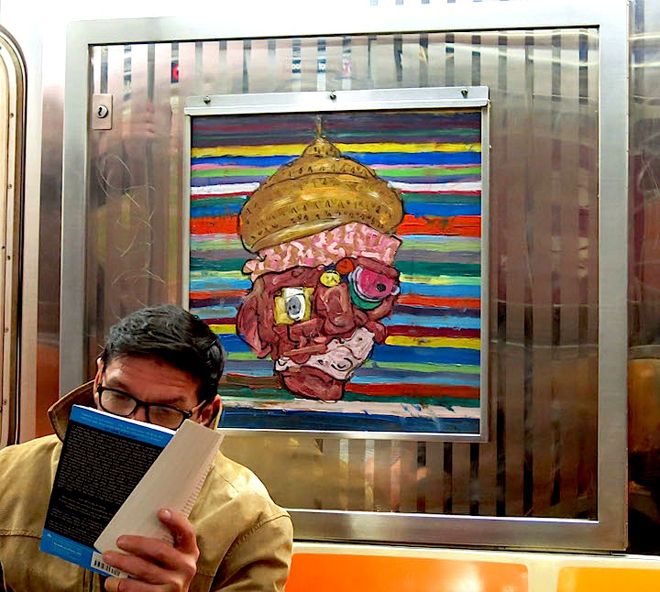
Yonkers-based Michael Cuomo’s artwork riding the NYC subway with unidentified commuter

The legendary Jean-Michel Basquiat

Brooklyn-based RAE

Contemporary master George Condo

Photos of artworks by Lois Stavsky

{ 0 comments }

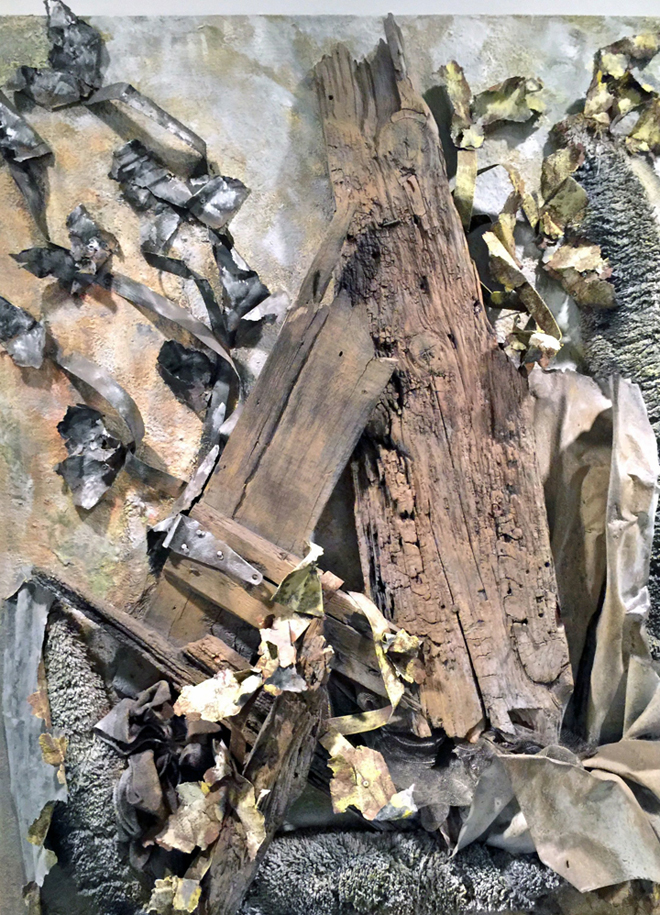
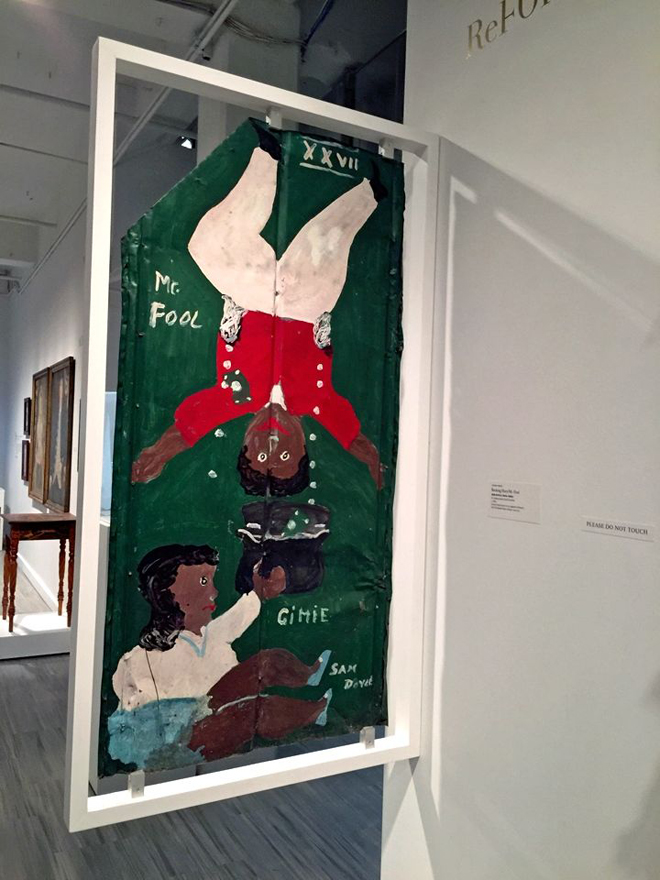
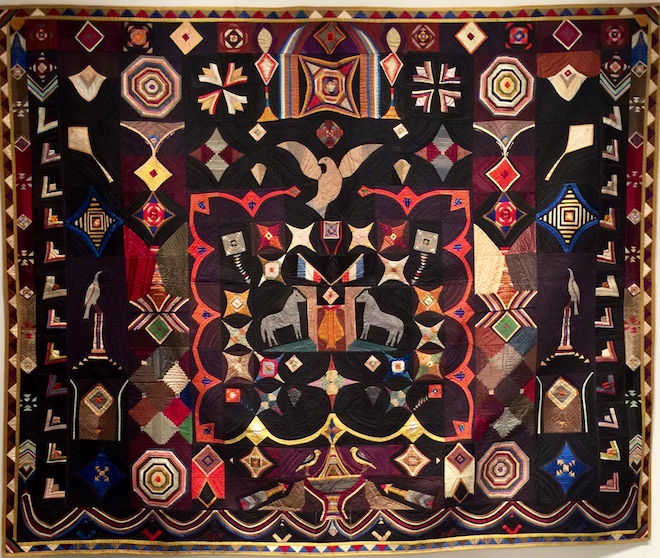
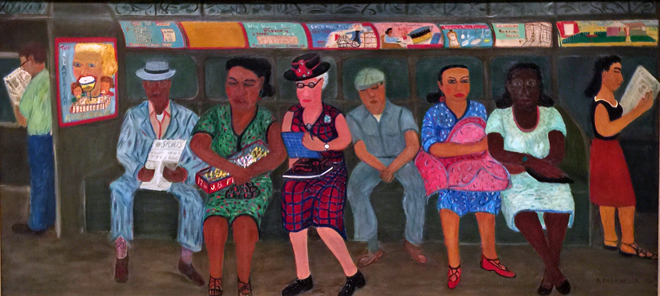
A diverse selection of iconic images from the landmark exhibition, Self-Taught Genius: Treasures from the American Folk Art Museum  — which had toured nationally from 2014 to 2017 — is now on view at the new Self-Taught Genius Gallery in Long Island City.

Co-curated by Stacy C. Hollander and Dr. Valérie Rousseau of the American Folk Art Museum, Highlights from Self-Taught Genius  opened to the public on September 27 and remains on view through January 8. The image featured above is the work of self-taught Mexican artist Consuelo “Chelo” González Amézcua, who had immigrated to the United States as a young child in 1913. Several more images follow:

Pioneering African-American artist Thornton Dial Sr, Birds Got to Have Somewhere to Roost, (large segment of larger work) wood, carpet scraps, corrugated tin, burlap, nails and enamel on wood, 2012 

Southern African-American artist Sam Doyle, Mr. Fool, Enamel house paint on corrugated roofing tin, c 1983

Carl Klewicke, Original Design Quilt, Pieced silk, faille, taffeta and satin, c.1907

Socially conscious, immigrant artist Ralph Fasanella, Subway Riders, Oil on canvas, 1950

Located at 47-29 32nd Place in Long Island City, the Self-Taught Genius Gallery is open Monday through Thursday, 11 AM to 5 PM. Admission is free.

{ 0 comments }

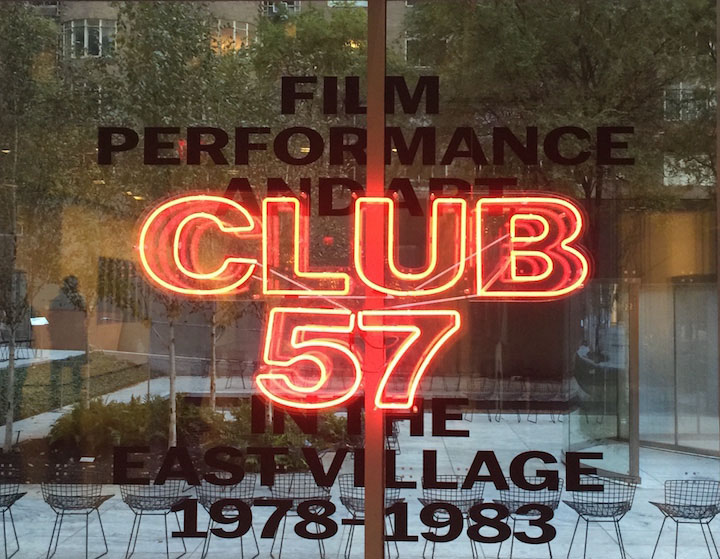
Located at 57 St. Mark’s Place in the basement of the Holy Cross Polish National Church during the late 70’s and early 80’s, Club 57 was a hub of unorthodox creativity. Home to an array of visual artists, performance artists and musicians on the fringe of the art world, it epitomized the spirit of the East Village counterculture prevalent at that time. Among those it attracted were several disillusioned School of Visual Arts undergraduates, including Keith Haring, Kenny Scharf and Frank Holliday.

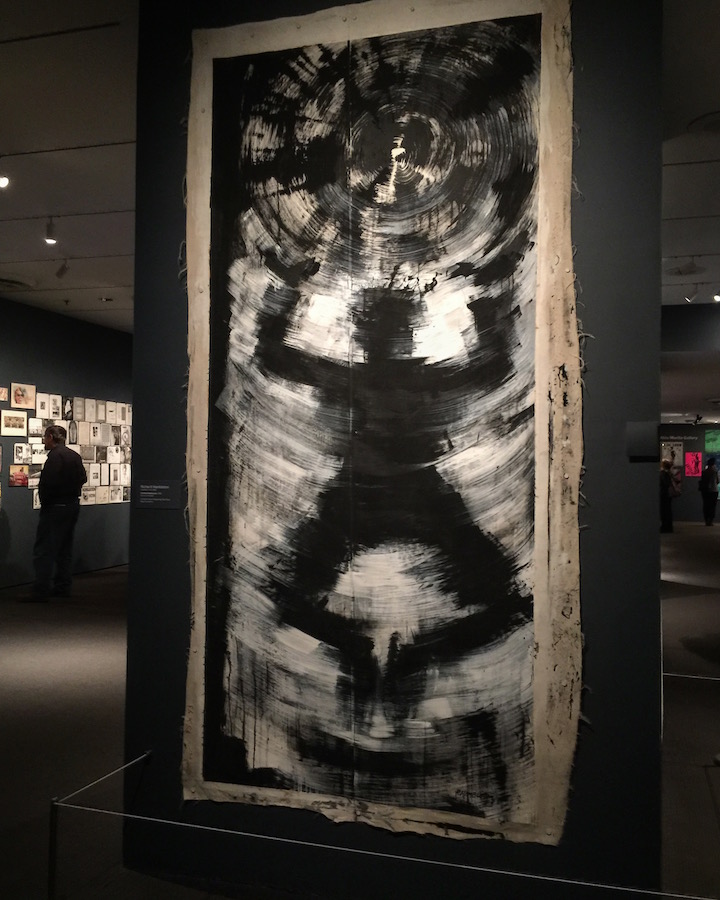
Many of the visual artists who had exhibited at Club 57 have since achieved recognition within the art establishment. Several key ones have died, and others remain largely unrecognized. “Club 57: Film, Performance, and Art in the East Village, 1978–1983” — curated by Ron Magliozzi and Sophie Cavoulacos with Ann Magnuson — is a celebration of the art, film, performance, poetry and more that came to define Club 57. Pictured above is an untitled Shadowman, painted by the recently deceased Canadian artist Richard Hambleton. Several more images of the visual art on view in this multimedia exhibition follow:

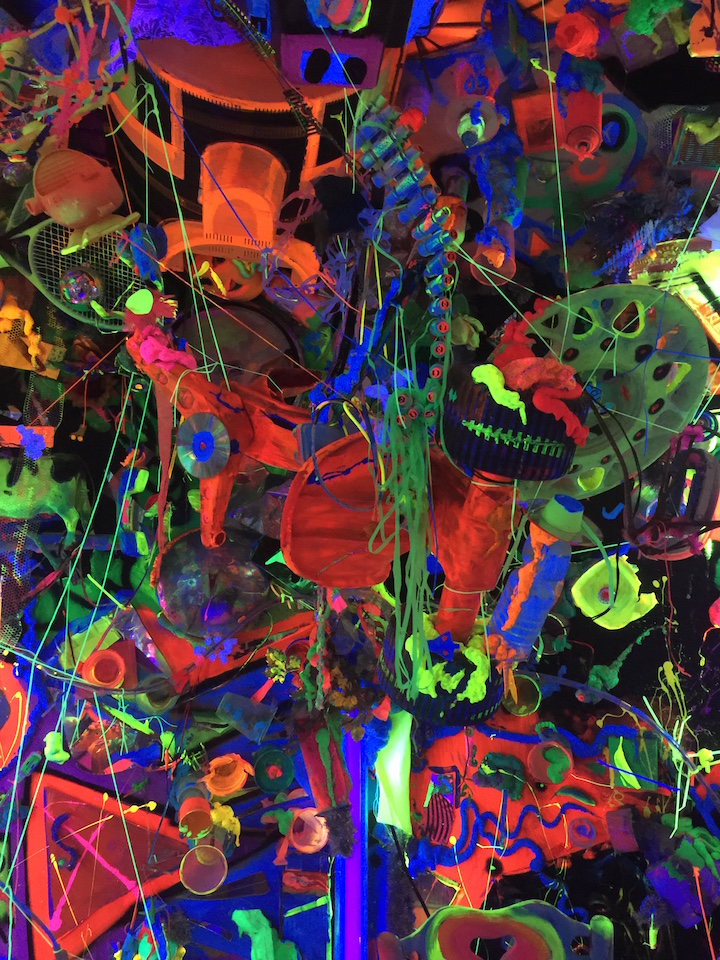
Contemporary pop surrealist visual artist Kenny Scarf, Cosmic Closet, close-up from multimedia installation

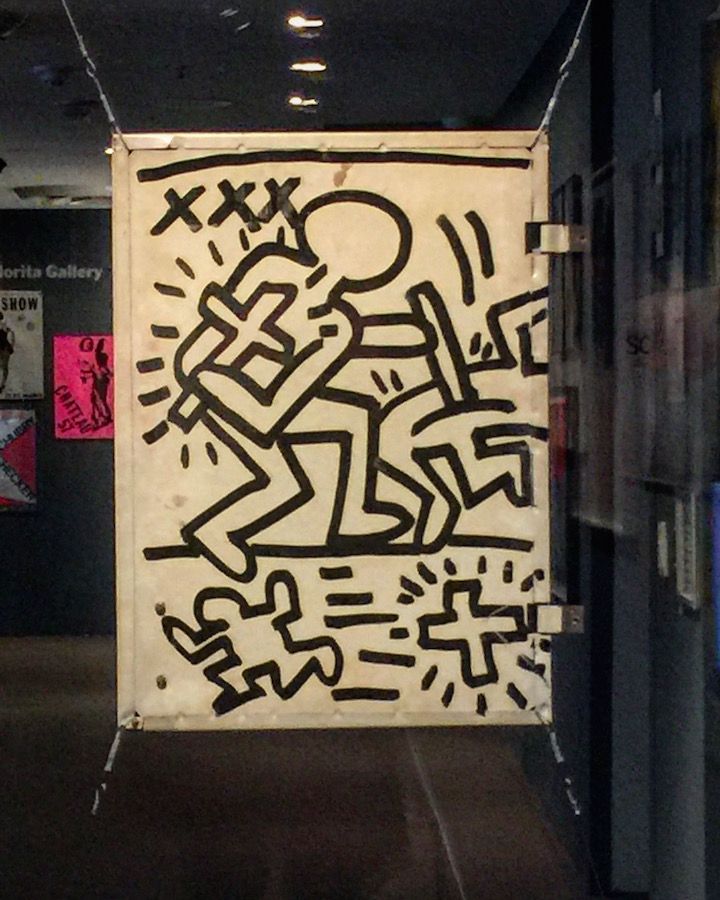
The legendary Keith Haring, Cabinet Door for Joey Arias

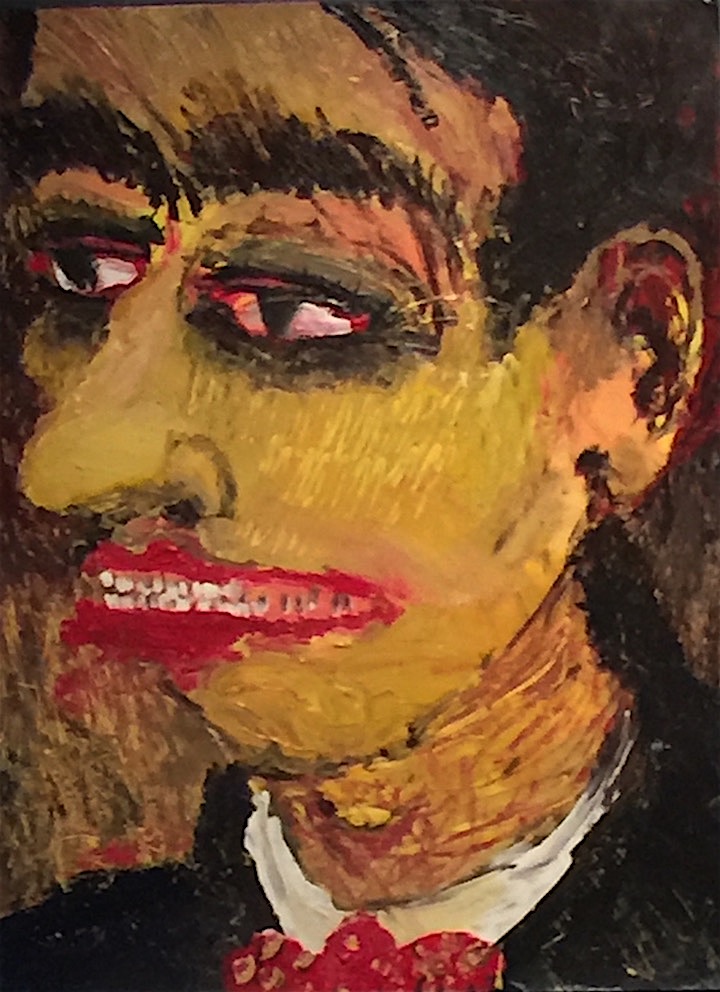
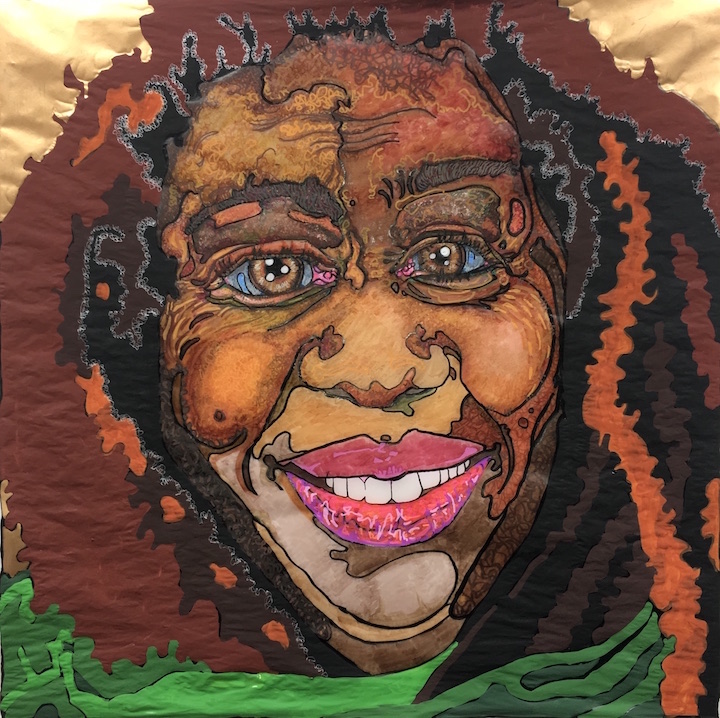
 Multimedia artist Stephen Tashjian aka Tabboo!, Self-Portrait, Acrylic on found advertising paper

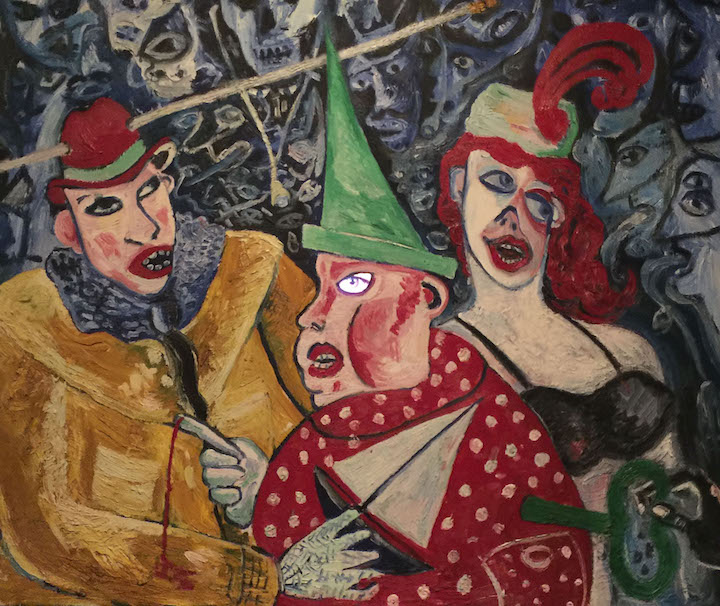
Contemporary painter Frank Holliday, The Lingerie Family, Acrylic on masonite

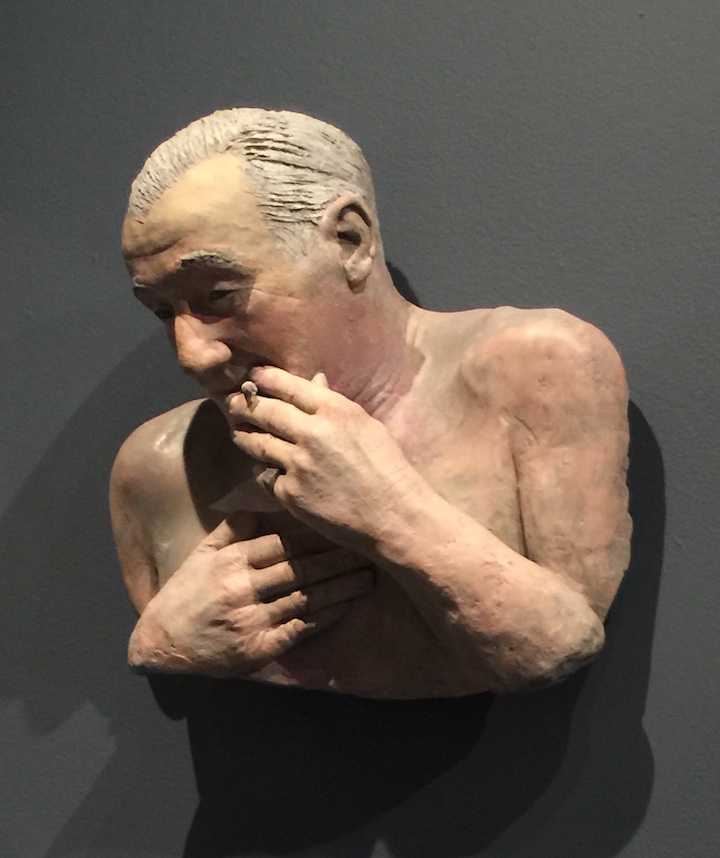
Renowned sculptor John Ahearn, Eddie Moshier, Acrylic on plaster

In addition to the survey of visual art  — including dozens of flyers — presented in “Club 57: Film, Performance, and Art in the East Village, 1978–1983”,  films, videos, poetry readings and performance art are integral to this exhibit.

Held in the museum’s lower level, the perfect venue to convey the underground and interdisiplinary spirit of Club 57, the exhibit remains on view through April 1.

Photos by Lois Stavsky

{ 2 comments }

Speaking with Self-Taught Artist Matthew Wheeler

Based in Ithaca, New York, Matthew Wheeler is a self-taught illustrator and painter. An interview with the artist follows:

When did you first begin drawing?

I was 17 when my best friend – my beloved horse — and I were in a serious accident. I was in a coma for a week and a half.  And when I woke up from it, art was the only way I could express myself. It was through my art that I began communicating to my family and friends.

Had you any interest in art before your accident?

No! My passion was horses. I became interested in horses when I was about 12. We were on a family outing at Red Hawk Ranch in Trumansburg, just outside Ithaca. Within a few years, I learned calf-roping, bareback bronco riding, and I began teaching horseback riding and leading trail rides.  And at the time of my accident, I was training with world-famous champions to expand my abilities. I was determined to be the best.

Can you tell us something about the experience of drawing after your brain injury? What did it initially feel like? What inspired you?

I felt totally detached from what I was doing. I felt like I was someone else watching my hands draw as I filled up notebook after notebook. What inspired me? What was already there in my mind. I simply translated what I saw in my brain into lines, symbols and shapes. And when I learned something new – like using colored pencils – I felt like I’d done it before.

Have you any favorite media? Tools that you prefer to work with?

My favorite is a particular Bic ballpoint pen that the company no longer makes.

What percentage of your time is devoted to art these days?

Most of it. Even when I sleep, I dream about art.

Have you any preferred setting?

No. I can draw anywhere. I especially love listening to Pink Floyd in the background.

Any favorite artists?

Salvador Dali. No doubt!

Are there any particular cultures or movements that have influenced you?

I’ve been influenced by Surrealism and by Egyptian and Native American cultures.

Are there any other creative activities that engage you these days?

I’m working on building a rocket with aluminum, wood, fiberglass and cardboard.

How does your family feel about your life as an artist?

Everyone is supportive and encouraging. I remember soon after my accident, my parents propping me up at a desk so that I can draw. And they’ve been supportive ever since.

Besides your rebirth as an artist, what are some of the other changes that you’ve experienced since your brain injury?

All of my senses feel heightened, yet nothing seems quite real. I think and feel in images. I feel more connected to the spiritual world. And although I don’t subscribe to any religious dogma, I read the Bible every day.  I have difficulty keeping track of time, and I can sit in one place for up to three days on end – without sleeping. I also have to be reminded to eat.  The horse stole my life as I knew it, but it also gave me a future…as an artist.

Note: You can see more of Matthew’s artworks here, and you can contact Bonnie at art.dba@comcast.net if you would like to purchase any of Matthew’s featured artwork.

Images

1 Self-Portrait, Oil on canvas, 18″ x 24″

Doc, Pen and ink on paper, 9″ x 12″ 

3 Emanation’s Web, Pen and ink on paper, 12″ x 14″

4  The Beekeeper, Pen and ink on paper, 6″ x 8″

5 Solace, Watercolor, colored pencil, pen and ink on paper, 6.5 x 8.5

Interview conducted by Bonnie Astor and edited by Lois Stavsky; all images courtesy of the artist

{ 0 comments }

Located at 702 Ninth Avenue at 48th Street in Manhattan, Fountain House Gallery showcases and sells artworks in a range of media by artists living and working with mental illness. While some of the artists are self-taught, others are graduates of prestigious art schools. And while some are emerging, others are established. All produce distinctly affecting images.

On view at the welcoming and vibrant non-profit space through December 22 is Small Works: $100 and Under, an enticing selection of dozens of small-scale works which can be purchased “off the wall.”  The image featured above is a digital photograph by Fountain House artist Bradford Scott Stringfield of Judith Supine street art.  What follows are several more artworks I captured while visiting the exhibit earlier this week:

Kathy Piper, Linoleum block print

Fiber artist Alyson Vega, Mixed media

Shey, The Prophet, Digital art on wood panel

Anthony Newton, Oil on wood panel

Gavin Dubblex Alleyne, Ink, spray paint and acrylic

Fountain House Gallery is open Tuesday to Saturday: 11am-7pm and Sunday: 1-5pm. Several additional artworks can be viewed and purchased here, as well.

Photos of images by Lois Stavsky

{ 0 comments }