≡ Menu

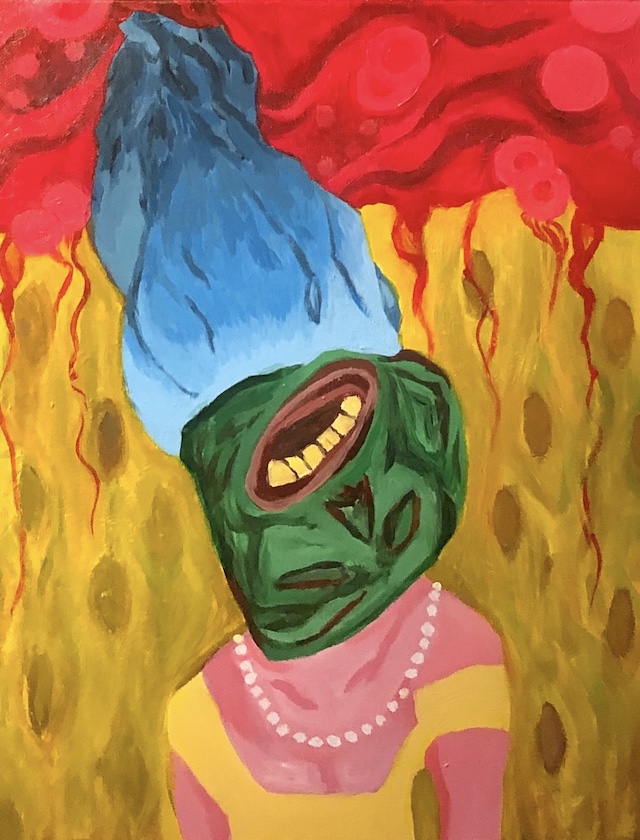
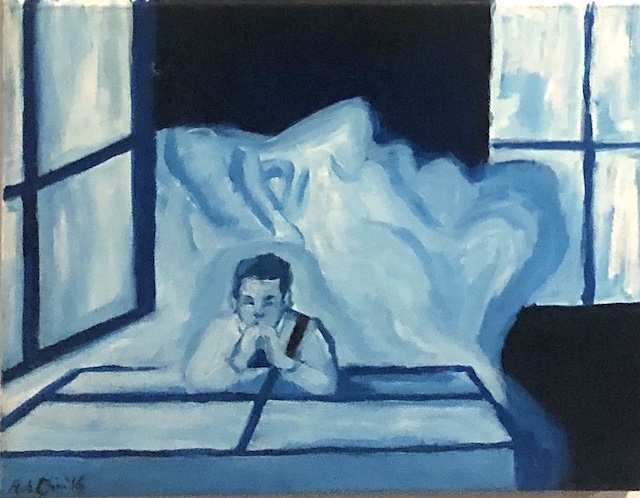
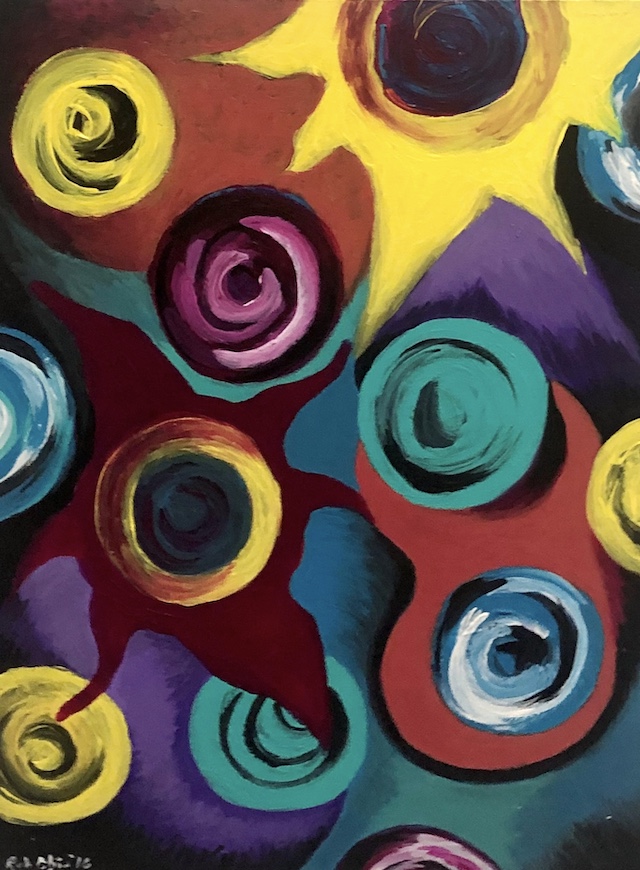
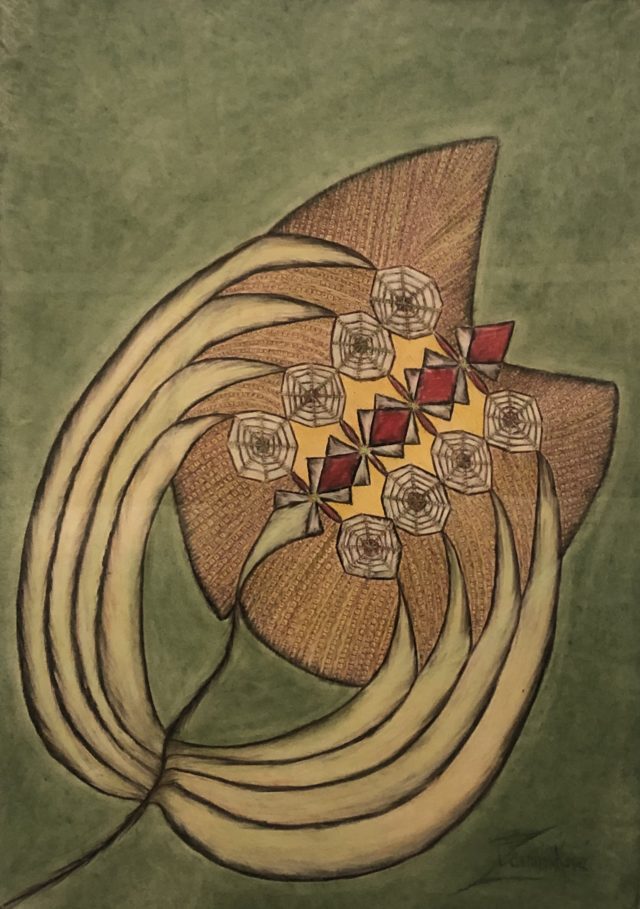
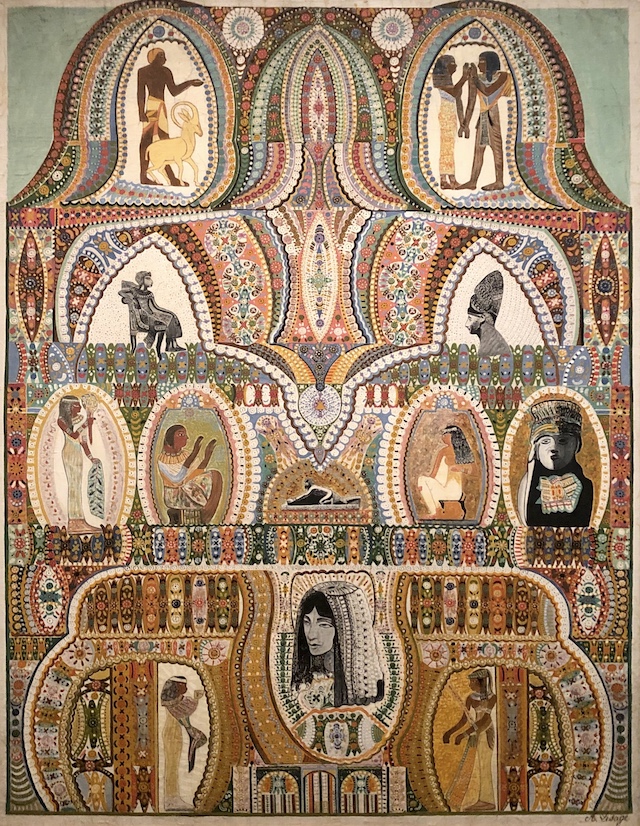
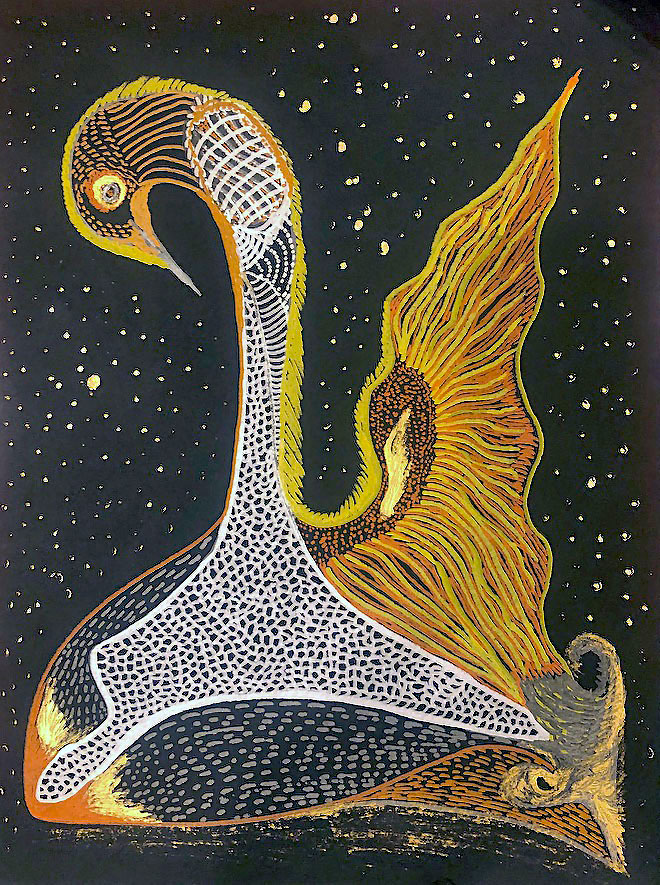
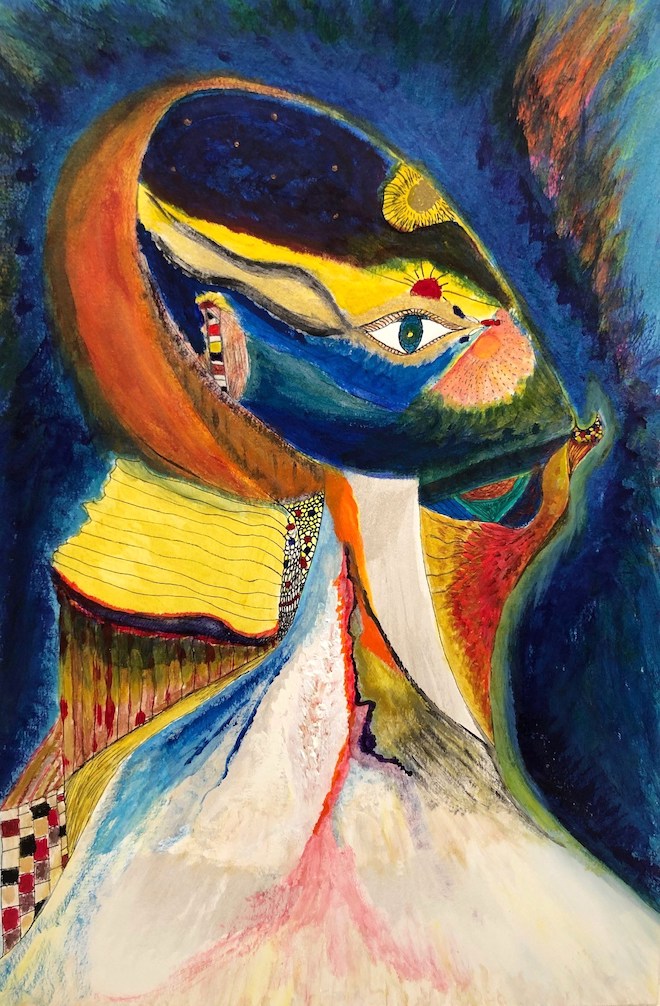
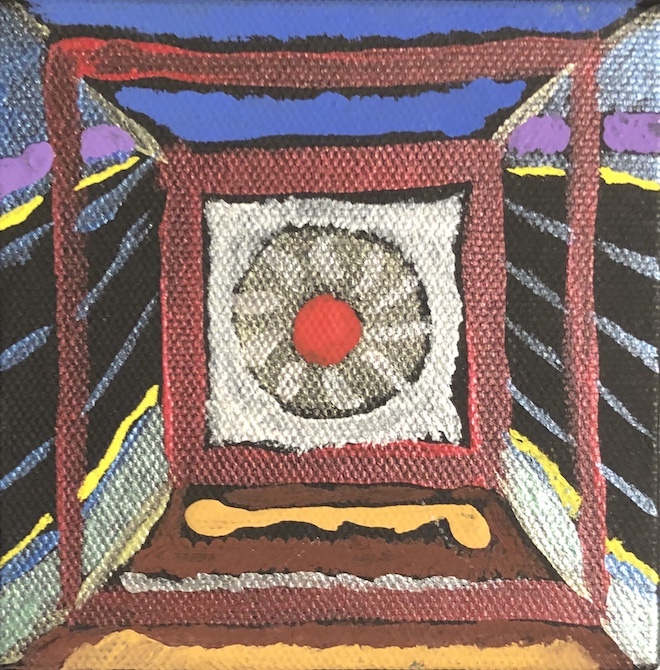
I came upon George Mannouris’s distinct visionary aesthetic while visiting Arts Educator Fawn Phillip’s Fresh Art NYC class at St. Margaret’s House earlier this fall. I was delighted to have the opportunity to interview him.

When did you first start drawing? And what inspired you at that time?

I was about 7 and living in Cyprus, where I was born. I was inspired by nature. Beautiful mountains, beaches and fields of golden grain surrounded me. And the sky at night was spectacular!

Do any early art-related memories stand out?

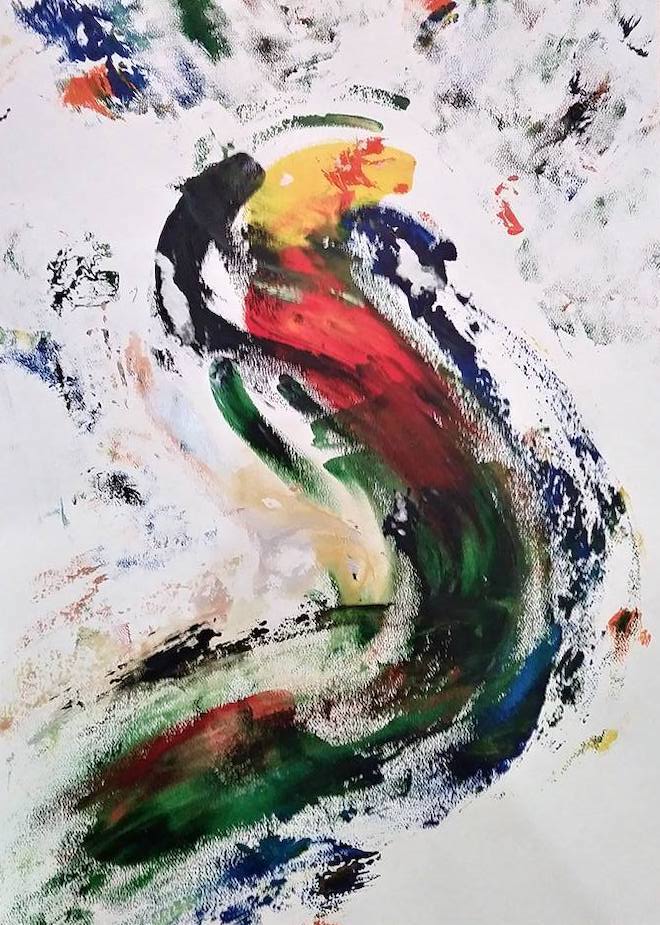
Yes. When I was 12, Turkey invaded Cyprus, and war broke out. I witnessed a massive explosion. The Turkish army was dropping bombs on civilians, and – at the time – I was in front of a glass door that exploded into a million pieces and knocked me over. I landed on my back. My hands and face were bleeding, and I had to flee for my life. I could not look back. That day I became a refugee. I soon began creating art — much of it abstract — that reflected that incident. It was my way of dealing with the intense trauma.
Who are some of your favorite artists?

Van Gogh, Picasso, and Dali are among my all-time favorites. I also love Hilma af Klint, Takashi Murakami, Yayoi Kusama, Georgia O’Keefe, Mondrian, Marc Chagall, Giorgio de Chirico, Jackson Pollock, and Alex Grey.

Wow! That’s quite a huge range. What about cultural influences?

I’m strongly influenced by indigenous cultures throughout the world. Ancient Egyptian, Indian, Chinese and Japanese aesthetics – along with my Greek culture –are also strong influences.

How has your art evolved since you began to seriously work on it?

My art has taken on a fantastical bent. I am better able to express my creative energy. I continue to work with some wonderful art therapists like Christen Meyer.
How long do you usually spend on a piece?

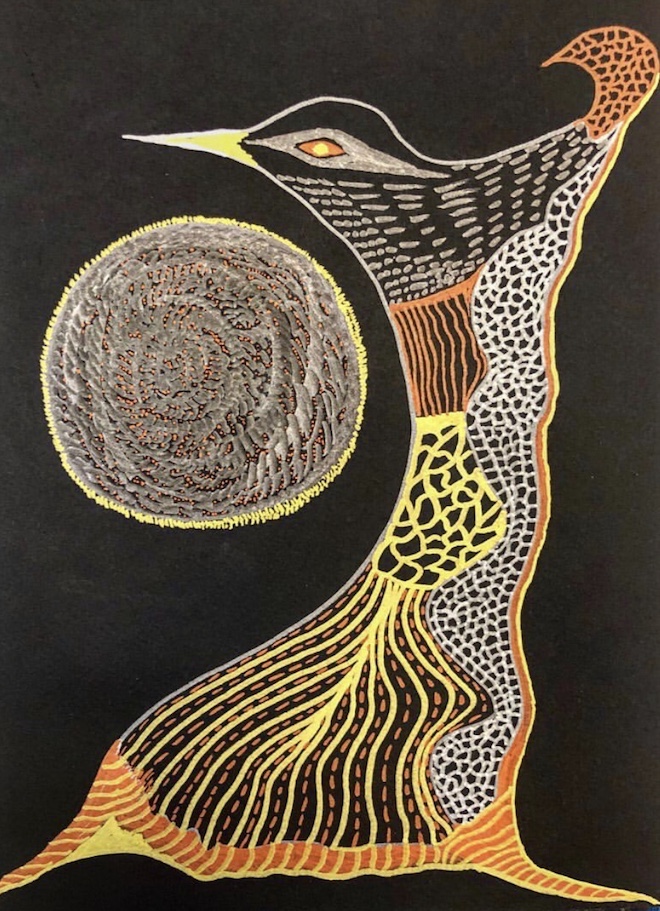
Anywhere from two hours to two months.

What percentage of your time is devoted to art?

Just about every day, I do something artistic. I’m also into photography.

What are some other activities that interest you?

Singing, composing music and writing poetry.
Have you exhibited your work?

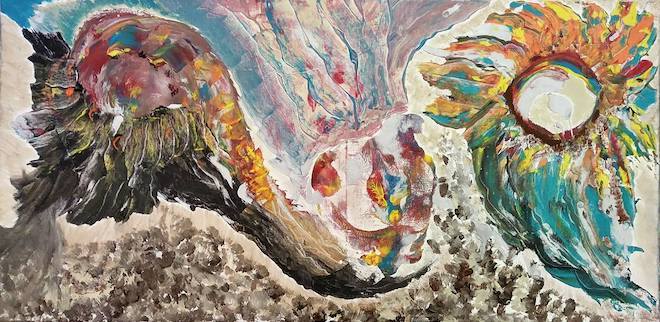
Yes! I’ve shown my work in a variety of spaces including the Buddhist Culture Center, the New York Public Library and the James Cohan Gallery. I’ve also exhibited in alternative spaces in London and in Aukland, New Zealand and in a special exhibit following a workshop at MoMA.

Are you generally satisfied with your work?

I work until I’m happy with it.

Is the viewer’s response to your work important to you?

I’m interested in how others perceive it, what it evokes in them. What’s important to me is that they react to it.
What is your favorite setting to work?

Any space with good lighting.

Have you any favorite media?

Watercolor inks, acrylics and metallics.

Have you a formal art education?

No. I’m self-taught.
Where are you headed?

I’d like to attain more recognition and eventually exhibit in museums.

What do you see as the artist’s role in society?

The artist’s role is to speak truth to power…to express realities and to liberate our personal realities.

Interview conducted and edited by Lois Stavsky

Photos: 1, 3 & 6 Lois Stavsky; 2, 4 & 5 courtesy of the artist
{ 0 comments }

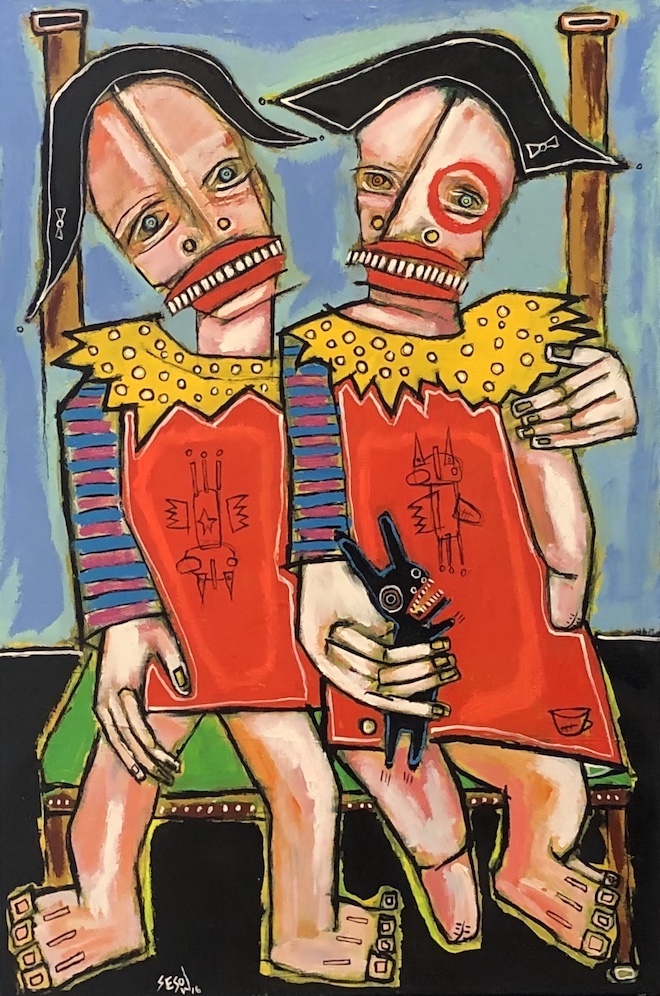
Currently based in Washington DC, self-taught artist Matt Sesow was born in 1966 in rural Nebraska. When he was eight years old, he was struck by the propeller of a landing airplane. As a result of this accident, Matt’s left hand was severed.

“My paintings are the emotional response to a traumatic past, the road to healing, and the confidence of finding a new language to express feelings felt but never shared,” he explains.

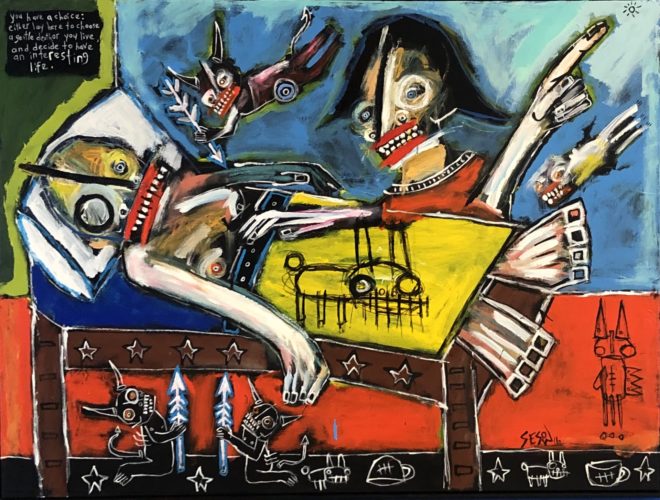
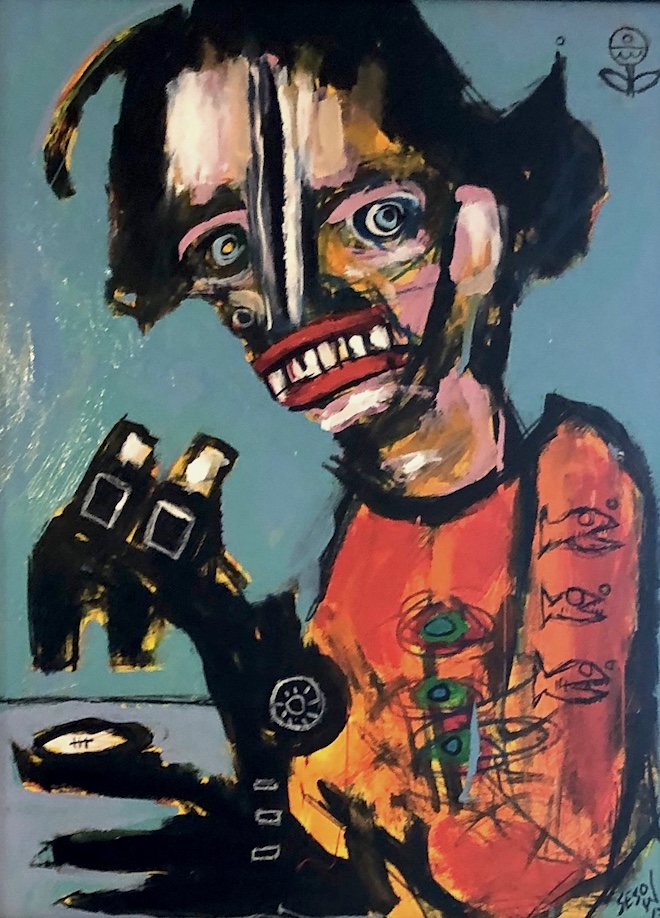
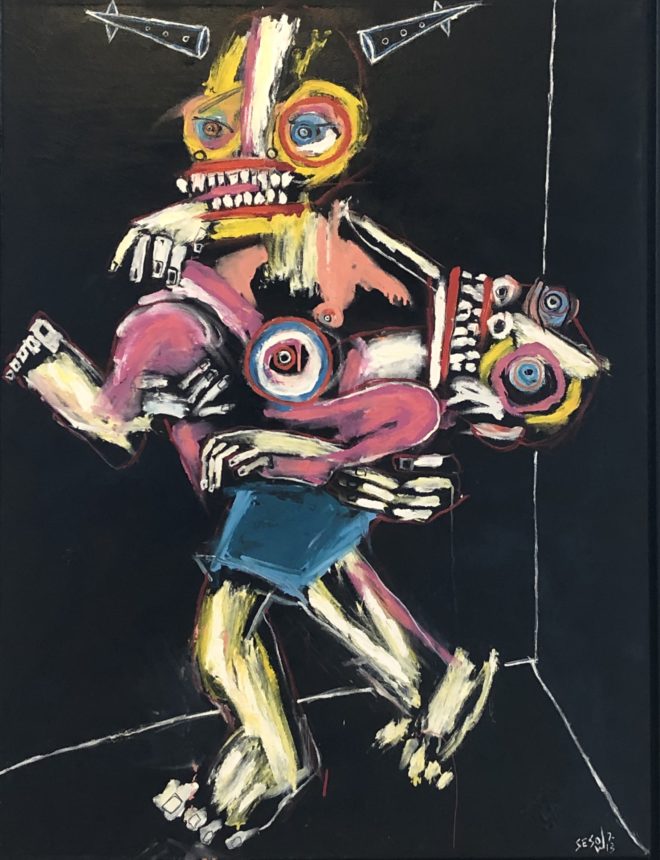
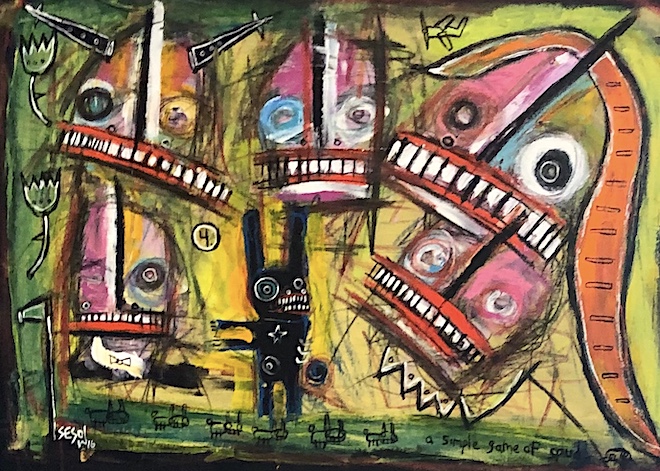
Matt Sesow’s paintings have been exhibited in a range of spaces throughout the globe. I recently visited several on view at the American Visionary Art Museum in Baltimore.

Featured above is “Identical Twins.” Fashioned with oil and acrylic on canvas in 2016, it was inspired by a photo of twin girls. Several more images of paintings — reflecting the artist’s infectious outsider art aesthetic — seen at the AVAM follow:

A Choice, 2016, Oil on canvas

Marine Biologist, Rachel Carson, 2017, Oil and acrylic on watercolor board

Border Crossing with Edward Snowden, 2013, Oil on canvas

A Simple Game of Spud, 2016, Acrylic and oil on canvas

Photos of paintings: Lois Stavsky
{ 0 comments }

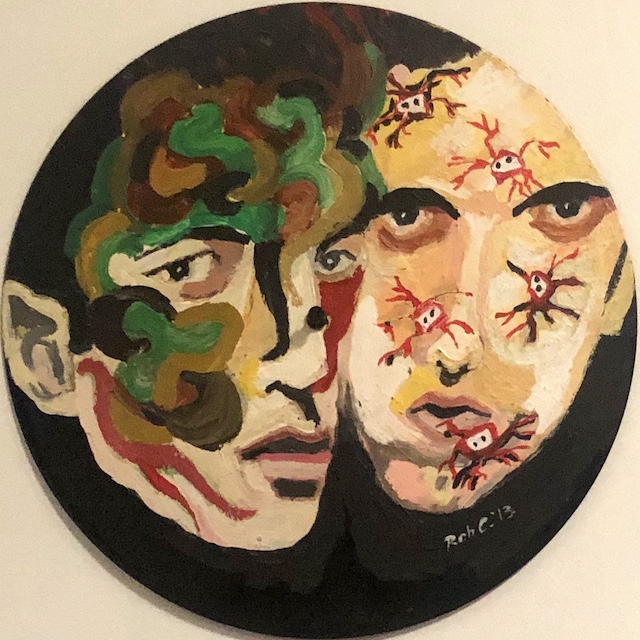
Speaking With Living Museum Artist Robert Chin

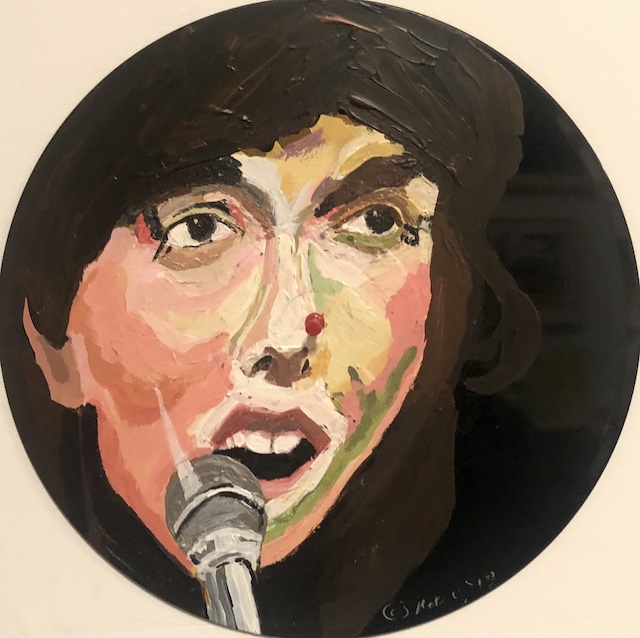
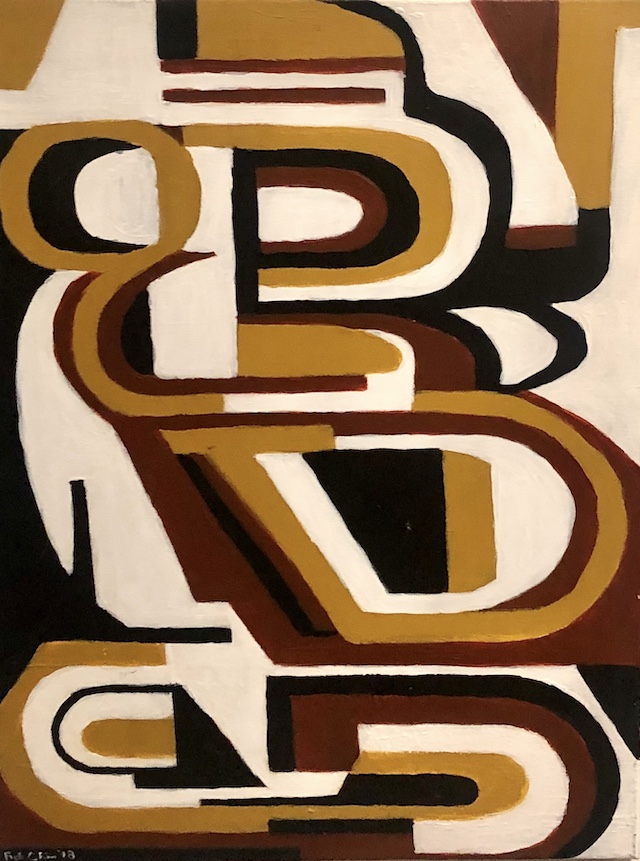
I discovered Queens-based artist Robert Chin‘s intriguingly diverse artwork awhile back at the Living Museum. I was delighted to finally meet him and find out a bit about him.  

When did you begin to draw?

I was in 3rd grade when I started. I drew an Easter bunny for a class assignment, and I decided this is what I want to do the rest of my life…draw!

What inspired you at the time?

I was terrified of everything else

And what inspires you these days?

It is my way of expressing my vision of the world. It is how I can best express my thoughts.

Who are some of your favorite artists?

Van Gogh, Picasso, and Jackson Pollack are among my favorites. When I look at the art of the masters, I see what’s possible.

What about cultural influences?

Rock music and art films are among my main influences.

How has your art evolved through the years?

It changed dramatically five years ago when I started doing caricatures. My main inspiration was Philip Burke.

How long do you usually spend on a piece?

Anywhere from a month to six weeks.

What percentage of your time is devoted to art?

I work on my art about five hours a day.

What are some other activities that engage you?

I like to write and I like to sing.

I was introduced to your work here at the Living Museum.. Have you exhibited elsewhere?

I’ve shown my work at Hofsta University, at the Queens Museum and in a group exhibition in Korea.

Is the viewer’s response to your work important to you?

Not at all. I don’t care what others think about what I am doing.

Have you any favorite media?

I like working with acrylic.

Have you a formal art education?

I attended the High School of Art and Design. I, also, studied art at Pratt for three years.

What was that like?

It was horrifying.

Where are you headed?

To bigger and better things.

What do you see as the artist’s role in society?

To reveal all of society’s hypocrisies, mistakes and treacheries.

Interview conducted and edited by Lois Stavsky; images of artworks by Lois Stavsky

{ 0 comments }

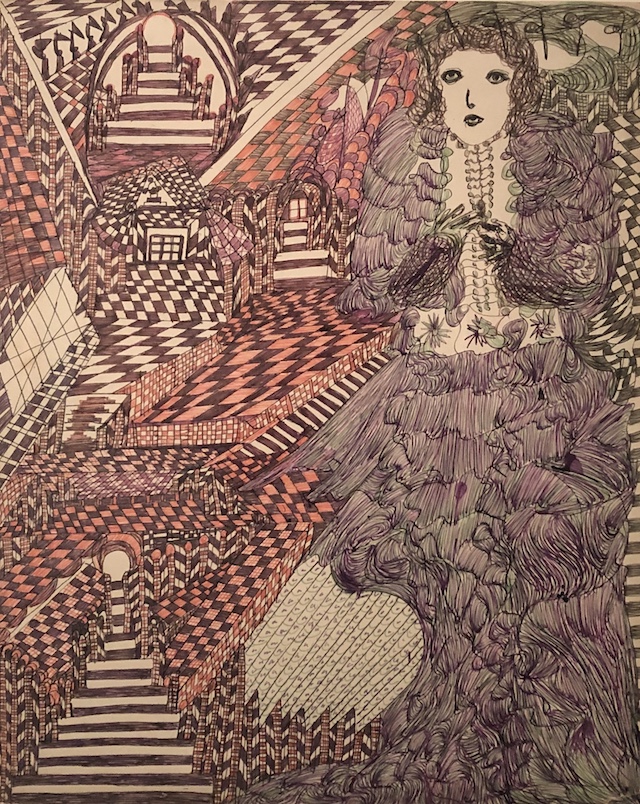
Yesterday afternoon, we joined ARTBreakOUT co-founder and art educator Bonnie Astor, along with a group of young artists supported by AHRC, at the American Folk Art Museum. It was our second visit to the wondrous exhibition, “Memory Palaces: Inside the Collection of Audrey B. Heckler,” featuring dozens of intriguing artworks form Audrey Heckler’s personal collection. On her passion for outsider art that she had begun collecting after a visit to the Outsider Art Fair in 1993, Audrey Heckler told ARTnews: “All this art speaks to me, a lot more than other forms of art.”

The image featured above is the work of the late noted English visionary artist Madge Gill (1882-1961), whose artwork often references a longed-for daughter who was stillborn. A small sampling of our favorite works follows:

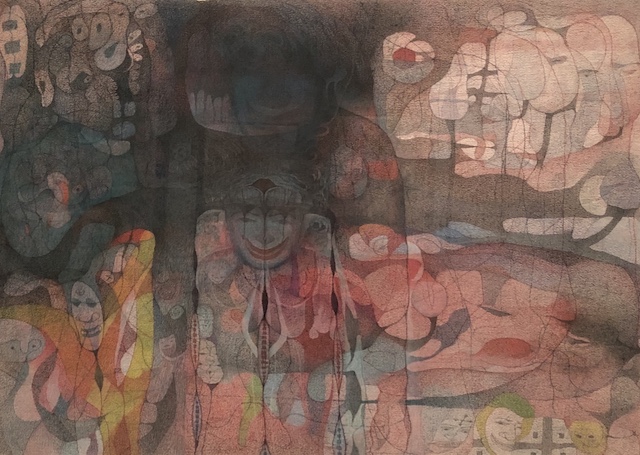
Japanese visionary artist M’onma, one of several otherworldly, often unsettling, surreal artworks created with graphite, ink and colored pencil

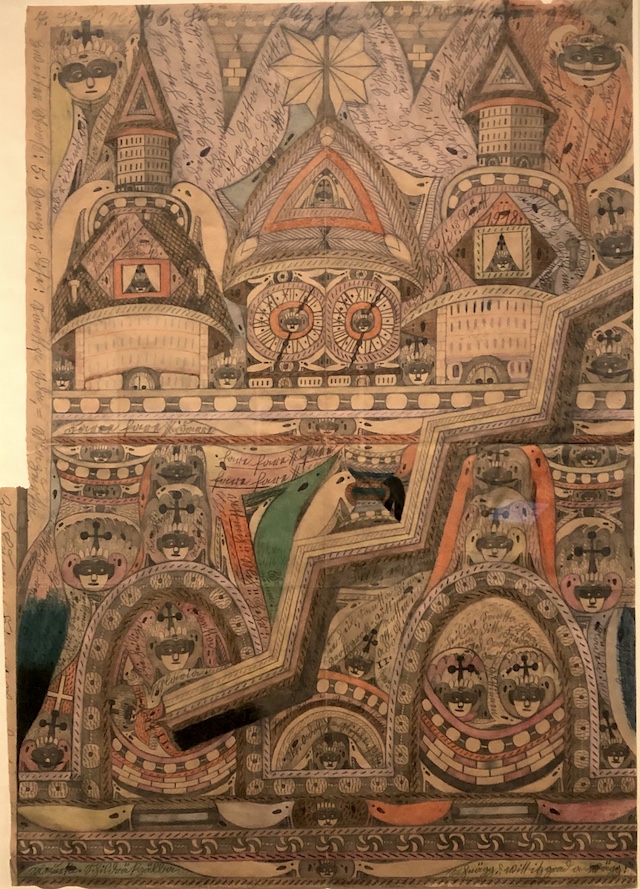
One of the first artists to be identified with the outsider art movement, the late Swiss artist Adolf Wölfli (1864-1930) created thousands of intricate drawings of imaginary adventures while confined to a psychiatric hospital in Berne. As the one featured below, they picture a fantastical world created from the artist’s imagination.

Czech artist Anna Zemánková (1908-1986), one of her many striking botanical images that she created to help her cope with her depression

French artist Augustin Lesage (1876-1954), one of many drawings inspired — according to the artist — by voices from invisible spirits, including that of his dead sister

Wide view of one segment of the sprawling exhibition featuring a range of artworks in different media

Linen tapestry fashioned by the late English visionary artist Madge Gill, with City-as-School intern Sage Ironwood to its left

“Memory Palaces: Inside the Collection of Audrey B. Heckler” continues through January 26, 2020. Located at 2 Lincoln Square (Columbus Avenue between 65th and 66th Streets), the American Folk Art Museum is open Tuesday–Thursday: 11:30 am–7:00 pm; Friday: 12:00–7:30 pm; Saturday: 11:30 am–7:00 pm and Sunday, 12:00–6:00 pm. Admission is always free.

Research for this post: City-as-School intern Sage Ironwood;

Photo credits: 1-5 Sage Ironwood; 6 & 7 Lois Stavsky

{ 0 comments }

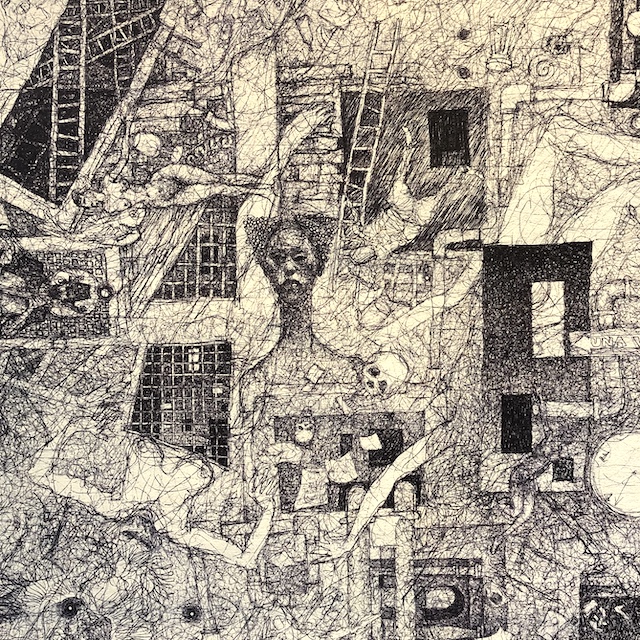
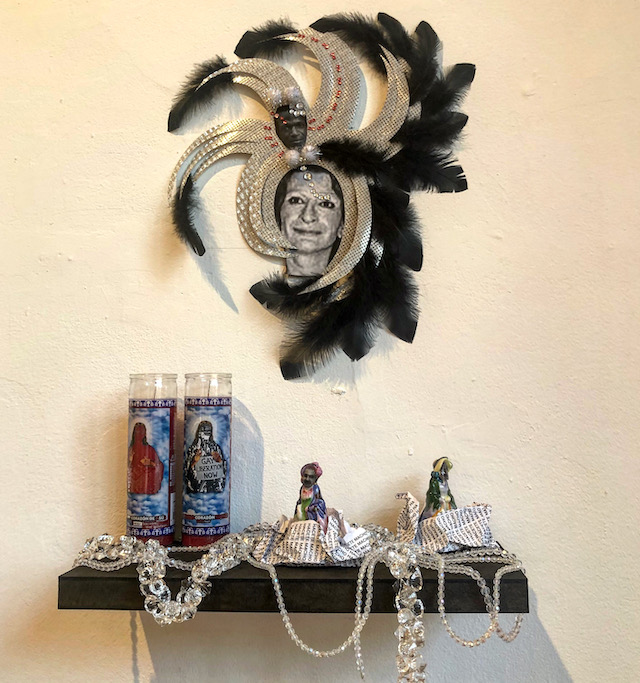
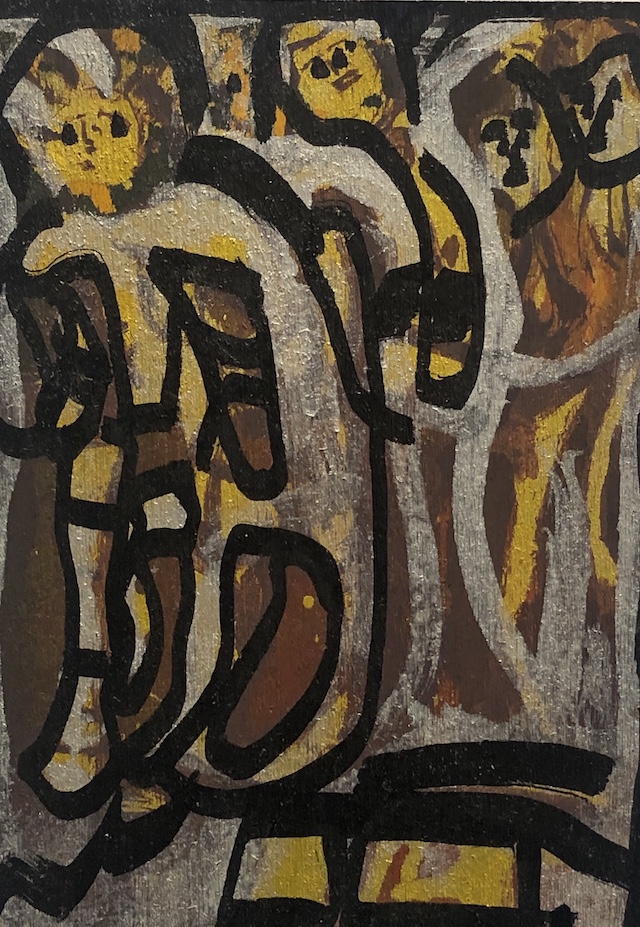
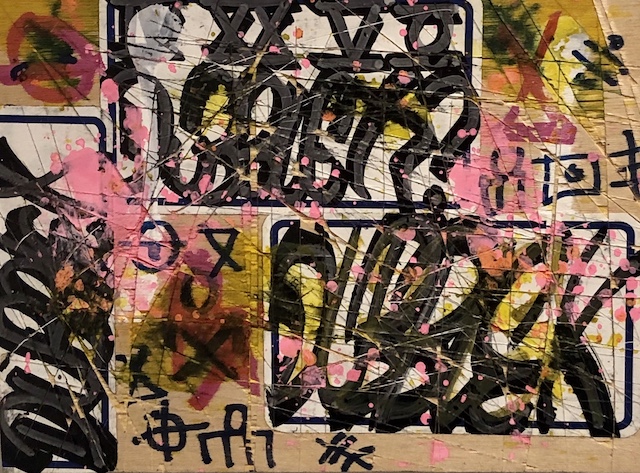
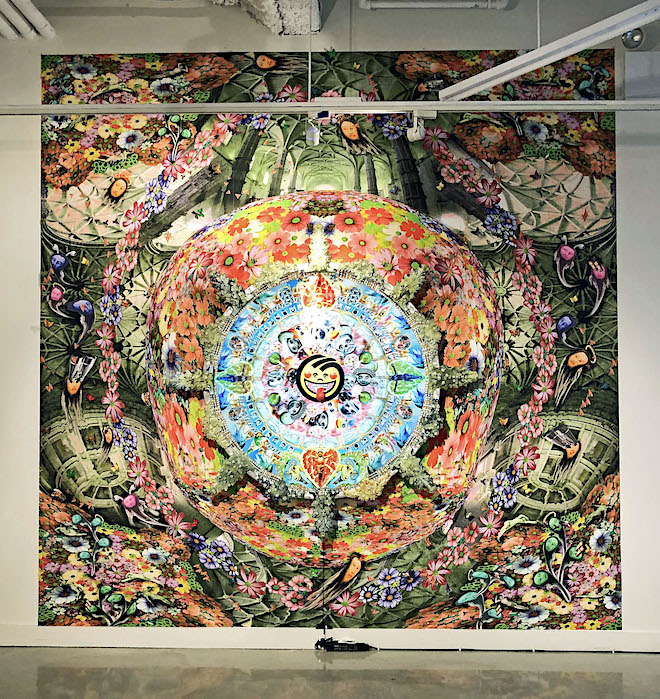
What began in November, 2005 as a month-long gathering at the Clemente Soto Vélez Cultural & Educational Center during Puerto Rican Heritage Month, BORIMIX has since evolved into a vibrant city-wide project showcasing Latinx artists working in film, theatre, dance, music and the visual arts. Among this month’s festivities is sierra/COSTA — a gallery exhibition spanning two galleries at The Clemente featuring an eclectic range of works by over two dozen artists. The intriguing image featured above is a close-up from Mazmorra, fashioned with ink on vinyl in 2018 by Ecuadorian artist Ivo Uquillas. Several more images of artworks — many by Ecuadorian artists — captured during my recent visit to the exhibition follow:

Jersey City-based Athena Toledo, For My Village, 2019, Mural

Ecuadorian artist Toofly, Close-up from “Free Spirit Remix” — a huge mural painted onto the wall

Puerto Rican artist Carlos Dávila Rinaldi, Naranjito, 2015, Tar gel

NYC-based Argentine artist Julia Justo, Altar for Sylvia Rivera, 2019, Installation

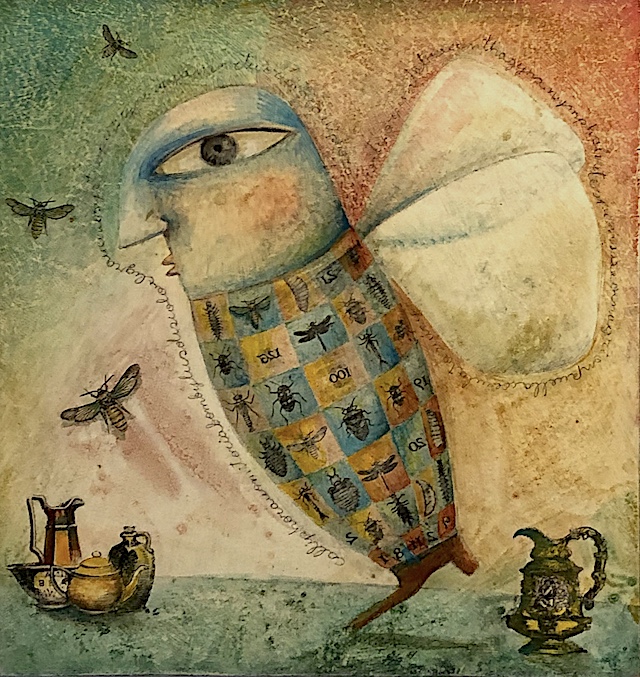
Ecuadorian artist Carla Torres, Lord of the Flies, 2006, Mixed media on Masonite

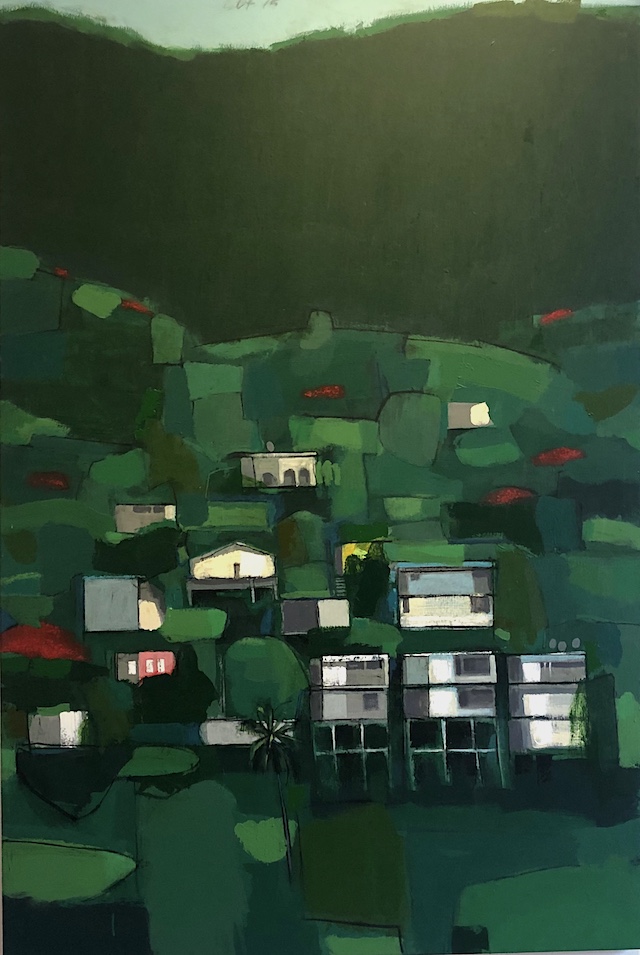
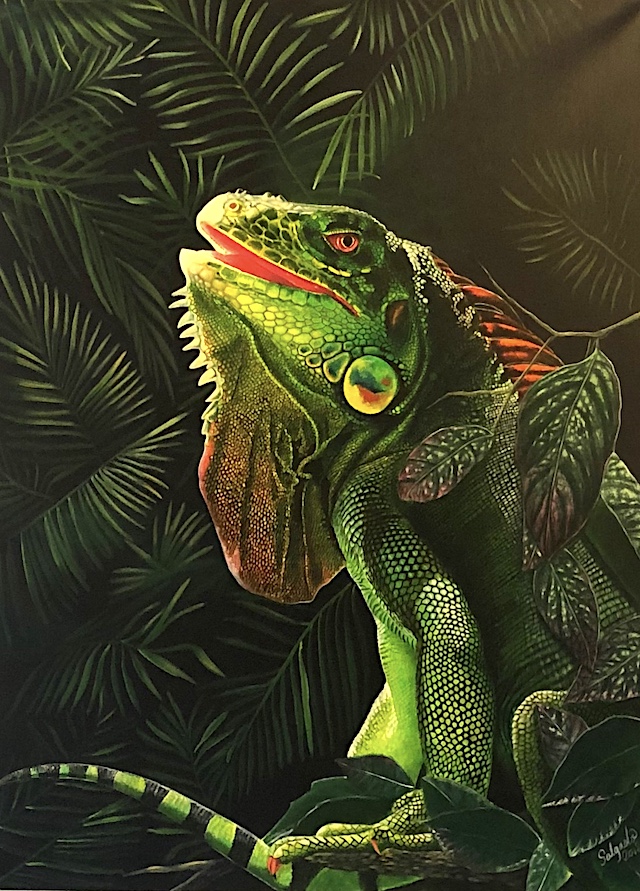
Colombian artist Edwin Salgado, Green 2018, Oil on canvas

The Clemente Soto Vélez Cultural & Educational Center is located at 107 Suffolk Street on the Lower East Side. Its gallery spaces are open Wednesday-Sunday 12PM-7PM and by appointment, 212-260-4080.

Photos of images: Lois Stavsky
{ 0 comments }

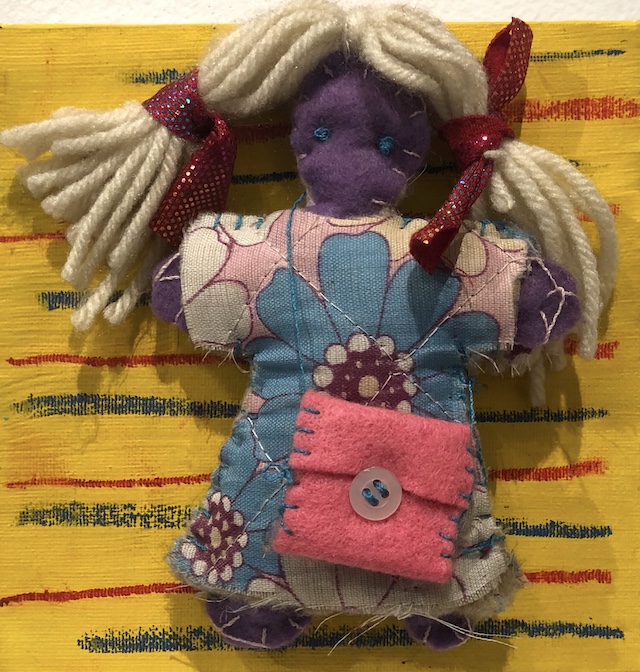
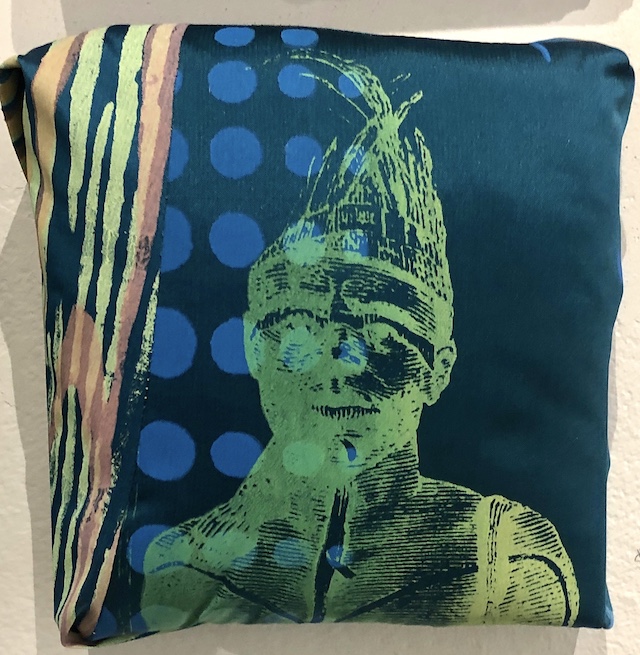
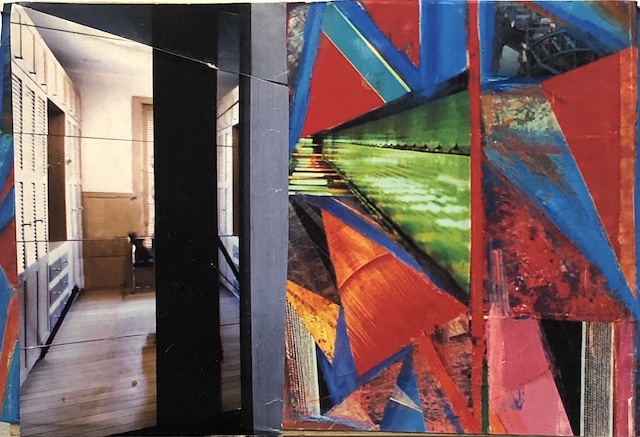
Over 400 original, alluring artworks in a range of media and styles are on view through December 20 at Fountain House Gallery’s annual pre-holiday exhibition. Measuring 6 X 6 Inches inches or less, each is priced at $100 or under. The image featured above is the work of self-taught artist, Roger Jones, whom I first met earlier this year at Fountain House Gallery Open Studios in Long Island City. A small sampling of images of artworks from this must-see exhibit follows:

Elizabeth Atlas, Sewn mixed media

Dubblex, Acrylic and marker

Lewis Pujol, Acrylic

Barry Senft, Acrylic

JoAnn Berman, Silkscreen, mixed textiles and watercolor

Martin Cohen, Collage

Founded in 2000, Fountain House Gallery showcases the works of artists living with emotional challenges, providing them with opportunities to share their creative expressions with others. Located at 702 Ninth Avenue at 48th Street, Fountain House Gallery is open Tuesday to Saturday: 11am-7pm and Sunday: 1-5pm.

Photos of images: Lois Stavsky
{ 0 comments }

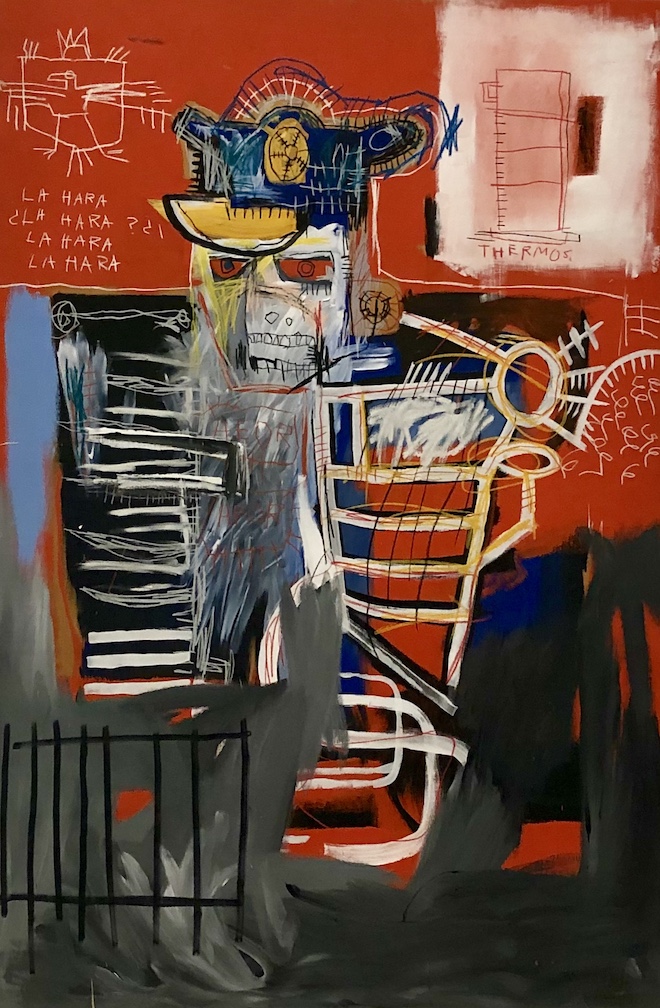
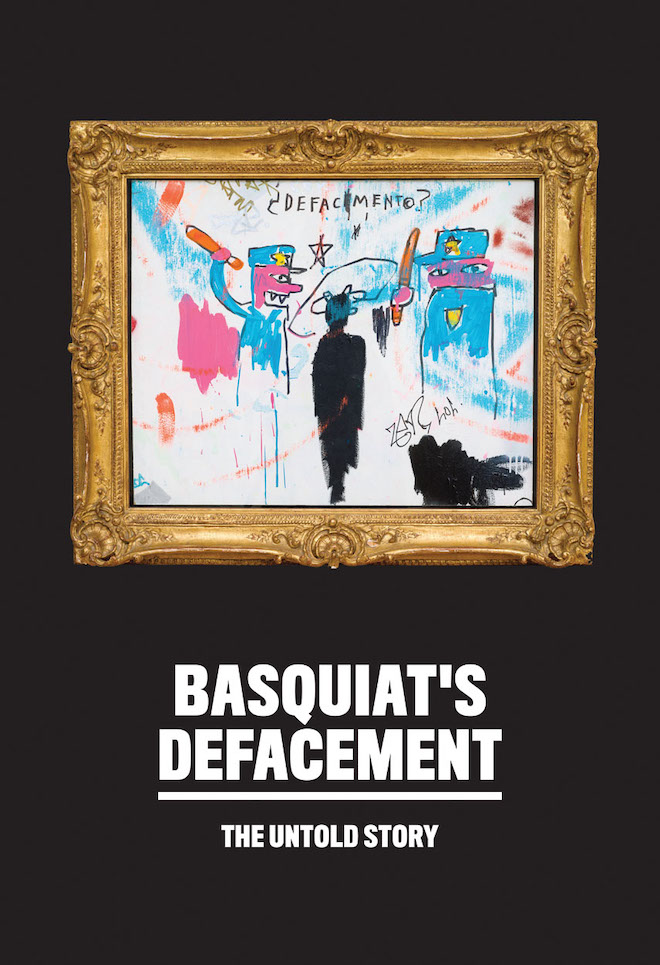
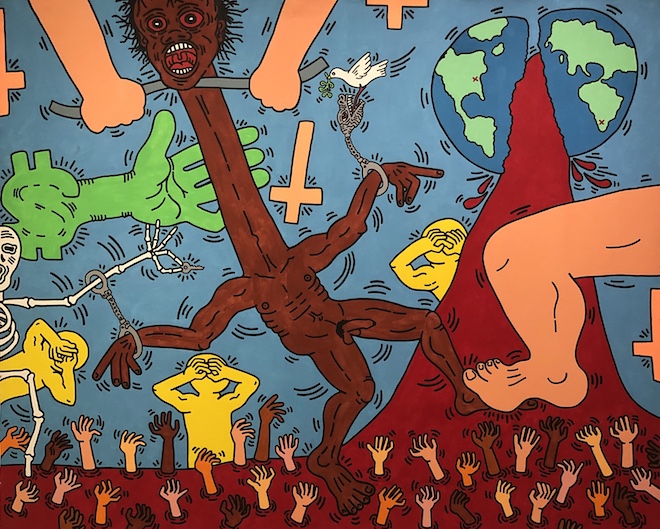
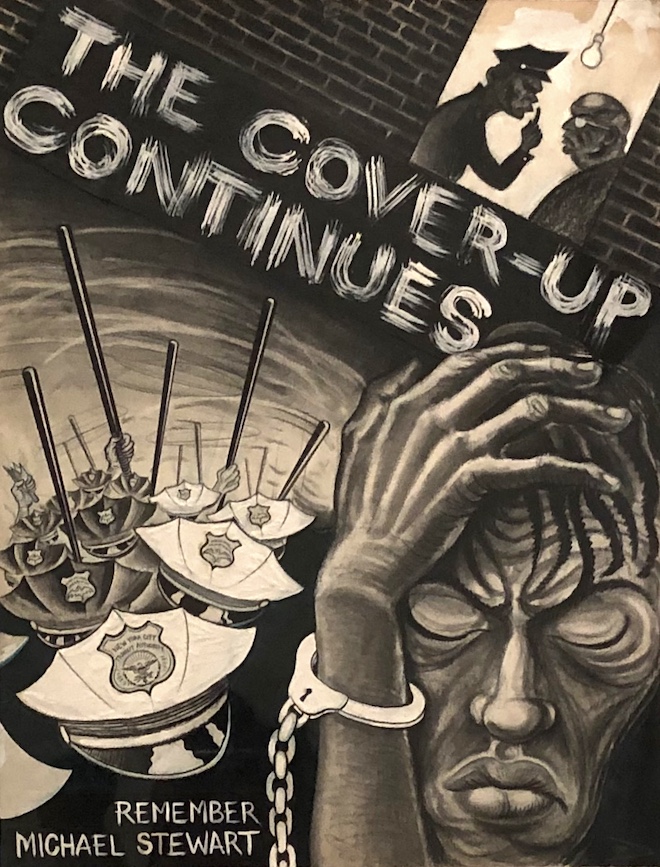
On September 15, 1983, Michael Stewart, a young African American, was brutally assaulted by New York City Transit Police following his arrest for writing graffiti in the First Avenue L train subway station. Thirteen days later, Stewart died in a coma. Soon afterwards, Jean-Michel Basquiat painted The Death of Michael Stewart, informally known as Defacement, on the wall of Keith Haring’s studio.

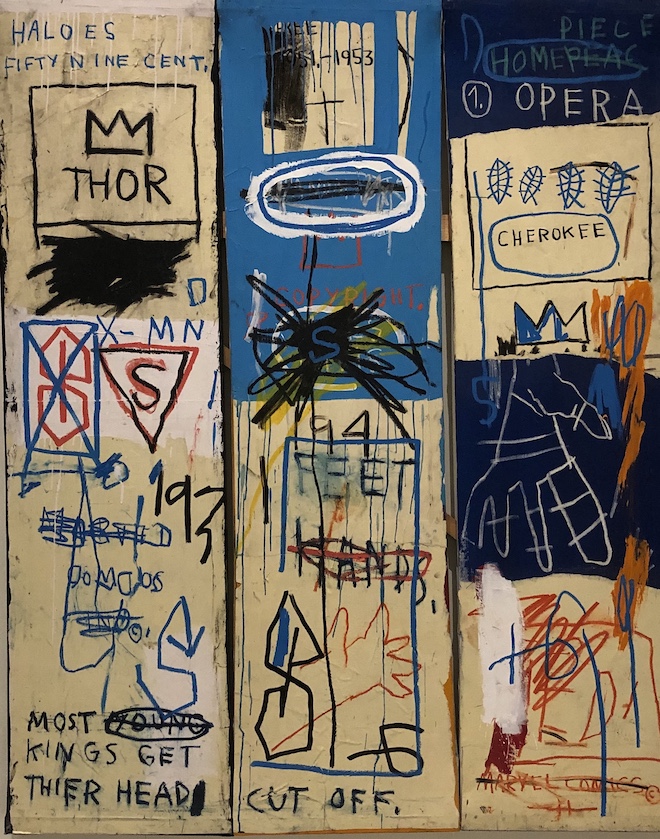
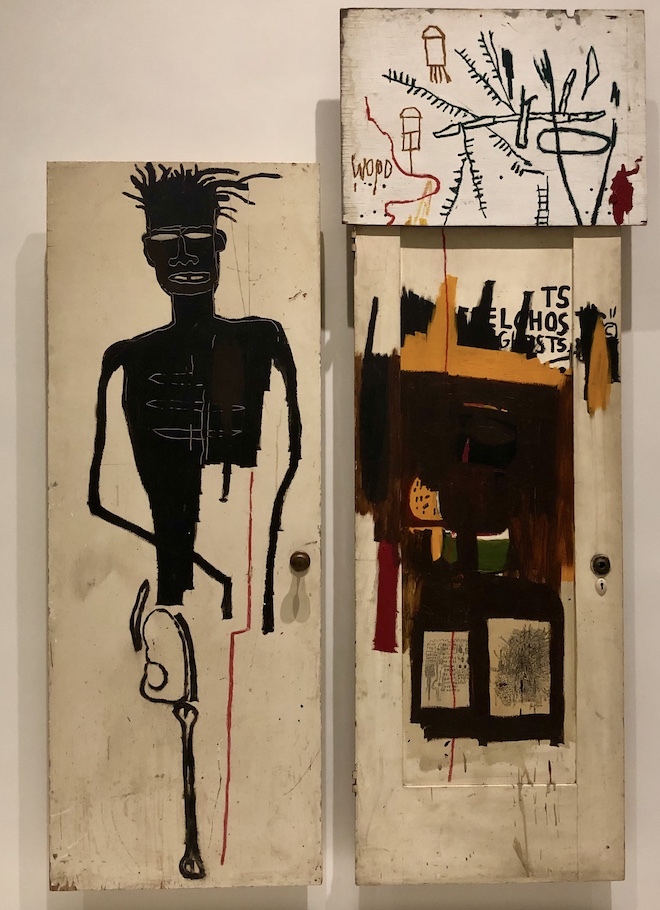
With The Death of Michael Stewart as its centerpiece, “Basquiat’s Defacement: The Untold Story” features several additional socially and politically conscious artworks by the legendary self-taught artist Jean-Michel Basquiat,  along with a selection of artworks by several of Stewart’s contemporaries. The first image featured above, La Hara, was fashioned by Basquiat with acrylic and oilstick on wood panel two years before Stewart’s death. Several more images of artworks on display in “Basquiat’s Defacement: The Untold Story” on view at the Guggenheim Museum on Manhattan’s Upper East Side follow:

Jean-Michel Basquiat, Charles the First, 1982, Acrylic and oil stick on canvas

Keith Haring. Michael Stewart — USA for Africa, 1985, Enamel and acrylic on canvas

Jean-Michel Basquiat, Self Portrait, 1983 Oil, acrylic, oilstick, graphite and pen on paper collage on wood with metal attachments

George Condo, Portrait of Michael Stewart, 1983, Oil on wood panel

Eric Drooker, The Cover-Up Continues, Charcoal on board

Organized by Chaédria LaBouvier, “Basquiat’s Defacement: The Untold Story” remains on view through November 6 at the Guggenheim Museum. Located at 1071 5th Avenue between 88th and 89th Streets, the museum is open seven days a week. and on Saturdays — from 5pm until 8pm — you can pay what you wish.

Photos of artworks by Lois Stavsky; the second image features the cover of the book accompanying the exhibit.

{ 0 comments }

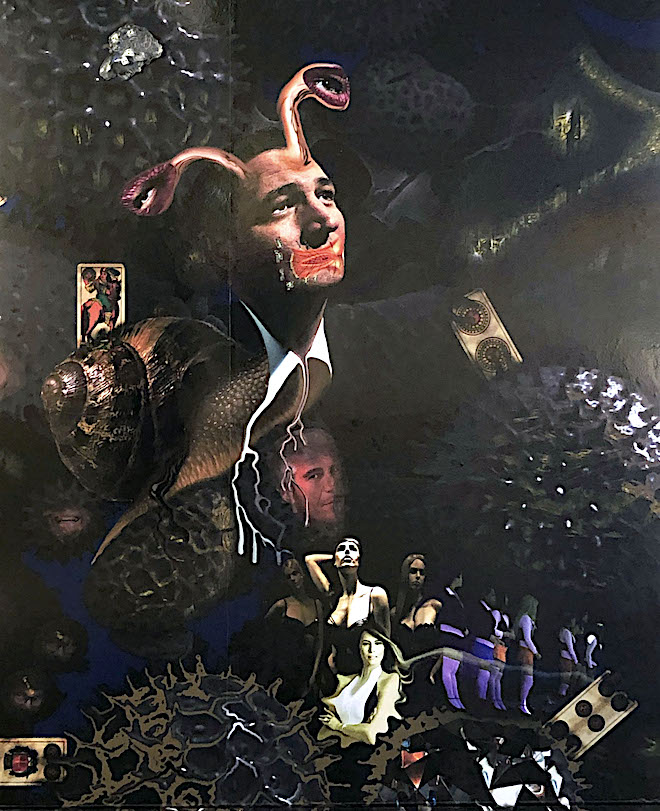
Since its establishment in 1997, the non-profit organization UrbanGlass has advanced the non-traditional use of glass as a creative medium. Currently on view in its spacious gallery at 647 Fulton Street in Brooklyn is HIGH NOON, an extraordinary surrealistic exhibition and installation by Einar and Jamex de la Torre, featuring a frightening reality, “where we clumsily juggle the fate of our planet with every lurch towards global meltdown.”

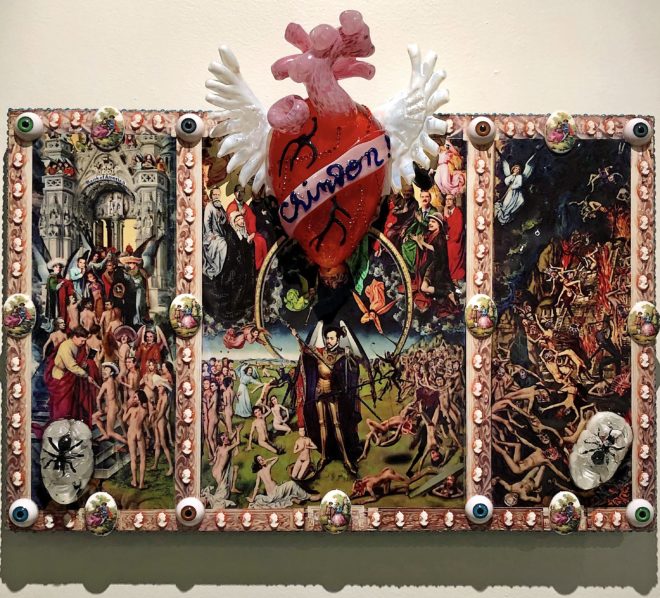
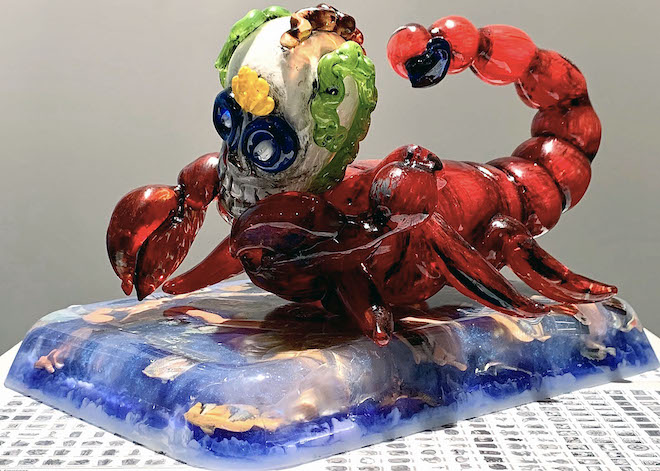
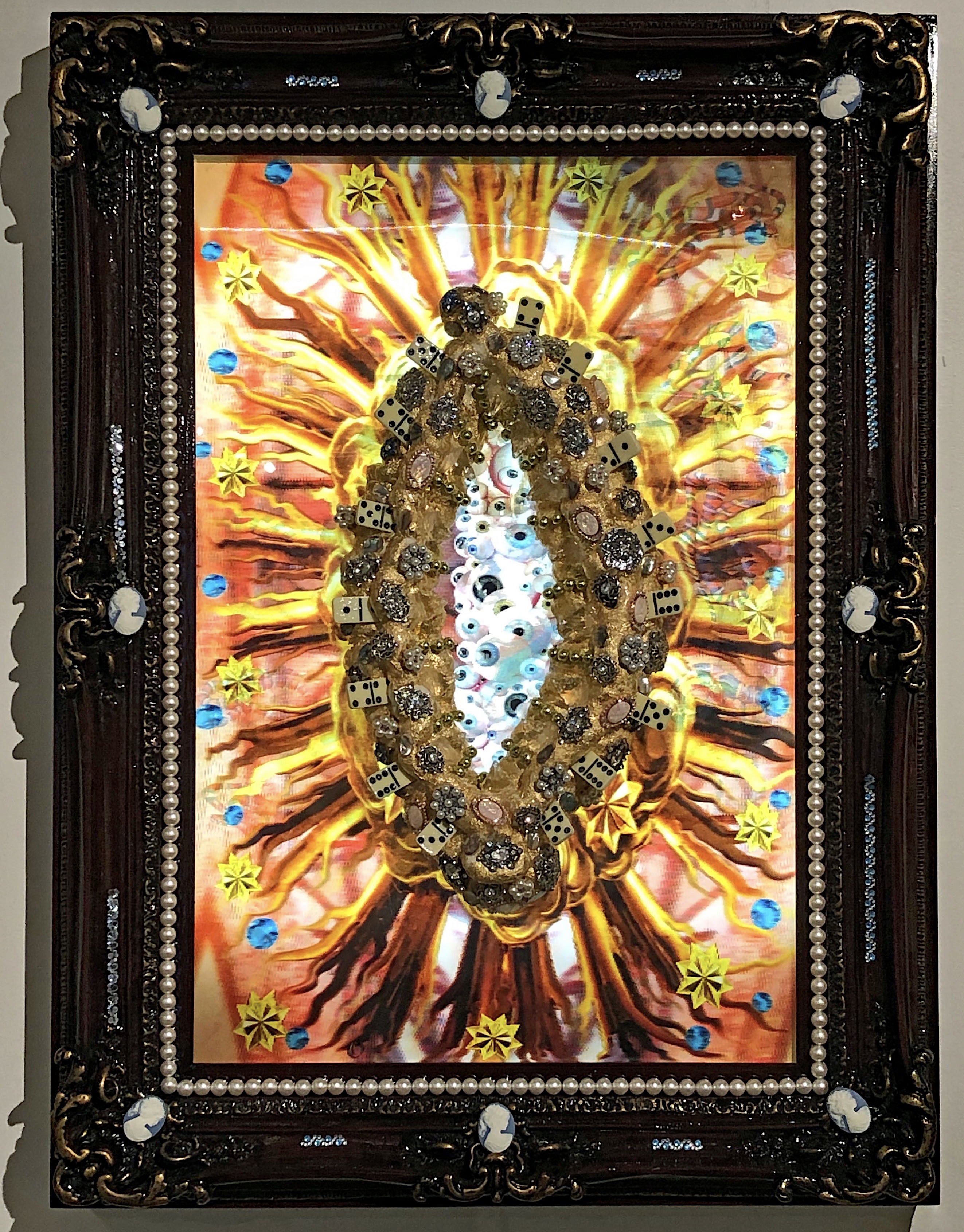
Born three years apart in Guadalajara, Mexico, brothers Einar and Jamex de la Torre now live and work on both sides of the border, providing them with a unique transcultural perspective. While Jamex holds a BFA in Sculpture, Edgar is largely self-taught. Collaboratively, they fashion an extraordinary range of mixed- media work with blown glass sculpture and installation art. Featured above are two close-ups from Patho Genes, a huge vinyl and mixed-media wall installation. Several more images of artworks featured in the brothers’ current exhibition follow:

Chingonl!, 2017, Blown glass and mixed media 

Remorse, 2018, Blown glass and mixed media

Age of Uncertainty, 2019, Archival lenticular print and mixed media

Ya Sabritas, 2014, Archival lenticular print and mixed media

Curated by Ben Wright, HIGH NOON continues through November 2 at 647 Fulton Street in Brooklyn. It is open Tuesday – Sunday from 10am to 9pm; admission is free.

Research for this post: City-as-School intern Angelize Santiago; photos by Angelize Santiago and Lois Stavsky

{ 0 comments }

Currently on view at White Columns, New York’s oldest alternative gallery space, is HEALING ARTS!, a selection of over 100 works from the archives of Healing Arts Initiative. Founded in 1970, the Healing Arts Initiative — aka Hospital Audiences Inc./H.A.I. — provided opportunities for “the culturally underserved in the New York City community” to actively engage with the arts.

Until its permanent closure in 2016, due to a series of unfortunate circumstances, H.I.A. supported a community of mostly self-taught artists, many living with disabilities, for close to five decades. Instrumental in helping preserve H.I.A.’s decades-long archive of art produced under its auspices, White Columns is now introducing it to a larger audience.

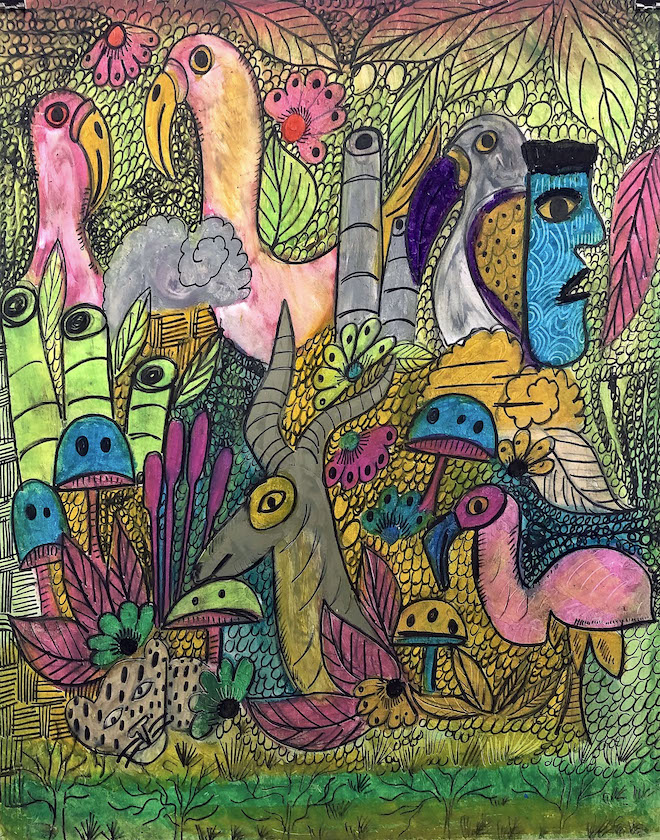
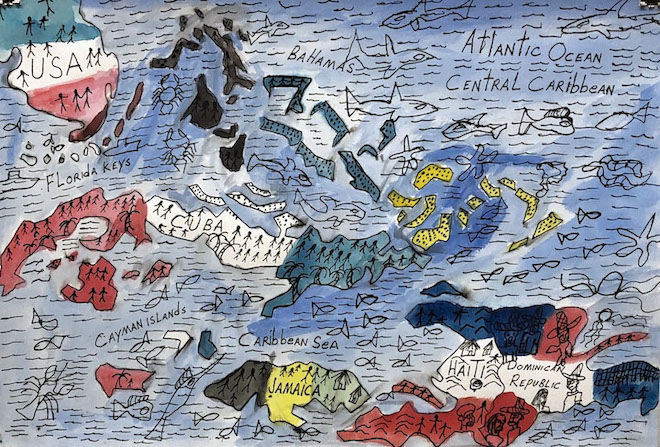
The image featured above was created by the late Julius Caesar Bustamante, a member of the Arawak/Caribe Indian nation, who began drawing in 2000 at age 43 following a diagnosis of post traumatic stress syndrome. Several more images on exhibit through November 2 follow:

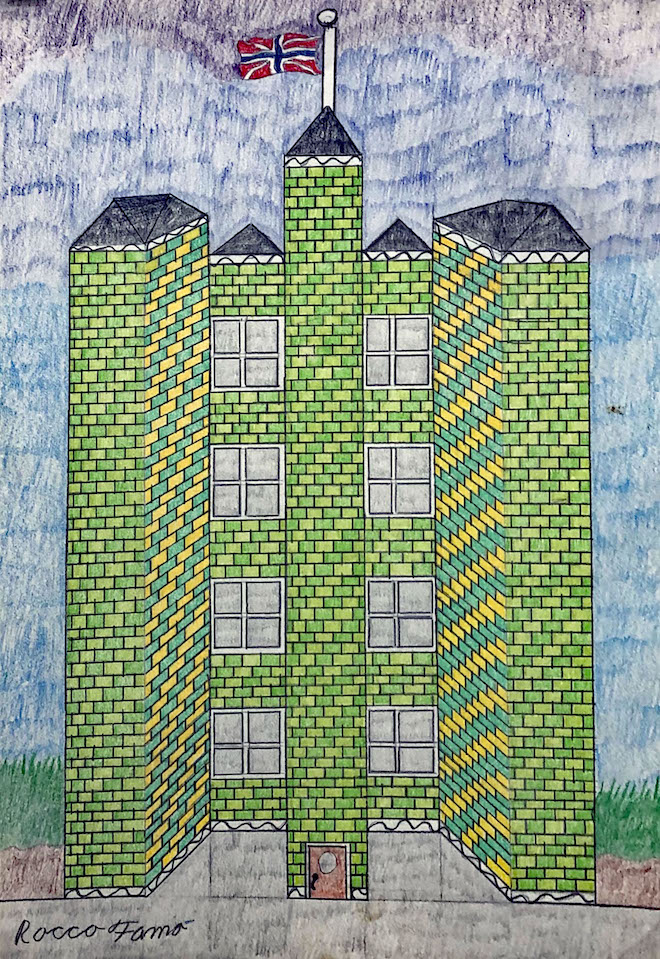
 The late Rocco Fama, noted for his colorful drawings of imagined skyscrapers

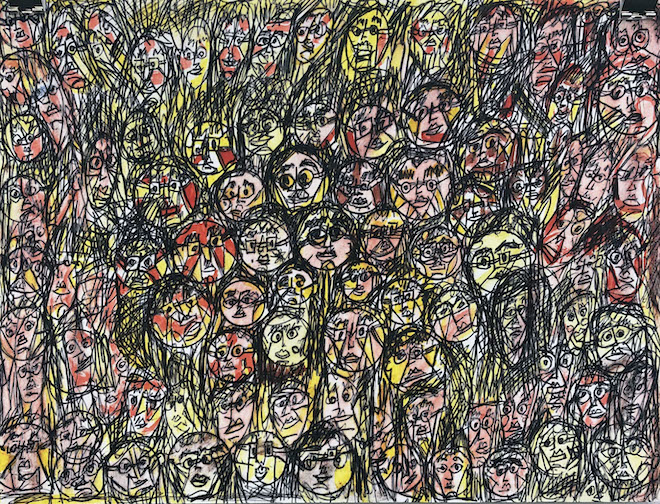
The prolific Roger Jones, now active with Fountain House Gallery

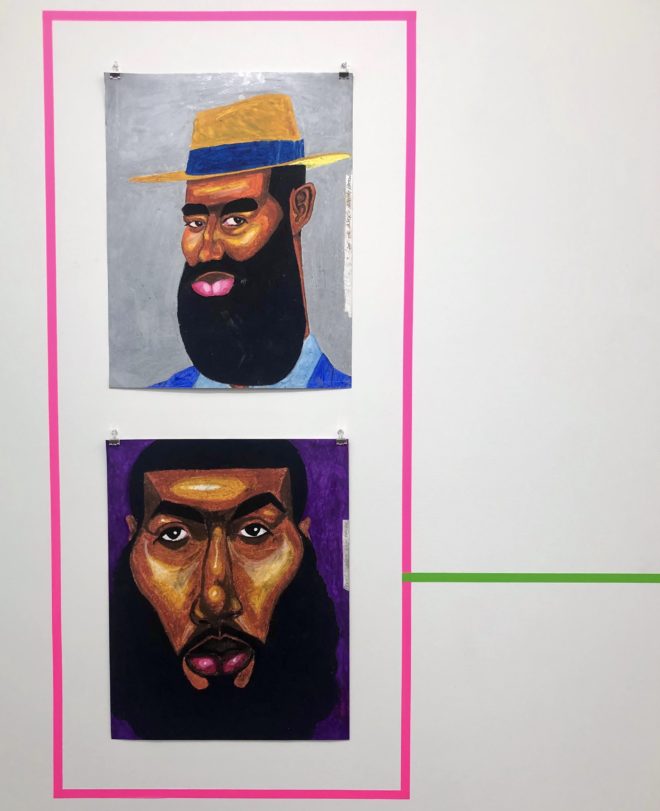
The late Brooklyn-native Derrick Alexis Coard who struggled with schizo-affective disorder and was best-known for his drawings of bearded African-American men

Caribbean artist Adeyinka Perry

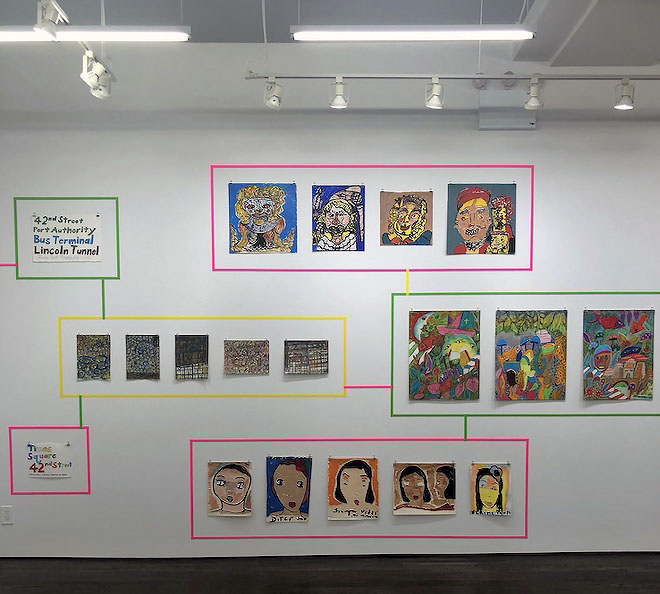
Wide view of small segment of installation featuring (top to bottom): Mercedes Jamison, Roger Jones, Julius Caesar Bustamante and Donna Caesar

Located at 91 Horatio Street in the West Village/Meatpacking District, White Columns is open Tue – Sat, 11AM –6 PM.

Research for this post: City-as-School interns Angelize Santiago and Sage Ironwood; photos by Angelize SantiagoSage Ironwood and Lois Stavsky

{ 0 comments }

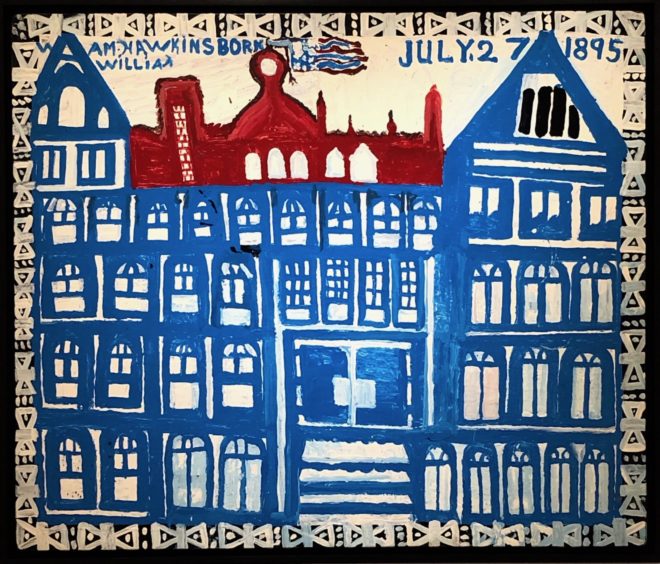
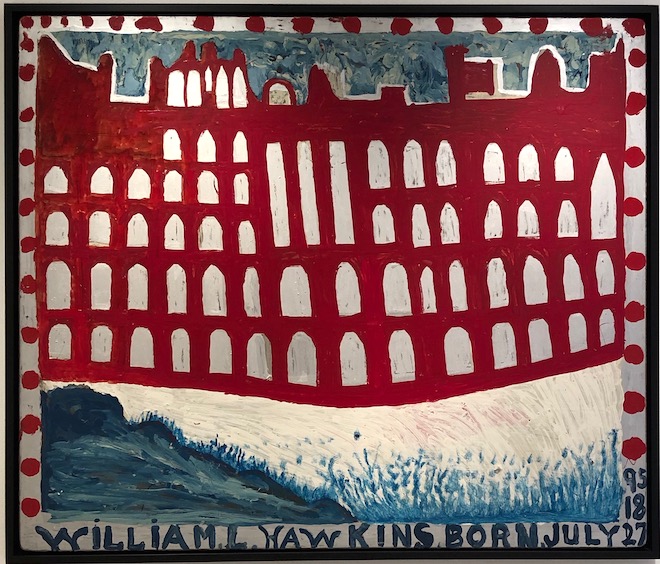
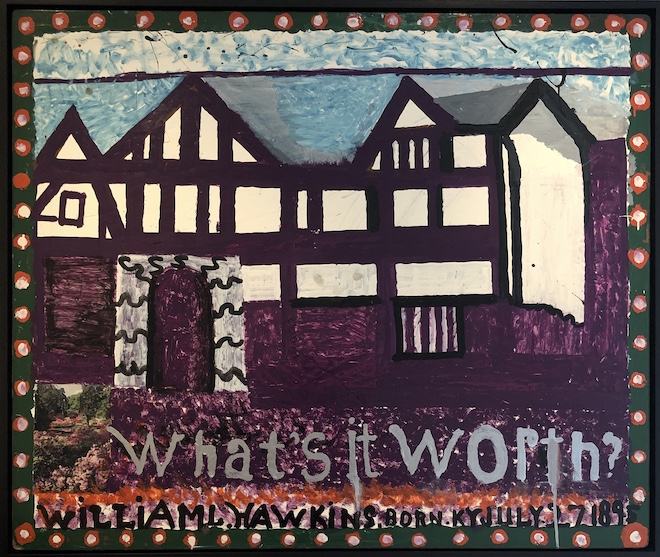
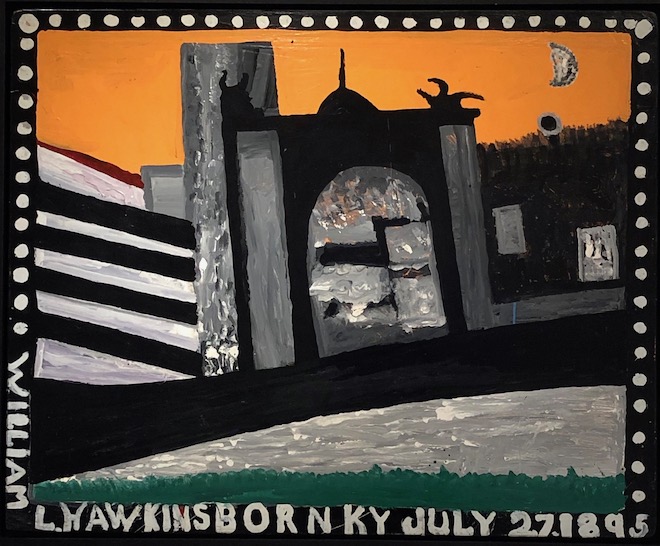
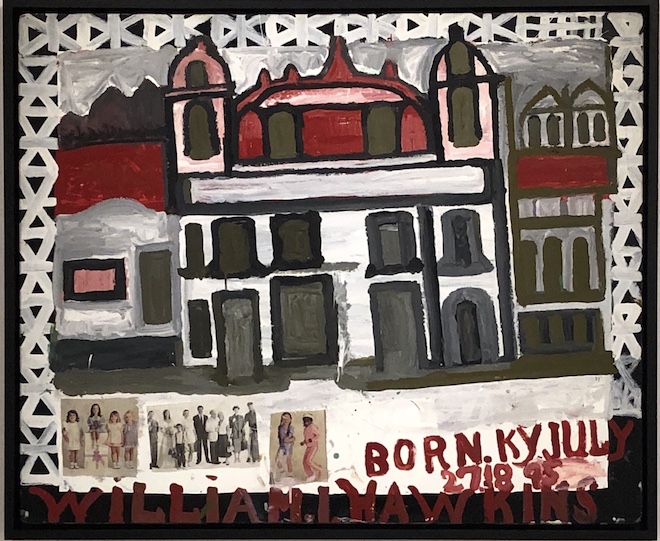
Organized in collaboration with Ricco/Maresca, an exhibition of paintings by the celebrated African-American artist William Hawkins is on view at Demisch Danant, a distinctive gallery space that specializes in twentieth century  French design. Titled Jazz, the exhibition highlights the “unexpected syncopation and rhythms” shared by 1950’s French designers and the self-taught artist William Hawkins .

Born in 1895 in Kentucky, Hawkins began making art in the 1930’s, experimenting with house paint on found wood. But he didn’t exhibit his work until he was 87, after a local artist, Lee Garrett, discovered his paintings while visiting Hawkins’ Ohio home. William Hawkins has since attained global recognition for his authentic, expressive aesthetic.

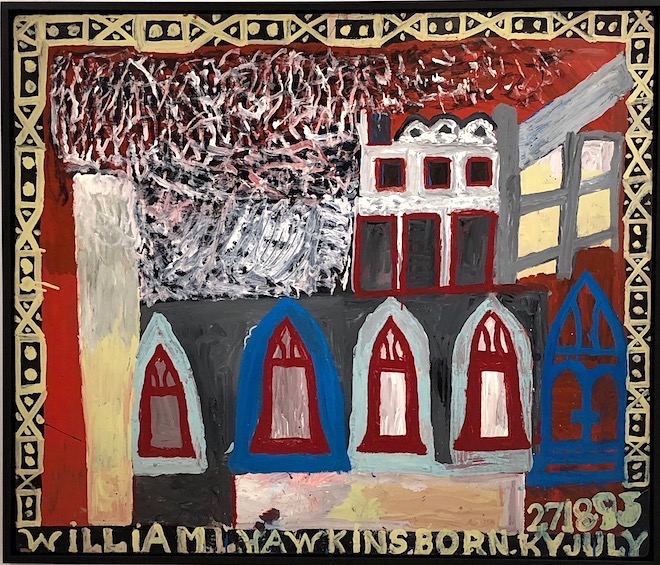
The work featured above, Interior with Arched Windows, was fashioned with enamel on Masonite in 1989, just one year before the artist’s death. Several more images of Hawkins’ works on display at Demisch Danant follow:

State Capitol, Albany #2, 1986, Enamel on Masonite

Old Town Square #3, 1987, Enamel on Masonite

Cathedral, 1988, Enamel and collage on Masonite
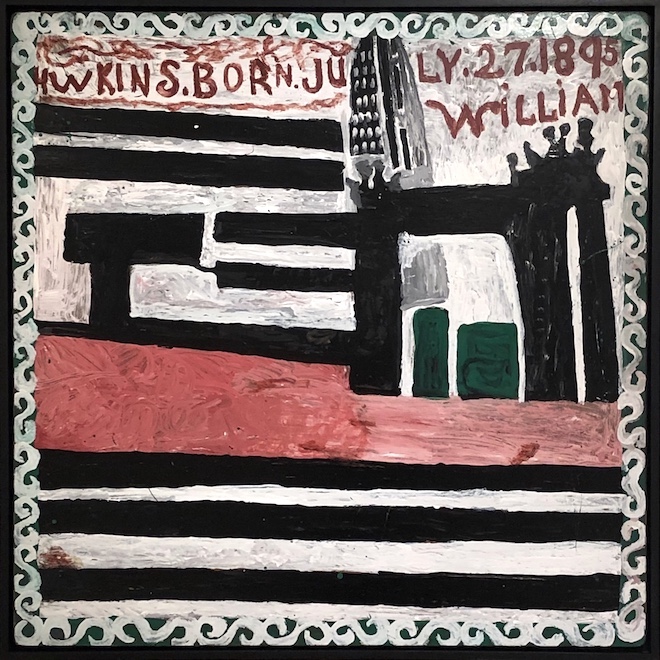
Arched Park with Nationwide #3, 1989

WHAT’S IT WORTH?, 1987, Enamel on Masonite

150 Arch Park with Nationwide, 1986, Enamel on Masonite

Jazz continues through October 19 at Demisch Danant. Located at 30 W 12th Street in the Village, Demisch Danant is open Monday – Friday from 10AM to 6PM and on Saturday from 12PM – 5PM.

Photos of images by Lois Stavsky

{ 0 comments }